


.webp)


.webp)


.webp)


.webp)


Welcome to ZUTTO
Free shipping for newsletter subscribers (some areas excluded)
- トップページ/
- ZUTTO Journal/
- ブランドストーリー/
- Visiting the HARI...

Visiting the HARIO Lampwork Factory
Glass, transparent and beautiful. We often find ourselves captivated by its beauty.
At first glance it seems like such a fragile material, yet after experiencing 2000-degree flames it becomes soft and pliable, and then grows strong again as it cools. Wanting to understand more of this fascinating quality of glass, we visited HARIO Lampwork Factory, a workshop that creates glass accessories using a technique called burner work.


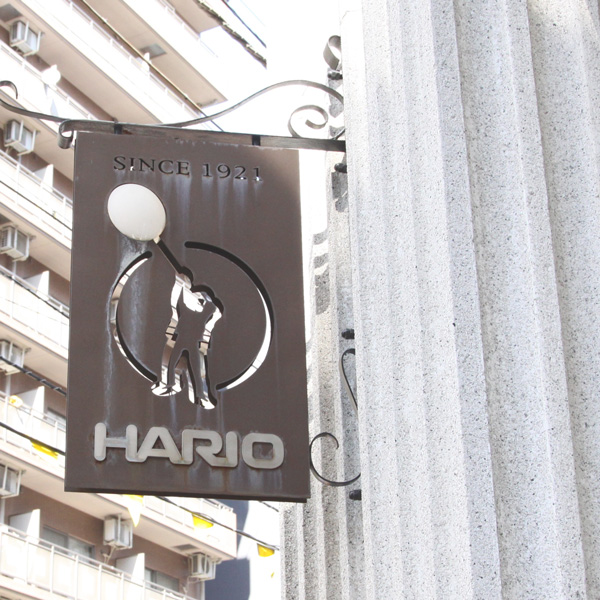
The first stop on our visit was HARIO's head office in Tokyo. On the signboard, alongside a silhouette of a craftsman handcrafting glass, are the words "SINCE 1921." HARIO is a long-established company that has been making glass since its early days. It is Japan's only heat-resistant glass manufacturer that has consistently handled the planning, production, and sales of heat-resistant glass since its founding.
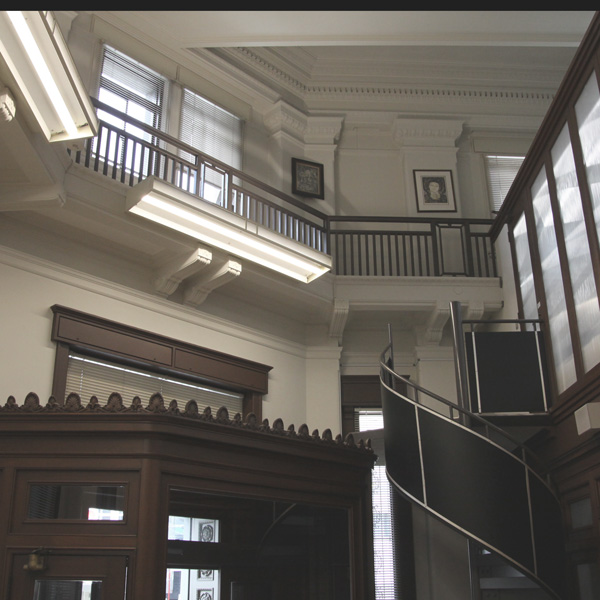
Stepping into the building, we were struck by a solemn atmosphere—white walls set against dark brown wooden frames. This room, we learned, was once used as a bank, and the space has since been inherited and repurposed as a showroom. There's something wonderful about the way older things are carefully carried forward here. This time, we spoke with Nemoto-san and Tada-san, who oversee the development of HARIO Lampwork Factory.
---When people think of HARIO, they tend to picture coffee equipment.
Yes, when we were founded in 1921, we mainly worked with beakers, flasks, and other glassware for scientific use, but I think what people are most familiar with today is our heat-resistant coffee pots and glasses. The origin of that is this siphon coffee maker. It became beloved by people here as a way of bringing in the culture of "brewing coffee with a siphon and enjoying it at home" from overseas.
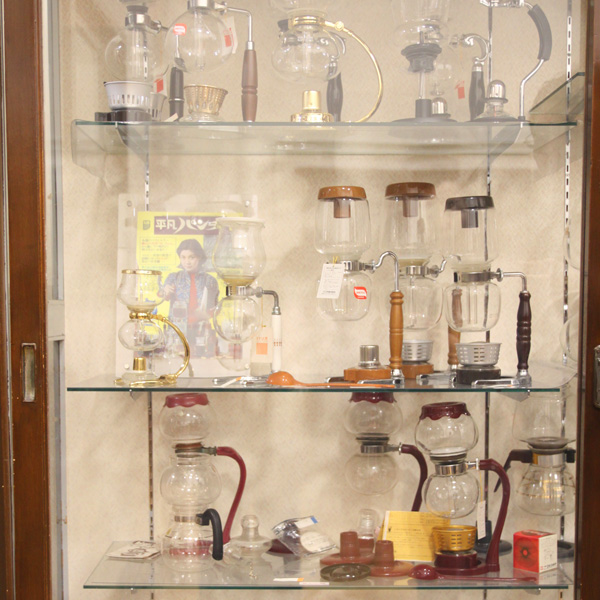
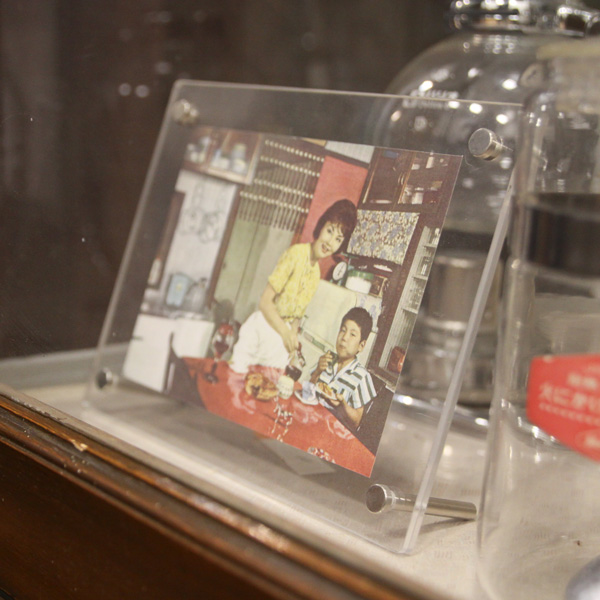

--Oh, that reminds me, isn't there a scene in "Chibi Maruko-chan" where the family gathers together and brews coffee with a siphon?
Yes, exactly that! (laughs) The siphons from that era were made entirely by hand by craftsmen. If you had to put HARIO's identity into words, it would be "domestically made heat-resistant glass," and our product development has always progressed in step with food culture and people's everyday lives. Take this tea pot, for example.
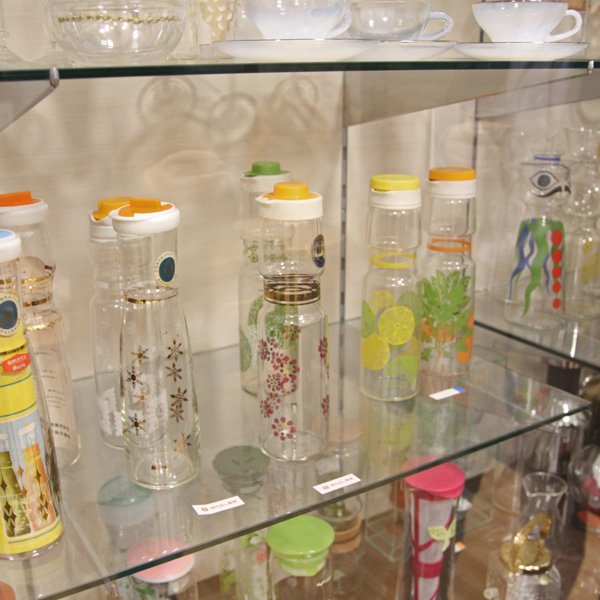
---I had one of these in my refrigerator! I didn't realize it was a HARIO product.
I'm so glad you recognize it. Once refrigerators became common in ordinary households, people developed the habit of keeping cold tea on hand in the summer. This pot became widely popular because of the convenience of pouring in hot water to brew tea, and then simply placing the pot straight into the refrigerator.
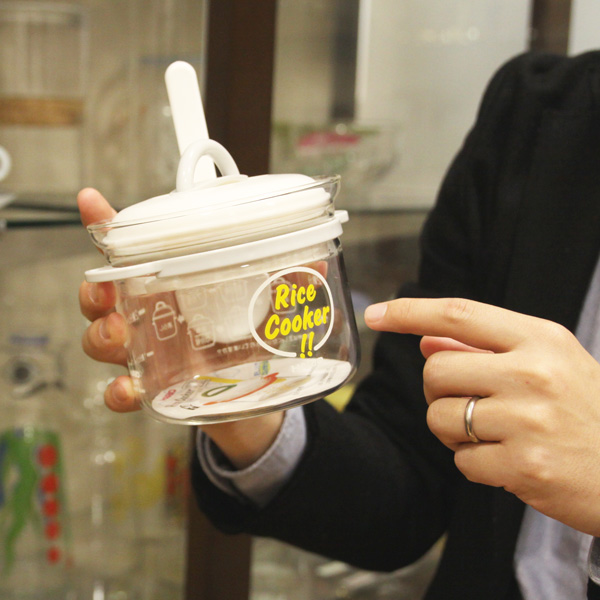
---So it really was heat-resistant glass shaped around how people actually live.
Exactly. When microwave ovens became widespread, we made a rice cooker—the very first device for cooking rice in a microwave. Versions of this kind of tool are still around today, but ours was the original. There was even a somewhat amusing product where you'd put rice and water in, pop it in the microwave, and out would come a finished onigiri (laughs). More recently, with the third-wave coffee boom rediscovering the merits of flannel and paper drip methods, our cone-shaped coffee dripper, designed for brewing specialty coffee well, has become quite popular.
---It really does feel like the work of a true manufacturer.
Yes, being a true "manufacturer" is precisely our strength. Out of ten products we make, maybe only one or two actually become hits and go on to be loved for a long time. Even so, it's only by continuing to make things that our techniques evolve, and that's how products people truly love come into being—that, I think, is our mission as a manufacturer.
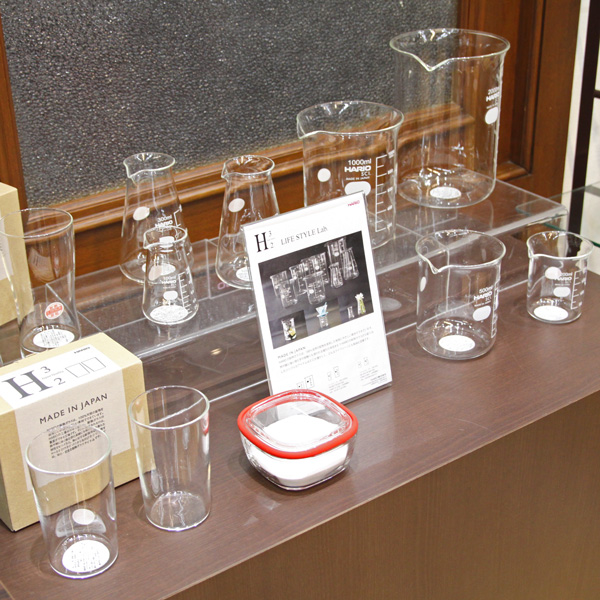
However, products that were originally made one by one by hand became increasingly mechanized as demand grew and productivity took priority, and as a result the handwork of craftsmen was no longer passed down. Our manufacturing base is a factory in Ibaraki, but as mechanization advanced there, the number of craftsmen able to work glass by hand dwindled down to just three. And yet, every glass product, no matter what it is, starts out being made by hand by a craftsman, and only afterward goes through the process of figuring out how to produce it by machine, before mass production begins. You simply can't jump straight to machine manufacturing for something that hasn't first been shaped by human hands. But without the craftsmen who do this essential work, there can be no advancement in technique. And unfortunately, that means no new products can be born, either.
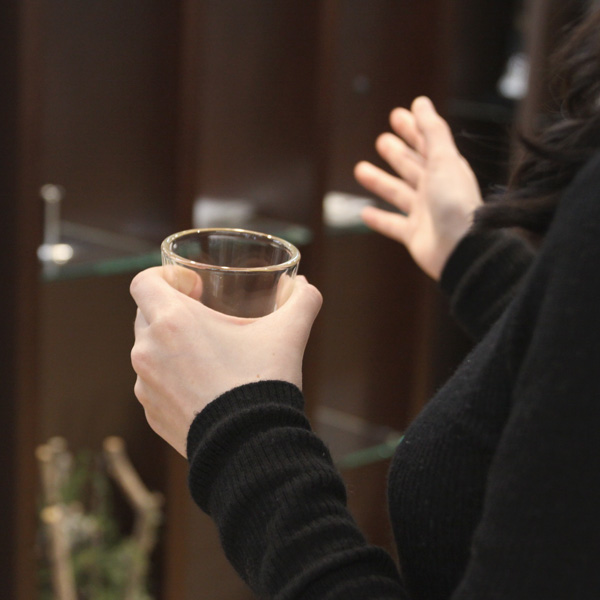
--So the skills themselves are at risk of dying out.
For instance, there's a tea pot where only the process of attaching the spout requires a craftsman's handwork—and if there's no craftsman left to do it, that product simply gets discontinued. It's a product where quality depends entirely on how the flame is applied, and if we can no longer make it, we won't be able to meet the requests of the ryotei (traditional Japanese restaurants) and ryokan (inns) that order it. It was out of the desire to somehow address this situation that HARIO Lampwork Factory was born.
---So the presence of skilled craftsmen is indispensable to product planning and development.
Yes, lampwork (also called burner work) is a delicate technique in which a craftsman shapes glass warmed over a burner, by hand. We plan, produce, and sell glass accessories that let people experience the appeal of this technique. We create new glass products and deliver them to our customers. By continuing to take on new forms of shaping while responding to what people ask for, we advance our techniques and nurture our craftsmen. In turn, that lets us keep creating new products to bring to our customers. This is a place we created with that kind of growth in mind.
HARIO's head office has a design staff of 20 people who work on main mass-produced items like coffee equipment while also designing accessories for Lampwork Factory. As the craftspeople in the workshop turn these designs into actual forms, they build up their skills, and it's become possible to feed technical insights—like "we could create this kind of shape" or "this way would make it stronger and more beautiful"—back into product planning.

Next, we finally head to the workshop. A short walk from HARIO's head office, this building with its eye-catching brick exterior comes into view. The glass-walled first floor lets passersby see the work in progress from outside, and people walking by would occasionally stop to watch the craftspeople's handiwork.
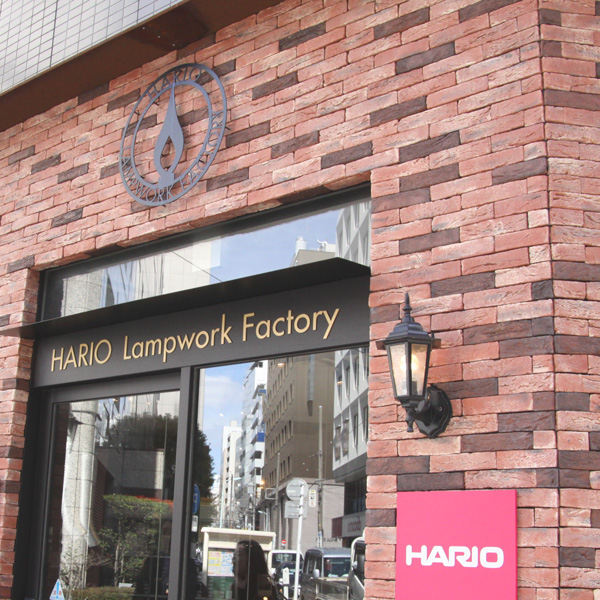
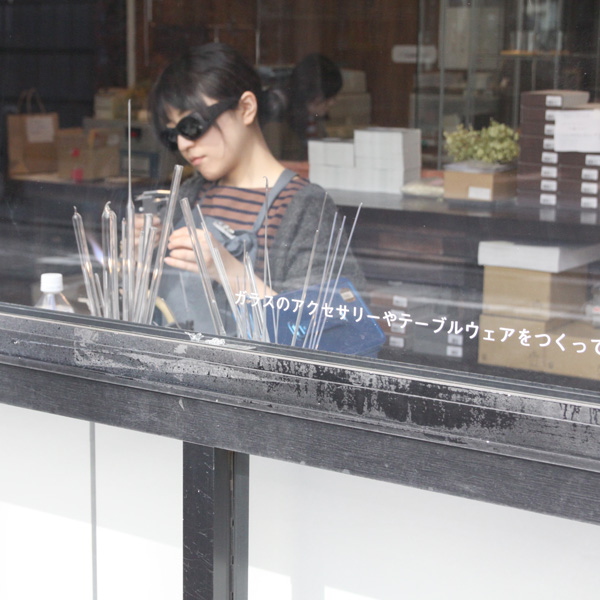
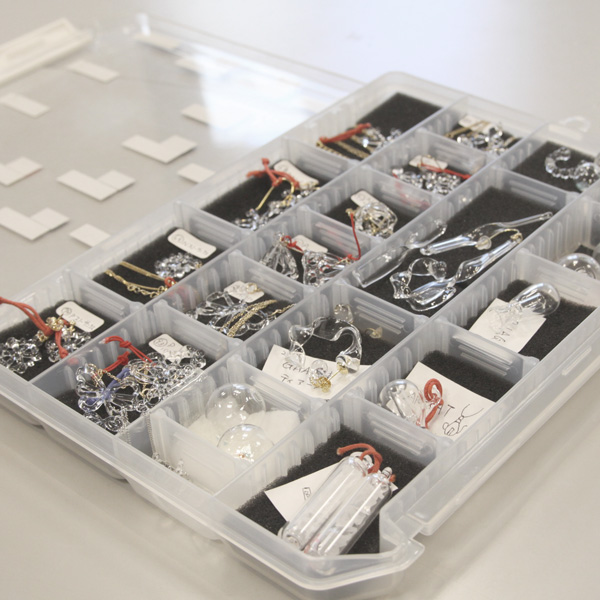
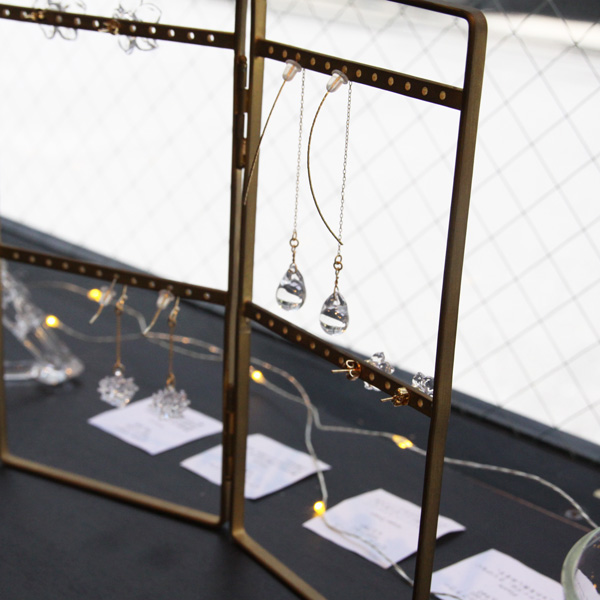
HARIO Lampwork Factory (HARIOランプワークファクトリー) has a shop space on the first floor where general customers can stop by, and visitors can also observe the glass-walled workshop. The glass accessories, displayed with generous spacing between each piece, reveal an astonishing variety of forms when you look closely—so much so that you can't help wanting to touch them. Seeing how each piece, made entirely of clear glass, differs subtly in design from the next makes your heart skip a beat.
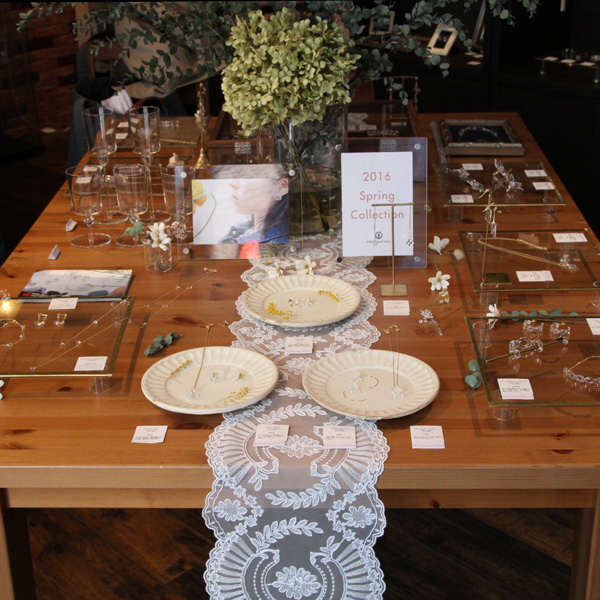
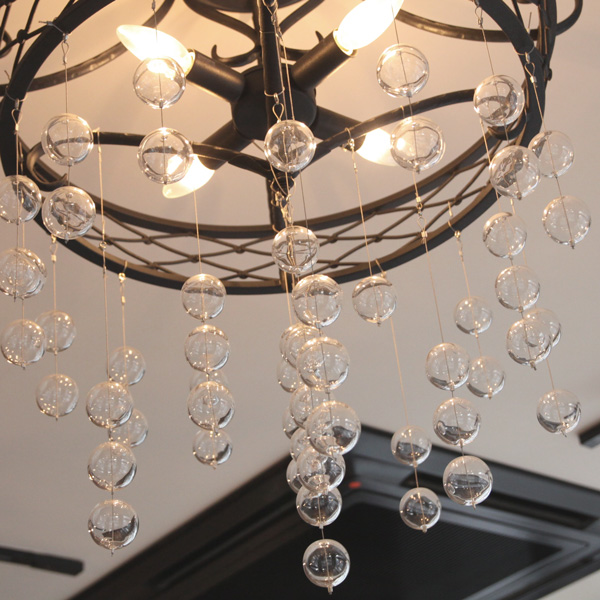
---They're so cute! Just looking at them makes my heart skip a beat.
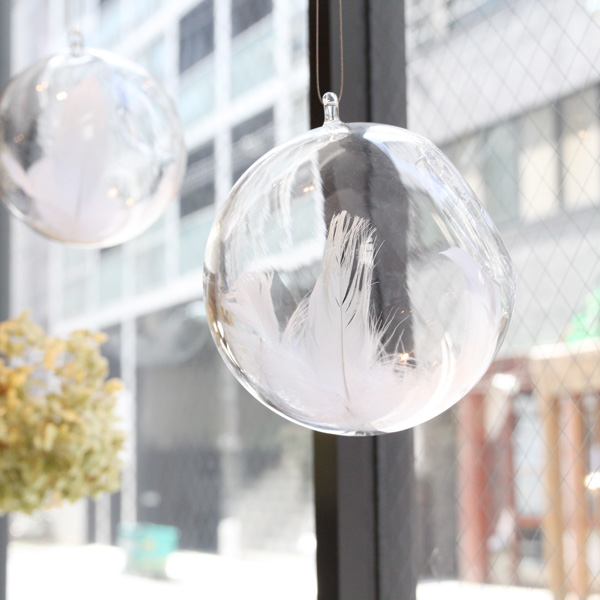
Thank you. We started out with 17 items in a simple design, and that lineup is still part of our core collection today, remaining very popular with customers. In the beginning, we mostly had abstract designs like teardrops or geometric patterns, but as our craftspeople have become able to render even more delicate patterns, we've expanded into series with more complex designs, like flower and snow motifs.

---What are the strengths of Japanese craftsmanship compared to techniques found elsewhere in the world?
We once tried having these accessories made at a factory in China, but they simply couldn't achieve the same level of precision and beauty of shape as our Japanese craftspeople. Incidentally, I've tried practicing the lampwork technique myself, and it turned out to be incredibly difficult (laughs)—I never got the hang of it at all. Since this kind of making involves such delicate craftsmanship, it really belongs in the realm of traditional crafts. In that sense, I've come to feel that the style of Japanese women craftspeople—who work with what I'd call hospitality, carefully and patiently—suits this work particularly well.
When we first set up this workshop, we only had five craftspeople, so once we ran out of stock, it was hard to keep up with production. We felt this wasn't good for us as a manufacturer, so we've been focusing our efforts on training more craftspeople and expanding our production sites.
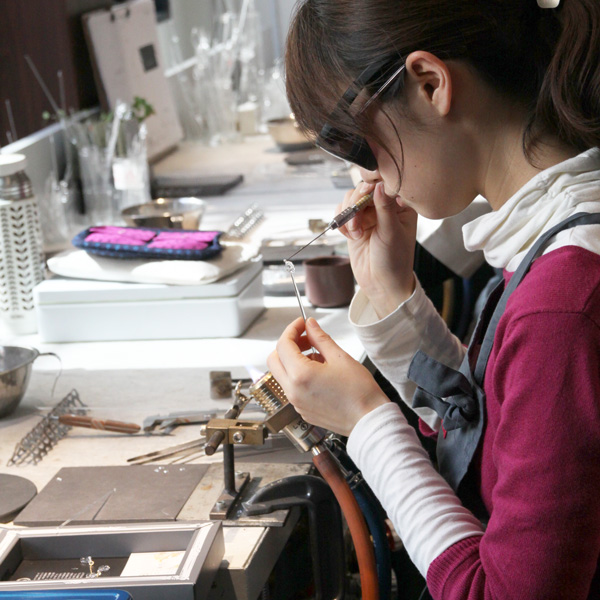
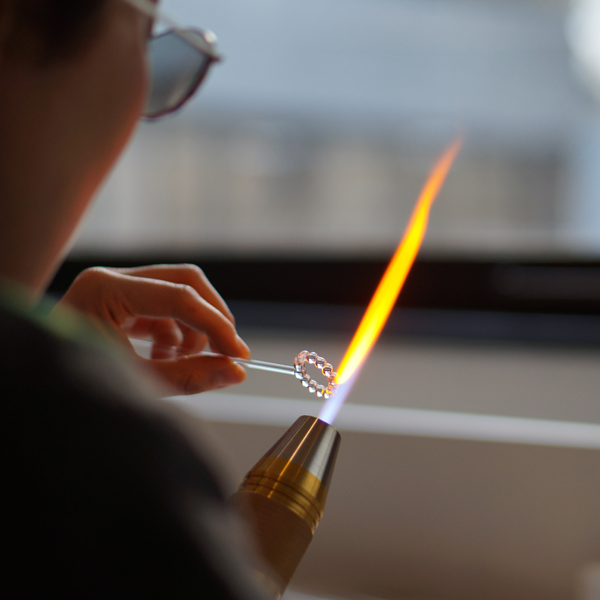

—Watching this, it looks so easy and quick, but I imagine it's actually quite difficult.
That's right—once the glass is heated with the burner, it keeps cooling down, so it's a race against time. Since we're making these by hand while still having to meet product specifications, we shape each piece while carefully matching the detailed dimensions against the original design.
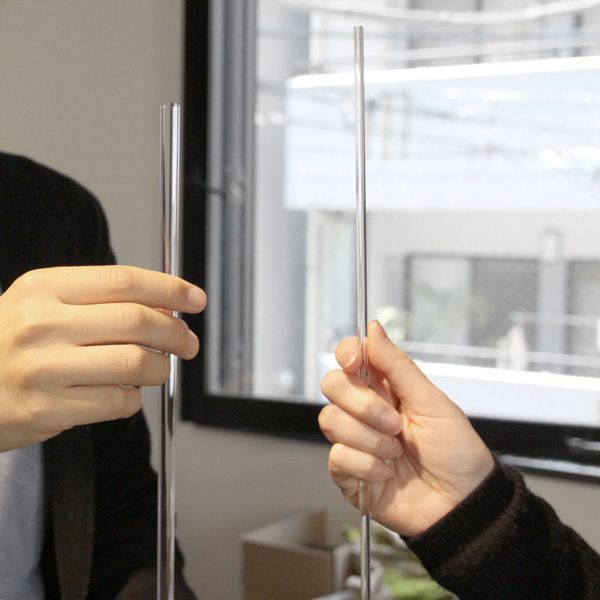
These glass rods are the raw material for lampwork. They come in various thicknesses, like 2mm or 4mm, and we melt them to create droplets, connecting them one after another to build up a bumpy design, or we flatten them with tools and then bend them into curving shapes. These glass rods are also made at HARIO's domestic factory—and HARIO is now the only Japanese glass manufacturer able to produce these entirely within Japan.
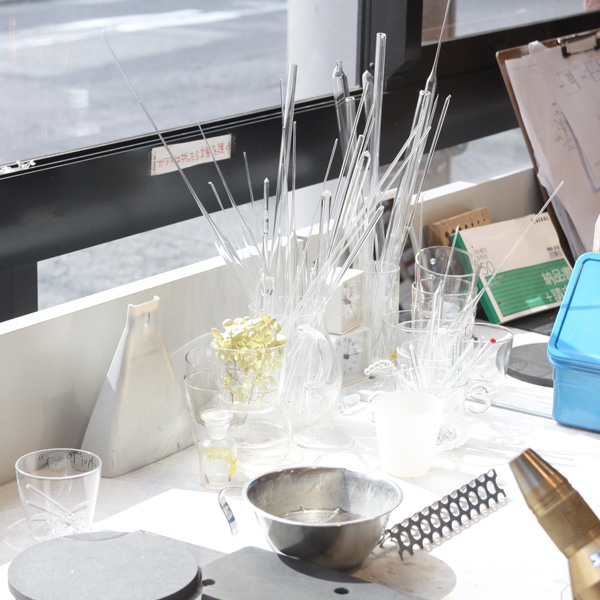
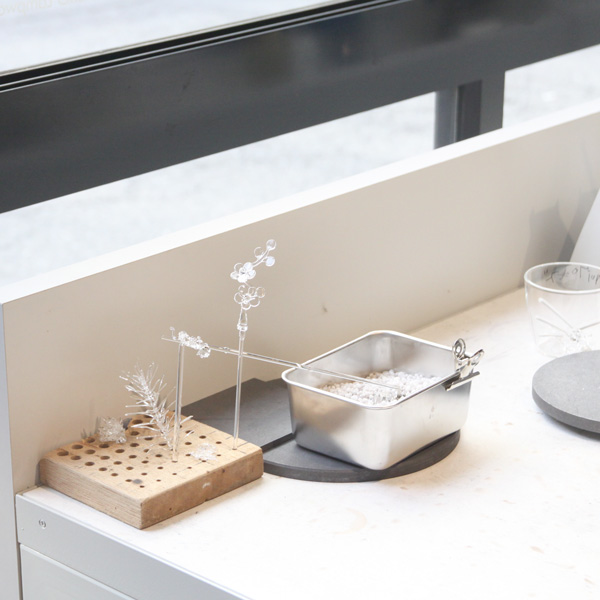
Here's a look at the craftspeople's workspace.
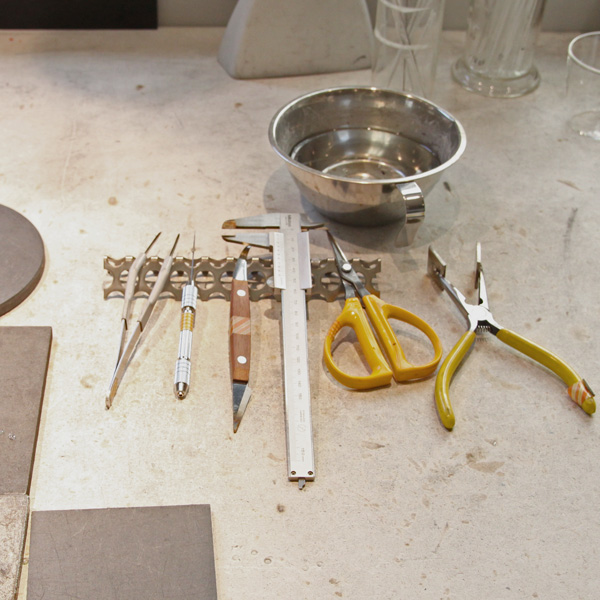
Tools that make delicate handwork possible.
A wide range of forms is possible—cutting, twisting, and joining glass melted over the burner.
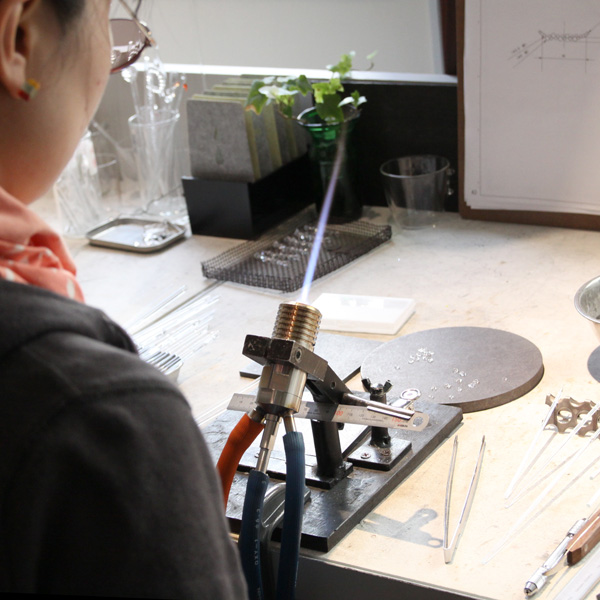
The flame of the burner that melts the glass.
The workshop echoes with the distinctive "goh-goh, shoo-shoo" sound made by this burner.
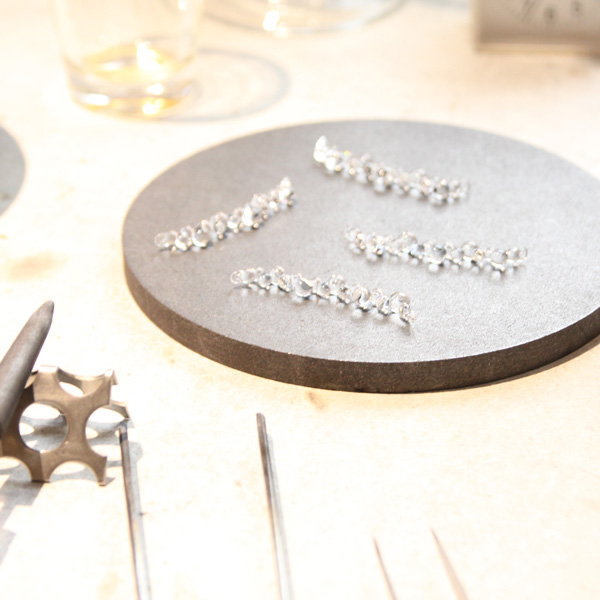
Glass parts made by the craftspeople.
A design that looks like a chain of teardrops—truly the work of skilled hands.
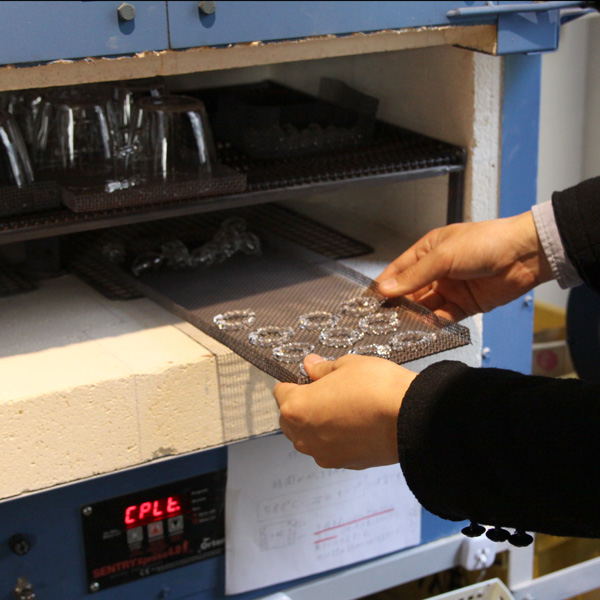
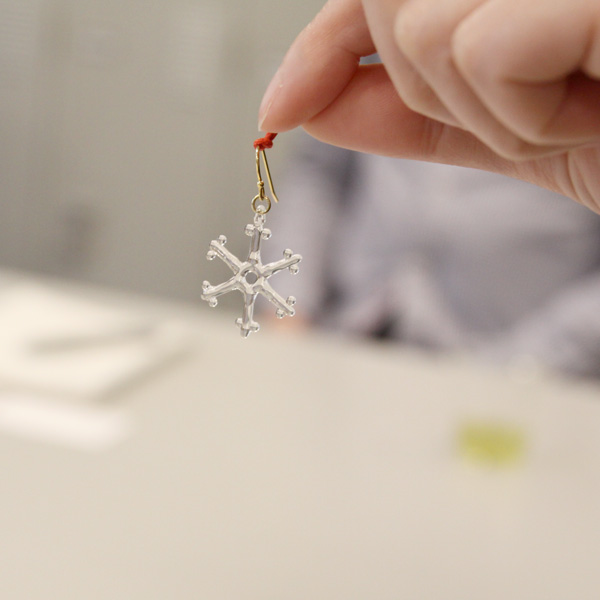
Once the craftspeople finish the handmade glasswork, the final finishing process follows. The burner's flame reaches about 2000 degrees, but a glass piece that's simply been shaped and cooled has "strain" in it, leaving the glass in an unstable state. So it's heated again to a high temperature in an oven like this one, then cooled, to complete the finishing process. This step is what makes the glass resistant to breaking.

—Is there anything to keep in mind for using these for a long time?
Glass is a material that breaks if you drop it—that's unavoidable. But if you take care of it, the material itself doesn't degrade, so no special maintenance is needed. Just a little bit of mindfulness—handling it gently when putting it on or taking it off, being careful when carrying it, and placing it on a soft accessory tray when you're not wearing it—is all it takes. And with this heat-resistant glass, even if it does break, it can be melted down and repaired again. Depending on the extent of the damage, we've set up a system to repair pieces at the workshop whenever possible so you can keep using them, so please don't worry.

—Finally, please share a message for those who will use these pieces.
That's right—if there's even one accessory that catches your eye, we'd love for you to experience wearing glass. And if you come to love it even more, adding a second or third design to your accessory case, nothing would make us happier. We hope you'll come to feel the variety in the craftsman's skill and grow attached to these pieces.
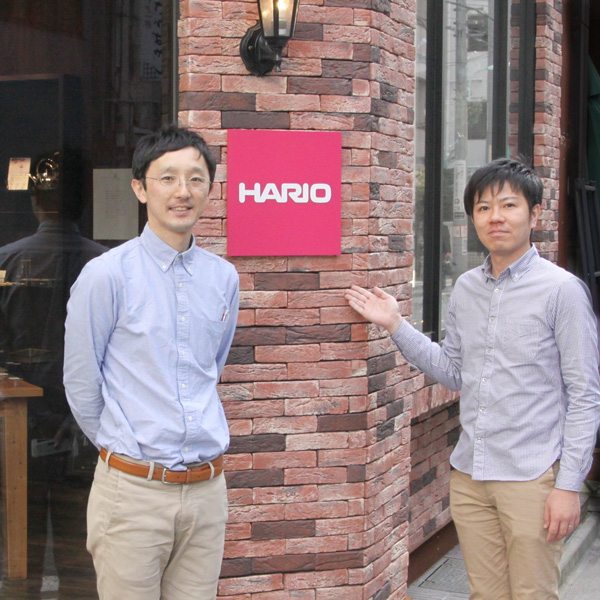
At HARIO Lampwork Factory (HARIOランプワークファクトリー).
Ms. Nemoto (left) and Mr. Tada (right), who kindly shared their stories with us today.
Both of them spoke with great care about the stories hidden within HARIO's heat-resistant glass, and about their strong feelings for the Lampwork Factory.

The sculptural beauty of glass, holding so many possibilities. Even within the single term "glass accessories," the designs are incredibly varied.
【Like a Falling Raindrop】

After the rain has stopped. "Tears," evoking the small raindrops seen at the windowsill. This uniquely textured, dotted form is created one drop at a time through the craftsman's handwork, melting thin glass rods over the flame of a burner. The design is beautiful, as if a chain of raindrops has traced out a lace-like pattern.
【From the Silhouettes of Plants and the Sea】

A small seashell picked up at the beach, a crown of clover flowers woven in a meadow. There are also forms that seem to express such nostalgic memories. These are designs that recall the days of girlhood and make the heart flutter unexpectedly.
【Urban Geometric Patterns】

There are also geometric patterns that make the most of the delicate handwork unique to glass. It's surprising how different the impression can be between straight lines and curves. Depending on the outfit you pair them with, they can take on an urban, fashion-forward mood, or a gentle, feminine taste.
How did you enjoy "Visiting HARIO Lampwork Factory"?
Hard, transparent, and delicate. It softens through exposure to 2000-degree flame, then hardens again as it cools. When you think about it, glass is a truly mysterious material.
What left the strongest impression was the sight of everyone in the workshop, facing the flame of the burner, silently and swiftly yet carefully and meticulously shaping the glass. What's curious about HARIO Lampwork Factory's glass is that although the glass itself has such a quiet, cool quality, you can still sense the warmth of the craftsman's handwork behind it. This attitude—combining the possibilities inherent in glass as a material with the craftsman's skill to create supple, delicate forms—may well be the true charm of this brand.
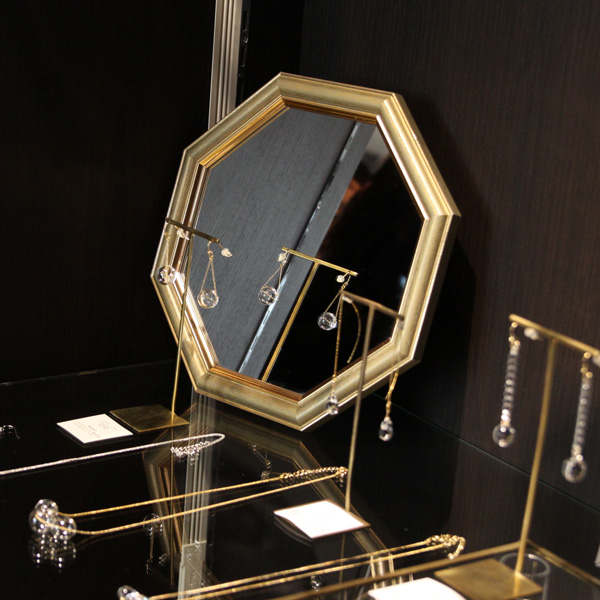
▼A wide range of designs are available, including earrings and necklaces.

GUIDE »
CONTENTS »
CATEGORIES »
- + Gifts by recipient
- + Gifts by scene
- + Clothing
- + Bags / Backpacks
- + Wallets / Card cases
- + Jewelry
- + Shoes
- + Rainy day outfits
- + Kitchen
- + Home
- + Babies / Kids
- + Japanese products
Earn Miles


Payment & Security




