


.webp)


.webp)


.webp)


.webp)


Welcome to ZUTTO
Free shipping for newsletter subscribers (some areas excluded)
- トップページ/
- ZUTTO Journal/
- ブランドストーリー/
- With their rich, ...

Rich in expression and irresistible to open—Makita Shoten's parasols
(Updated: June 12, 2024)
As the sunlight grows stronger and the sweat-inducing days become more frequent, a parasol becomes an indispensable companion for women heading out. A parasol isn't just for preventing sunburn—stepping into the shade it creates noticeably eases the heat, making it a truly valuable item.
The long-established Japanese umbrella brand we're introducing this time, Makita Shoten, was founded in Yamanashi Prefecture, a region known for its textile production. The brand creates parasols that shine with an incomparably delicate expression, skilled craftsmanship, and contemporary design.
The history of umbrellas began with the parasol
Let's first deepen our knowledge about parasols.
It's well known that the roots of the "umbrella" trace back to the parasol, but it's surprising to learn that it has been used for as long as 4,000 years. The parasol originally came into being as a way for people of high status to display their power. Sculptures and murals from places like Persia and Egypt depict kings with canopy-like parasols held over their heads.
The English word UMBRELLA derives from the Latin word UMBRA, meaning "shade." While UMBRELLA is now generally used to refer to a rain umbrella, the rain umbrella didn't appear until the late 18th century—much later than the parasol. In Japan, the history of the rain umbrella goes back to the paper-made "wagasa," which is said to have been introduced from China along with Buddhism.
The Western-style umbrella that we use today arrived in Japan during the Edo period. At first it was what we might call an "imported item," an extremely expensive one at that. It wasn't until the Meiji period that Western umbrellas began to be manufactured in Japan and spread among the general public.

Kaiki: a technique unique to the Gunnai region
In the textile-producing region of Gunnai in Yamanashi Prefecture, there exists a long-standing tradition known as Gunnai textiles.
Their roots lie in a fabric called kaiki (Kai silk), and the abundant water flowing from Mount Fuji has supported the textile industry of this region since the Edo period.
Kaiki is a thin, beautiful fabric used as the lining for haori jackets, produced from the Edo period through the early Showa era. It was born when merchants, forbidden by the Edo shogunate's sumptuary laws from wearing showy, extravagant fabrics, secretly indulged their sense of style through the linings of their garments.
Kaiki is characterized by the following:
・Thin and lightweight, using finely spun threads
・A firm body thanks to its high-density weave
・Vivid designs achieved through yarn-dyed thread
・Beautiful color produced with the help of Mount Fuji's spring water
By making the most of these characteristics, the region overcame the handicap of being far from major consumer centers and established itself as a producer of high-quality textiles amid competition with other regions.
Umbrellas made by a textile shop
Makita Shoten, whose roots lie in kaiki textiles, built up its expertise as a kaiki wholesaler from the late Edo period onward.
As Western-style clothing culture took hold, demand for haori linings declined, and weavers in the region shifted to producing delicate fabrics for neckties and dresses. Makita Shoten, meanwhile, applied its skills to umbrella fabric.
The company newly acquired waterproofing and water-repellent technology for fabric, creating an unprecedented "yarn-dyed umbrella fabric." At first the company only produced the fabric, but it later expanded into manufacturing the umbrellas themselves, establishing an integrated in-house production system.
The concept behind Makita Shoten's umbrellas is "umbrellas made by a textile shop." True to the pride the company takes in its history, it is thoroughly devoted to the quality of its fabrics.
"An umbrella that brings joy just by owning it"
"An umbrella that makes you look a little more stylish"
"An umbrella you'll want to treasure and use with care"
This dedication is expressed in the fabric through yarn-dyed jacquard weaving. Most inexpensive umbrellas sold on the market feature designs printed flatly onto the surface. Makita Shoten's jacquard weave, however, uses threads dyed in a variety of colors before weaving, creating patterns with a three-dimensional quality and a rich texture in the threads themselves. Since the pattern appears mirrored on the reverse side, the beautiful design can be seen from the inside even while the umbrella is open and in use.
A delightful parasol, made for grown-ups

Makita Shoten's "Sai Series," inspired by vegetables like corn and okra, is a parasol that fully embraces the brand's craftsmanship and distinctive character. It was designed by someone who was a student at Tokyo Zokei University at the time, and the design was turned into a product one year after they joined Makita Shoten.


Just as the name suggests, this is a parasol inspired by various vegetables. What's wonderful is that the design was carefully calculated with the idea that "an adult will be carrying this." Both when closed and when open, the details are restrained just enough that, once pointed out, you think, "Ah, I see the resemblance to that vegetable"—without ever tipping into childishness. The result is a beauty worthy of an adult's hand.
Embedded in this design is the concept of "a parasol that lets you enjoy the sunlight the way vegetables do."


When closed, the parasol resembles a bud, and when opened, it seems to bloom like a flower. To achieve this effect, the makers used an unprecedented stretch-fiber thread, creating a fabric with a bumpy, textured surface.
After much trial and error, this hand-made parasol is produced using a method that requires far more effort than usual. Because the process is so complex and difficult, it can only be produced in small quantities. It is the result of skilled artisans who, rather than relying solely on tradition, challenged themselves with new materials and techniques.
Jacquard weaving: the charm of its expressive texture


I've never seen fabric so crumpled and wrinkled while closed. But when opened, the jacquard-woven thread patterns pull taut, revealing an entirely different expression. The view from inside when you're holding the parasol is also lovely—a stylish touch meant only for the person using it.

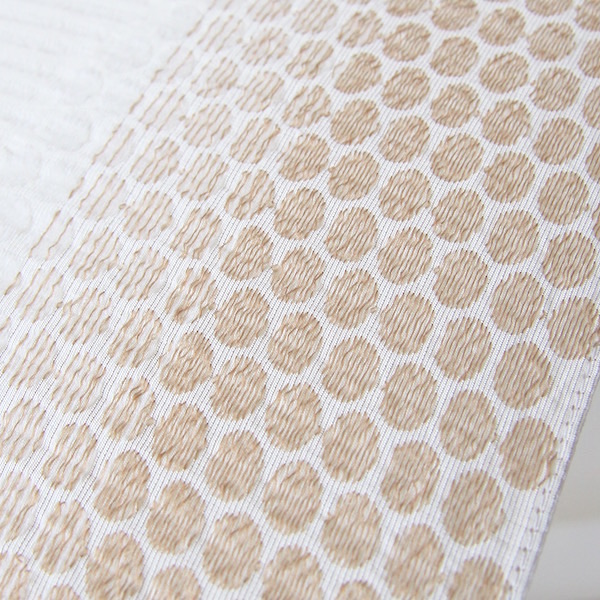
All seven varieties—carrot, corn, purple okra, enoki mushroom, sword bean flower, napa cabbage, and bean—feature beautifully distinct woven patterns that capture the characteristics of each vegetable. Looking closely, you can see the threads floating across the surface of the parasol fabric, and even to an untrained eye, this reveals the remarkably delicate craftsmanship involved.
Noticing details like these, one after another, is truly what deepens our affection for an object—it's something worth marveling at anew.
Caring for Your Parasol So It Lasts
These delicate parasols, crafted by skilled artisans, deserve to be cherished and used for many years. Here we've summarized some care points for using a parasol (or umbrella) that people often don't realize.

・Warm Up Before Opening
This applies to umbrellas in general, not just parasols: before opening one that's closed and secured with a strap, it's important to "warm it up" first.
If you undo the strap and force the parasol open right away, the friction between the layers of fabric won't release quickly enough, putting strain on both the ribs and the fabric. Once you've undone the strap, gently shake it side to side to loosen the fabric before slowly opening the parasol fully.

・Be Gentle with the Fabric
As mentioned earlier, Makita Shoten's fabrics feature richly expressive jacquard weaving, with threads woven to give the design a three-dimensional quality. Because of this, there are many places where stretched threads float across the surface of the fabric, so please be careful not to catch them on rings or similar items.
・The Secret to Longevity: Rotate Between Several
While in use, a parasol is continuously exposed to the strong UV rays of spring and summer. UV exposure causes fabric to become brittle and can lead to discoloration and fading, so after use, please store it in a well-ventilated place away from direct light.
Just like with shoes, if possible, rotating between several parasols will extend the lifespan of each individual one.

・If It Gets Wet
Makita Shoten's parasols are given a water-repellent finish to help resist stains, but this is not a waterproof treatment, so water will pass through. They cannot be used in the rain. That said, sudden rain showers can sometimes leave your parasol wet. If this happens, don't worry—simply open it halfway and let it dry in the shade in a well-ventilated area.
・Hand-Wash When Stains Become Noticeable
No matter how careful you are, stains will inevitably appear with use. As with any ordinary parasol, gently wipe the fabric with a solution of diluted neutral detergent. However, since threads float across the fabric's surface, please be careful, as they can easily catch. After rinsing with water, dry it half-open in a well-ventilated place away from direct sunlight.
Since the ribs are made of steel, it's important to let the parasol dry completely before folding it up. Any remaining moisture can lead to rust, so please be mindful of this.
・End-of-Season Maintenance
When storing your parasol long-term at the end of the season until the following spring, be sure to clean off that season's dirt first. Wash it following the steps above, and once completely dry, roll it up in a large sheet of paper to protect against dust, then store it in a well-ventilated place away from direct sunlight.

GUIDE »
CONTENTS »
CATEGORIES »
- + Gifts by recipient
- + Gifts by scene
- + Clothing
- + Bags / Backpacks
- + Wallets / Card cases
- + Jewelry
- + Shoes
- + Rainy day outfits
- + Kitchen
- + Home
- + Babies / Kids
- + Japanese products
Earn Miles


Payment & Security




