.webp)


.webp)


.webp)


.webp)


Welcome to ZUTTO
Free shipping for newsletter subscribers (some areas excluded)
- トップページ/
- ZUTTO Journal/
- ブランドストーリー/
- 【ZUTTO Custom Ord...
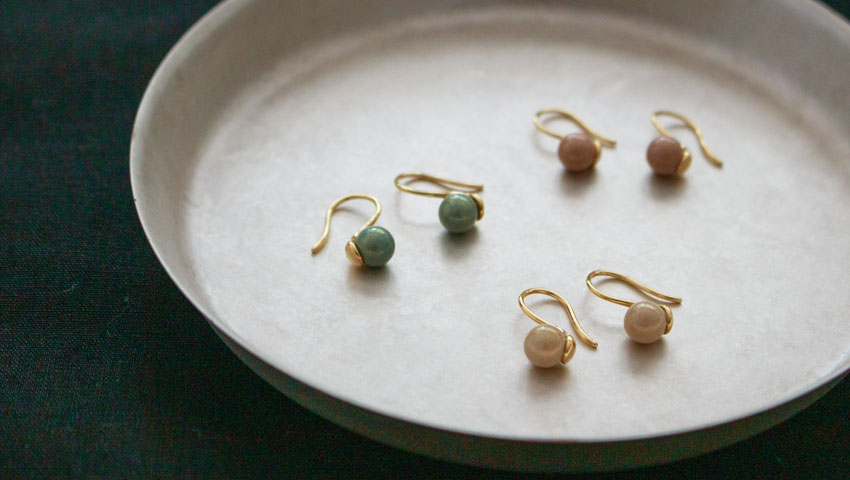
ZUTTO Exclusive Item
Brand interview | The refined luster born from roiro. Urushi earrings that shine through careful layered coats and hand-polishing.
Have you ever heard of the process called "roiro"?
Wajima-nuri is designated as an Important Intangible Cultural Property. As with many types of lacquerware, Wajima-nuri is made through a division of labor, passing through many hands—woodworking, undercoating, mid-coating, and top-coating—over a long period of time to complete a single piece. Roiro falls under the finishing stage of this process.
On top of the piece that has already received its final coat, kiurushi (raw urushi) is applied in layers, left to dry, and finally polished by hand—without any tools—to bring out its luster. If the polishing is insufficient, or if it's overdone, that luster simply won't emerge; it truly takes a craftsman's touch to find that delicate balance. The one who has seen the potential of this roiro technique not only for lacquerware but also as a decorative accessory to be worn, and who continues to take on new challenges, is Masui Saihon Kanshitsu.
Founded in 1955 as Masui Roiro-ten, the workshop is now run by the second generation. ZUTTO has previously featured the Nuance Gold series, and this time, based on that same Nuance Gold series, we've had the opportunity to create a new exclusive item together.
Earrings to wear on ordinary days and special occasions alike.
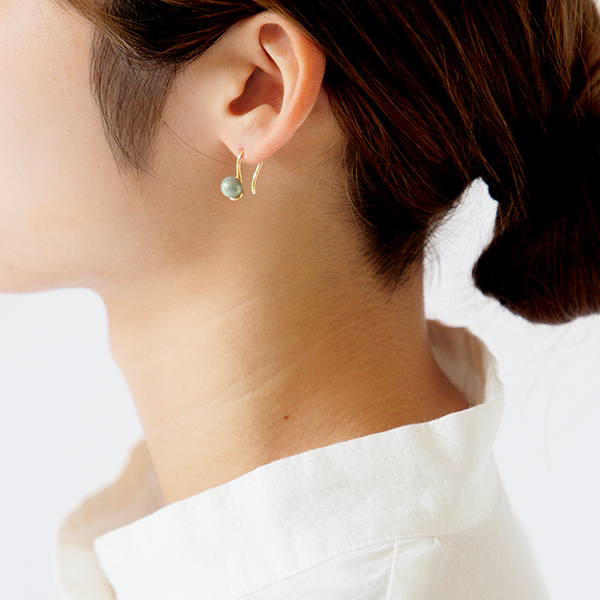
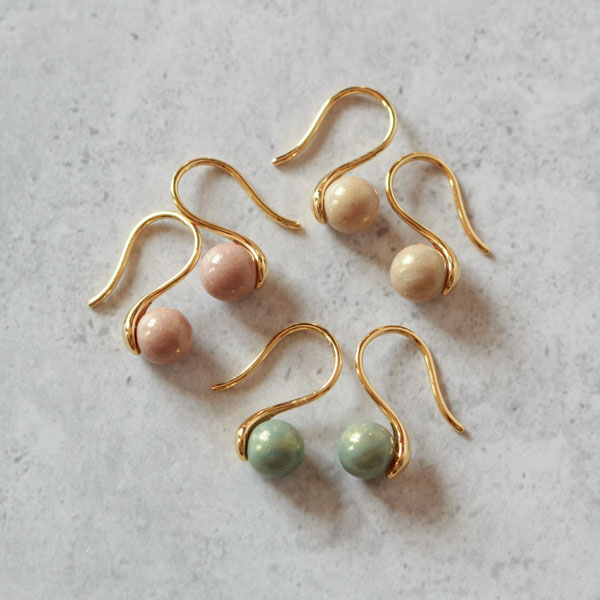
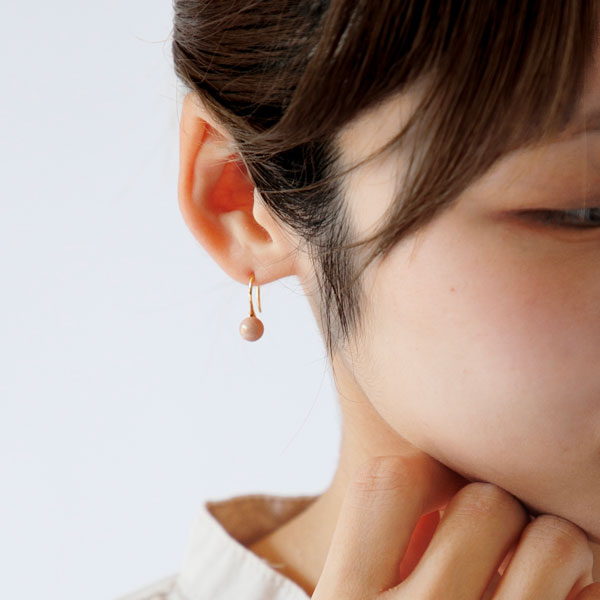
What struck me first was a soft, pearl-like luster. I've seen a few urushi earrings before, but the base color here has a calm saturation that blends naturally with the skin, and perhaps because of the golden nuance woven in, it has an expression that makes you want to keep gazing at it—truly one of a kind.
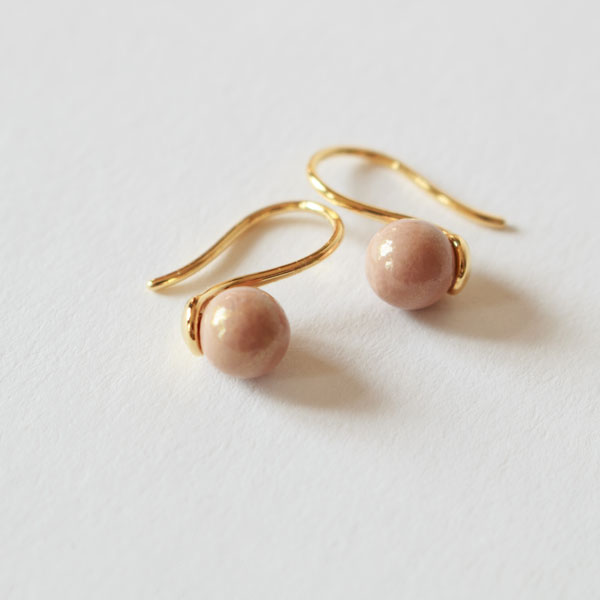
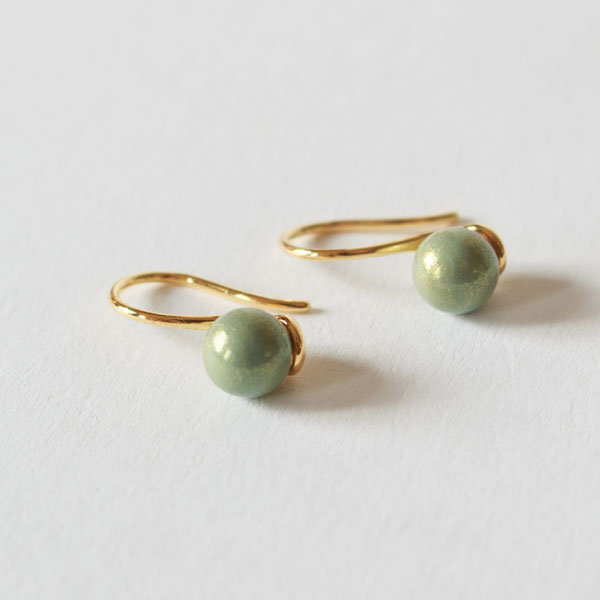
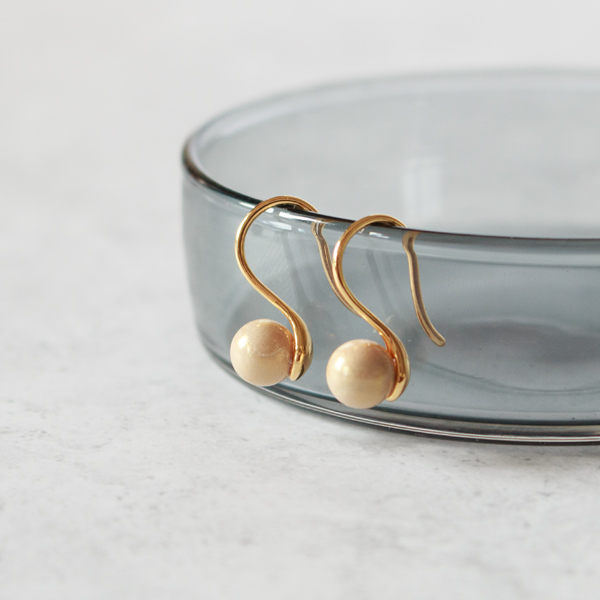
For this exclusive order, we had the motif made slightly smaller and asked for the fittings to be changed to a hook style with a bit more playful movement. Just like the original, the fitting material is surgical stainless steel, which resists rust and is unlikely to cause metal allergies.
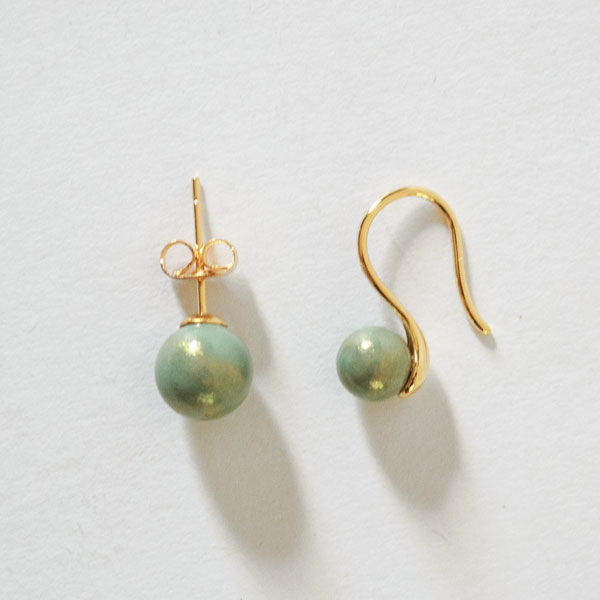
▲On the left is the originally featured Nuance Gold Earrings. On the right is this exclusive item.
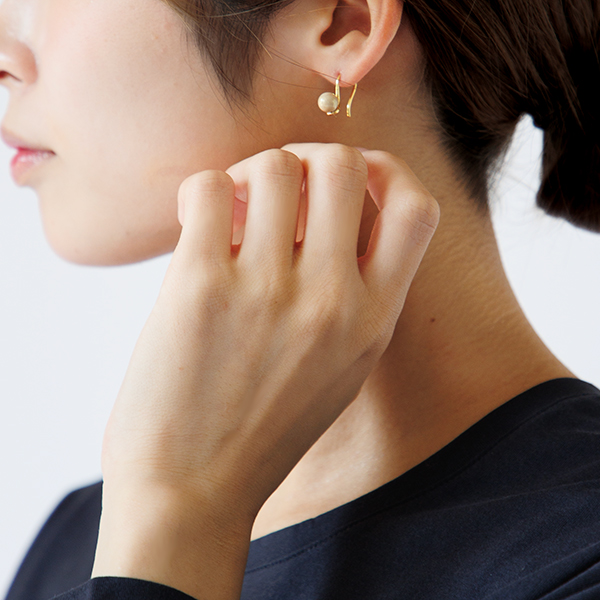
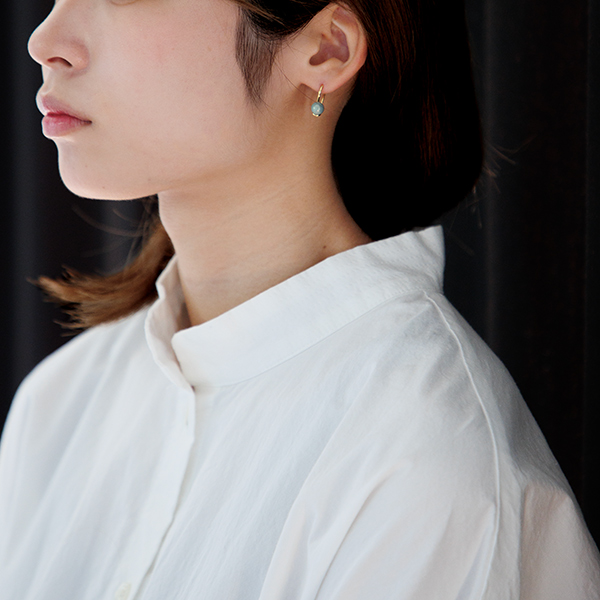
With everyday outings as well as slightly special occasions in mind, we imagined earrings that could be worn for both—and asked for a touch of ZUTTO's own nuance to be added, resulting in this special exclusive piece.
What truly stands out is the beautiful luster born from hands shaped by years of experience as a roiro artisan of Wajima-nuri. We spoke with Mr. and Mrs. Masui of Masui Saihon Kanshitsu once again to learn how their accessories came to be.
- Brand interview -
Expression only a roiro artisan can achieve, and urushi accessories born from new possibilities.
Katsumune Masui is a roiro artisan of Wajima-nuri. He was around 40 years old when his father, the previous head of the family, passed away and he took over Masui Roiro-ten.
"For about ten years after I took over, we only did the roiro work we'd always been commissioned to do. But as the economy shifted, production of Wajima-nuri declined, and the number of orders we received grew smaller. So we started thinking about making things ourselves, so we could deliver them directly to customers—that's how it began. It was a bit before 2010, so it's been more than 15 years now."
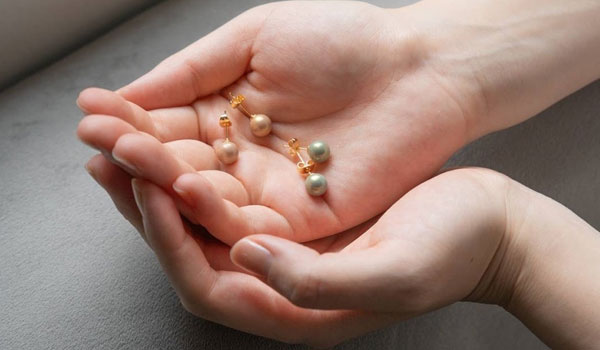
"Around the time Wajima-nuri production was declining, maki-e accessories were also on the rise, but the first thing we started making was prayer beads. Then, keeping an eye on the times, we began making accessories using the roiro technique. The first idea came from my wife. I have knowledge of roiro, but she didn't have much background in it. Her lack of preconceptions worked in a good way, and she keeps proposing new attempts."
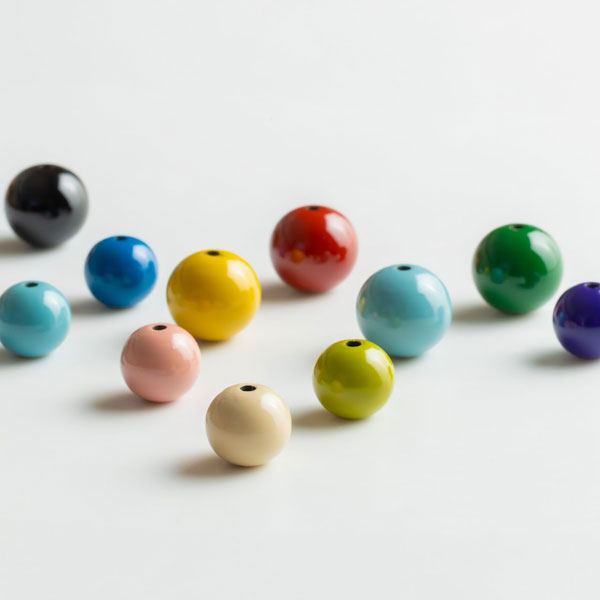
▲We heard they started with a necklace using plain beads, so that it would be simple and easy to use.
"Also, while doing roiro work, I actually came across jewelry from long-loved jewelry brands that had been finished with Wajima-nuri lacquering. Seeing how well those pieces were received by people, we gradually formed our own image of what urushi accessories could be.
Some people suggested adding maki-e, but we had concerns about sales channels and price, and we wanted to make accessories that many different people could pick up easily—so we decided to finish them using only roiro."
- Until the Nuance Series Was Born -

The pearl nuclei encountered through a commitment to "beautiful spheres"
"The first thing we were particular about was finding a beautiful sphere with no holes in it. A round shape looks the most beautiful once urushi is applied. Also, when we spoke with people in the jewelry industry, they mentioned that as a decorative piece, it seemed to lack 'weight.' Lacquerware is made of wood, so it's light and easy to handle. That's good for tableware, but from the perspective of a decorative accessory, it's a bit different.
A beautiful sphere with just the right amount of weight—that's what led us to the pearl nucleus.
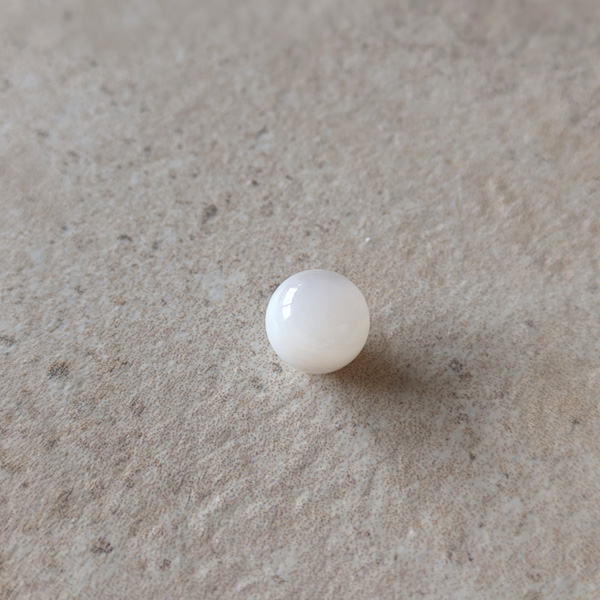
▲The actual pearl nuclei being used.
"But I had no idea where to even find them, so it was truly starting from zero. As I searched around, I came across a place that makes them on Awaji Island. Awaji Island was originally known as a production area for shell buttons, but once plastic buttons became widely available, the button industry alone could no longer sustain itself. That's apparently how they came to start making pearl nuclei."

"That's right. Until now we had only applied urushi to wood, so applying it to pearl nuclei was completely unknown territory. We went through a lot of trial and error, wondering whether the urushi would adhere properly and how to achieve a beautiful surface finish.
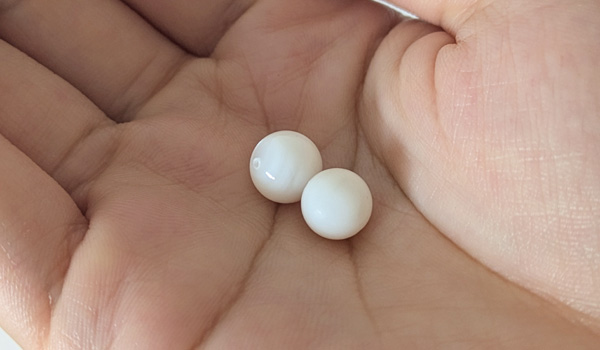
▲To improve the adhesion of the urushi, the pearl nuclei as received (back) are polished to create a slightly uneven texture (front).
The wood we usually use for roiro finishing is mainly kokutan (ebony), and the way ebony absorbs urushi turned out to be very similar to the way pearl nuclei absorb it. If a material absorbs too much urushi, you have to repeat the application process over and over. But since the absorption rate felt just right, I thought this could actually work."
Nuance colors born from using jinoko powder from Wajima-nuri
"The next thing we focused on was color. This Nuance series was created together with a designer, aiming to reach people who don't usually pick up urushi accessories. We had several color samples made, aiming for hues that evoke the scenery of Noto.
At first we adjusted these muted colors by mixing in black urushi, but when we happened to add jinoko—a gray powder used only in Wajima-nuri—it produced a beautifully muted tone."
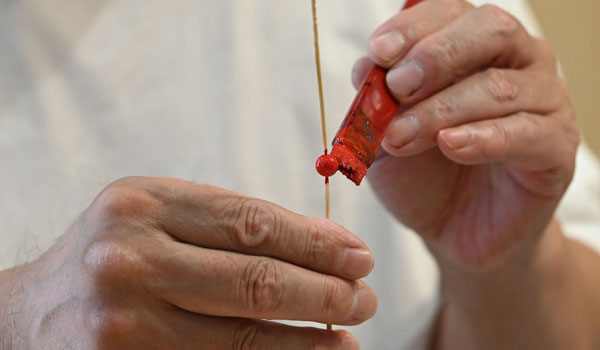

▲"Sora," reflecting the sky of Noto. This is the color also used for the special-order earrings.
"Building on the Nuance series born in 2023, we then came up with the Nuance Gold series. I thought that if we added a touch of glamour to the original Nuance series—while keeping a shine that isn't too flashy—it would broaden the range of occasions for wearing it. Like when you dress up a little to go out for a meal.
So we were moving forward with development, but then the Noto Peninsula earthquake struck in January 2024. It was originally supposed to be completed in March, but it remained unfinished for a while after that. It was at the exhibition in September 2024, half a year later than planned, that we first introduced the Nuance Gold series."

What it means to "polish by hand"
"That's right. We polish using only the palms of our hands. For earrings, it takes about three minutes to polish each bead.
If you polish too much, the shine actually disappears. You have to stop at just the right point. If too much urushi remains, it won't shine, and if you polish too much, too much urushi gets removed and the luster won't come out."
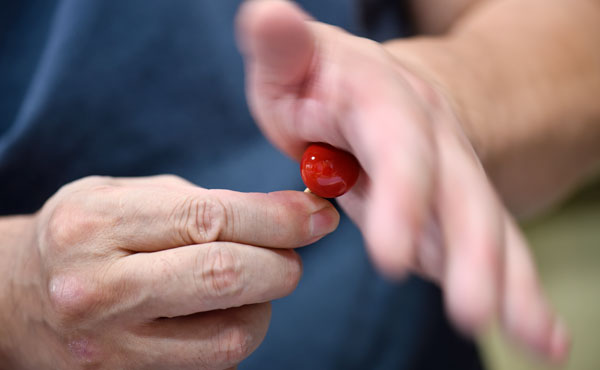
▲It's said that the natural oils in the palm work to create a beautiful luster.
"As you get older, your hands gradually change too. So with this roiro work, the polishing time changes depending on the age of the person doing the polishing. This is the process that visitors are most surprised and moved by, because we truly use no tools at all. But in the end, that's what makes the urushi look its most beautiful."
"No special care is needed. If it gets dirty with water or dust, simply wipe it gently with a soft cloth.
After finishing with roiro, the accessories in the Nuance series are coated so they won't irritate the skin. It's the same protective agent used to coat gold leaf. So you can think of them as changing less over time compared to lacquerware. We'd be happy if you continue to use them with care for a long time."
After the interview, from the project coordinator: A new form of "urushi accessories."
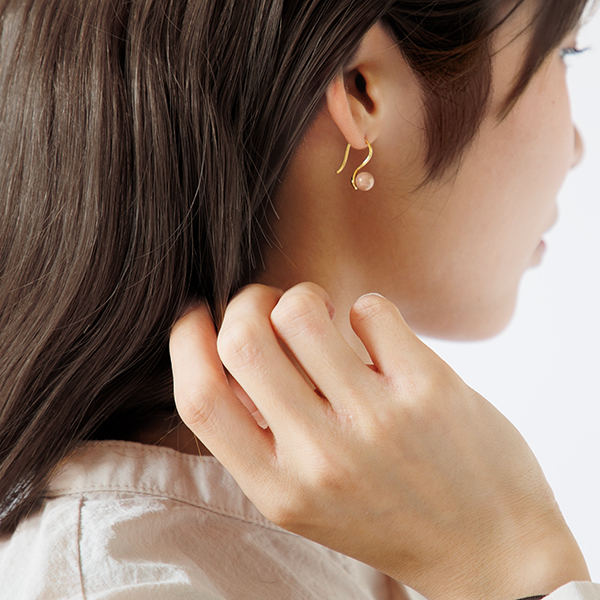
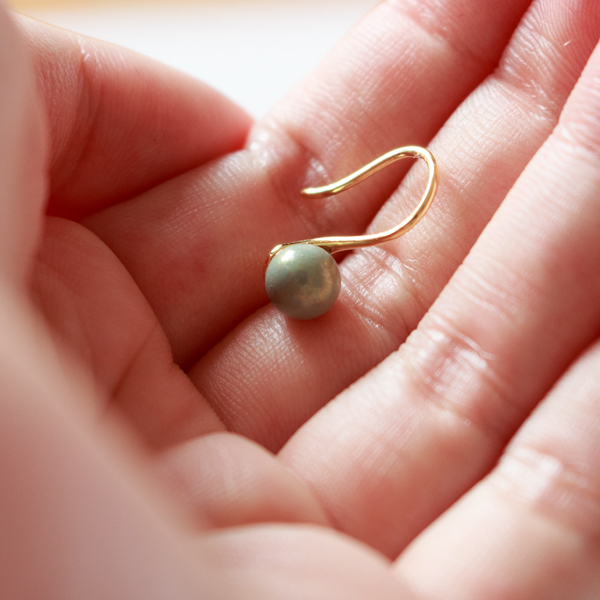
Originally, I reached out for consultation because I thought these could be used like pearl earrings, and now that I know the background this time, I understand why. This time, we had the beads made a bit smaller as a special order, but with the original ones, the character of the urushi is more clearly visible—each has its own appeal. I'd like to wear them with the same feeling as wearing pearl or natural stone jewelry, not just in everyday life but also on special occasions, and treasure them for a long time.
▼The special-order earrings by Masui Aya of Honkanshitsu introduced here
GUIDE »
CONTENTS »
CATEGORIES »
- + Gifts by recipient
- + Gifts by scene
- + Clothing
- + Bags / Backpacks
- + Wallets / Card cases
- + Jewelry
- + Shoes
- + Rainy day outfits
- + Kitchen
- + Home
- + Babies / Kids
- + Japanese products
Earn Miles


Payment & Security