.webp)


.webp)


.webp)


.webp)


Welcome to ZUTTO
Free shipping for newsletter subscribers (some areas excluded)
- トップページ/
- ZUTTO Journal/
- ブランドストーリー/
- The Craftsmanship...
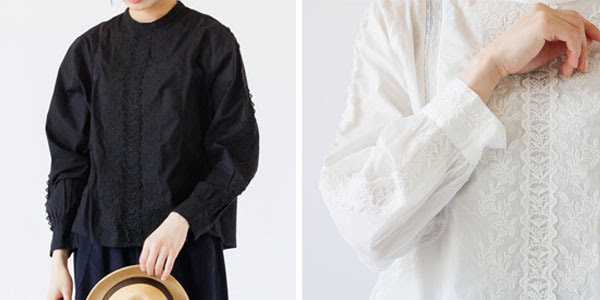
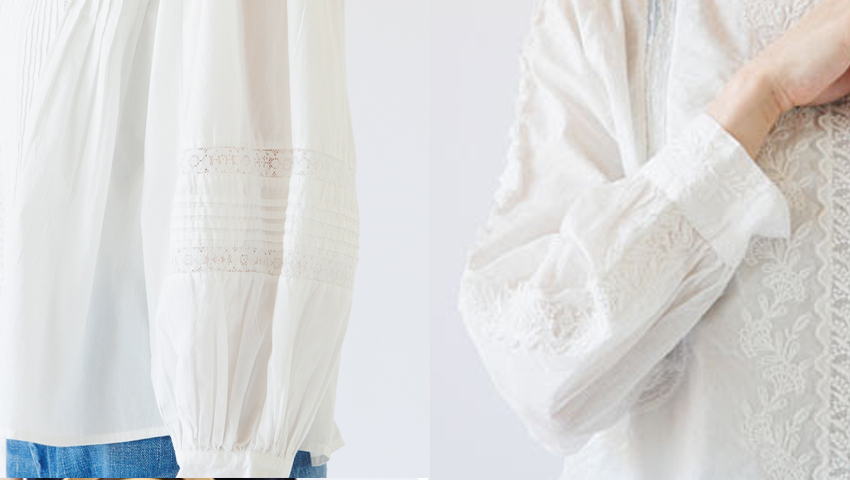
The fluctuations born from human hands, and their appeal
Before you make your purchase, we'd like to share a little about the background of the craftsmanship that a product alone can't fully convey.
At ZUTTO, we introduce items that you'll want to use with care for a long time. In an age where uniform, tidy manufacturing has become the norm, we believe that the slight fluctuations and individuality unique to handwork are just as much a part of an item's charm as flawless, tidy beauty.
We hope to deliver our products along with this background and these values.
The irregularities found in tableware and fabrics are not flaws, but a warm expression born from the involvement of human hands. Including such differences and their background, we introduce items that you'll want to keep using with affection.
The Leavers lace blouses we introduce incorporate many details with a crafted feel and delicate designs unique to handwork. Most of them are produced at factories in India.
In order to introduce this valuable craftsmanship in Japan, Fanaka has spent many years dealing directly with local factories, building an equal and good relationship with them.
While much of the warm fabric and embroidery is carefully made by hand by artisans, handcrafted products are not uniform. In Japan, where consistently stable quality is common, such items can sometimes feel like defects. However, these very irregularities offer a glimpse into differences in country, culture, and values, and are one of the charms unique to handwork.
We hope you'll read about the characteristics of these products, which are packed with techniques that don't lend themselves easily to mass production.
Leavers Lace
Lace passed down through time, made by both machine and hand.
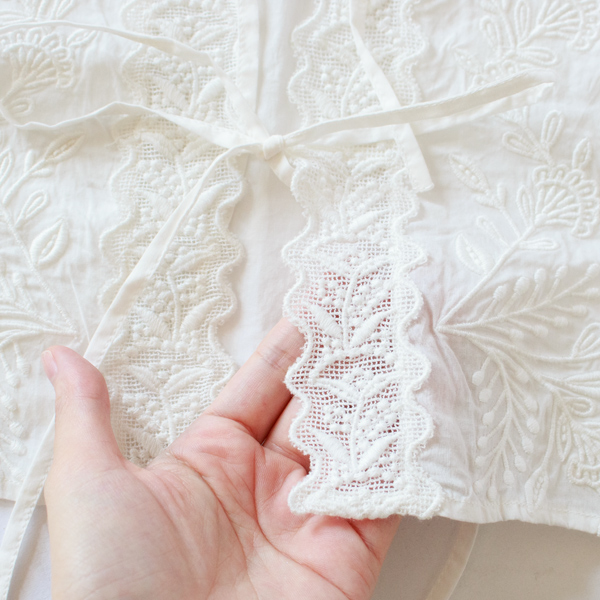
Leavers lace originated in Nottingham, England in the 1800s, and was later brought to India. These blouses are made using vintage Leavers lace machines that are over 100 years old. Even if you're not familiar with lace, it's the kind of delicate, beautiful lace that draws you in and makes you want to gaze at it.
Today, this machine is an extremely rare piece of equipment, remaining at only one factory in all of India.In place of lubricating oil, a material similar to pencil lead is used, and the irreplaceable machine is carefully adjusted and kept running. Oil stains that occur during this process are removed in later steps, butthe lace may still show a faint darkening in places. Occasionally, threads may also come loose—please understand that this is due to the fact that this machine is 100 years old.
Indian Cotton
A soft fabric expression, as if filled with air
Indian cotton is a material whose charm lies in its softness compared to ordinary cotton, and its gentle texture, as if filled with air.You can truly feel this when you hold it—in terms of skin, it brings to mind the soft skin of a child. The comfort of gauze may be similar as well. These products are made using traditional machines in a way that draws out this texture to the fullest, while still being delivered through modern manufacturing. Because of this,you may notice variations in thread thickness, unevenness in the weave, or partial weaving flaws.While this differs from a perfectly uniform finish, such fluctuations are one of the expressions born from manufacturing that makes the most of the material's natural texture.
Garment Dyeing
Craftsmanship conveyed even in a single piece
Garment dyeing is a method in which the dyeing takes place after the garment has already been sewn.
Dyeing each piece individually creates a soft texture and depth of color that differs from yarn-dyed fabric. Ordinary colored garments are often dyed at the fabric stage, with an emphasis on uniform color and finish. With garment dyeing, however, the deliberate choice to dye after completion means that each piece takes on a slightly different expression.
Because water and heat are applied during the dyeing process, the fabric can become softer or develop natural creases. Uneven coloring or gradation may also appear, but please understand these as expressions unique to garment dyeing.
These traces are not defects, but characteristics unique to this machine and manufacturing method. We hope you'll receive them not as a deviation from a uniform finish, but as a trace of the making process itself.
Fine Pintucks
Understated details that gently enhance the overall impression
A pintuck is a tuck sewn by pinching the fabric finely, like a pin. It gives blouses and shirts a sense of dimension and an elegant impression.
There are two types: machine-made and hand-sewn by artisans. Machine-made pintucks have a uniform, tidy finish, while hand-sewn ones are folded and stitched one at a time with care, soslight variations arise in their width and spacing. This fine unevenness creates a soft sense of shadow, adding depth even to simple outfits—this is the charm of pintucks. The subtle differences unique to handwork create a gentle, delicate expression.
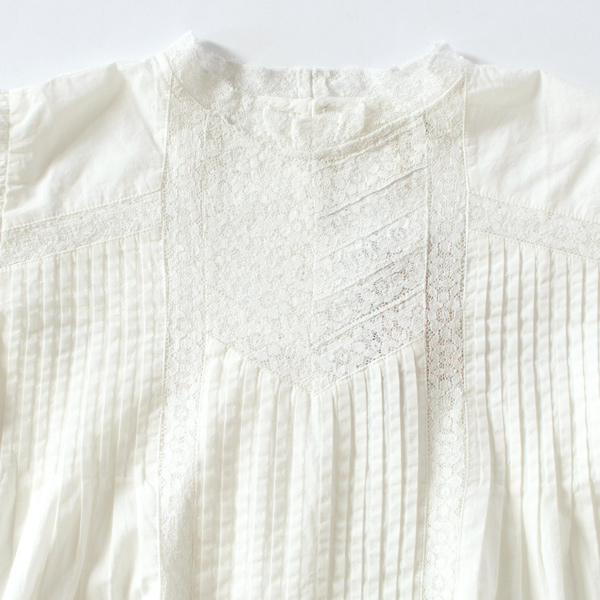
Lace is always the kind of presence that can gently bring out a woman's tender feelings. Its delicately woven pattern softly catches the light, lending an air of elegance even to the smallest gestures.
We hope you'll bring the charm of delicate lace into your everyday life with a Leavers lace blouse, and enjoy wearing it with thoughts of the handwork behind it. With the above in mind, we hope you'll welcome a piece of Leavers lace into your life.
GUIDE »
CONTENTS »
CATEGORIES »
- + Gifts by recipient
- + Gifts by scene
- + Clothing
- + Bags / Backpacks
- + Wallets / Card cases
- + Jewelry
- + Shoes
- + Rainy day outfits
- + Kitchen
- + Home
- + Babies / Kids
- + Japanese products
Earn Miles


Payment & Security