


.webp)


.webp)


.webp)


.webp)


Welcome to ZUTTO
Free shipping for newsletter subscribers (some areas excluded)
- トップページ/
- ZUTTO Journal/
- ブランドストーリー/
- Fabric Nurtured b...

Woven by Nature: Exploring the Charm of Banshu-ori
Banshu-ori is one of the traditional textiles handed down in the Kita-Harima area of Hyogo Prefecture.
It's said that its origins trace back to the Edo period, when
the weaving techniques of Nishijin in Kyoto were introduced to this region.
Thanks to a mild climate well-suited to cotton cultivation, and
an abundance of water from sources such as the Kako River,
Banshu-ori came to be widely produced as one of Hyogo Prefecture's representative textiles.
A defining feature of Banshu-ori is its use of the sakizome (yarn-dyeing)
method, in which the thread is dyed before being woven.
This sakizome process makes it possible to create textiles with intricate colors and patterns, and
also has the advantage of being resistant to fading.
Although it's a method that requires considerable time and effort to dye the thread,
the fact that each individual thread is dyed allows for rich coloring and
a distinctive texture—so much so that it's said 80% of Japan's yarn-dyed textiles
are now produced in the Banshu region.
The Charm of Banshu-ori, Woven into Clothing: hatsutoki's Craftsmanship
hatsutoki, a brand that creates clothing from Banshu-ori,
started with the desire to "unroll bolts of Banshu-ori fabric and pass on, just as it is, the excitement of touching it for the first time."
That was the thought behind the brand's beginning.
In a market flooded with homogenized clothing chasing after trends,
hatsutoki instead focuses on making products that convey to the wearer both the maker's intentions and
the appeal of Banshu-ori fabric, which feels wonderful against the skin.

The hatsutoki factory is located in Nishiwaki City, Hyogo Prefecture, not far from the Kako River.
The cotton-dyeing process requires soft water, and
the weaving process requires large amounts of water drawn from rivers and underground sources
to keep the temperature inside the mill constant, preventing the thread from breaking easily—
so the area is also blessed with the water resources essential to textile production.
In addition to beautiful water, the clear air and the mountain scenery surrounding the land
also serve as inspiration for hatsutoki's craftsmanship.
hatsutoki's textiles, designed with the idea of adapting traditional techniques and aesthetic sensibilities to fit modern times,
are, in this sense, also textiles nurtured by nature.

What hatsutoki works with is
fabric woven using an extremely fine 100-count single-ply thread.
A 100-count thread refers to an extremely fine thread
measuring about 0.09mm—finer than a strand of hair.
Producing such fine thread requires high-quality cotton with long fibers, so
hatsutoki uses carefully selected cotton.
Also, while sōshi (two-ply thread), made by twisting together
two strands of thread, is commonly used in clothing
and gives fabric firmness and body,
single-ply thread made from just one strand produces a more delicate, softer fabric.
Furthermore, the long fibers make the thread less prone to fuzzing,
resulting in a supple fabric with a sheen almost like silk.


hatsutoki products go through
the basic manufacturing process of dyeing → shaping and sizing (applying starch) → warp threading and pattern-setting → weaving → finishing
(with additional detailed steps involved along the way),
and since each step is handled by a different specialist, a single product passes through many hands before it's completed.


The dyeing process, done first, must be carried out without putting stress on the fine thread,
and must be applied evenly without unevenness.
It's said that in Nishiwaki City, where the hatsutoki factory is located,
only a single workshop is capable of performing this technique.
In the later stages, such as sizing and weaving as well,
the work must be done with the utmost care
to prevent the thread from snapping at the slightest jolt,
requiring highly precise skill and know-how.
It's through this truly dizzying array of long processes that
the melt-in-your-hands, wonderfully comfortable
texture of hatsutoki's fabric comes to be.
Banshu-ori Stoles That Echo the Original Bolt of Cloth
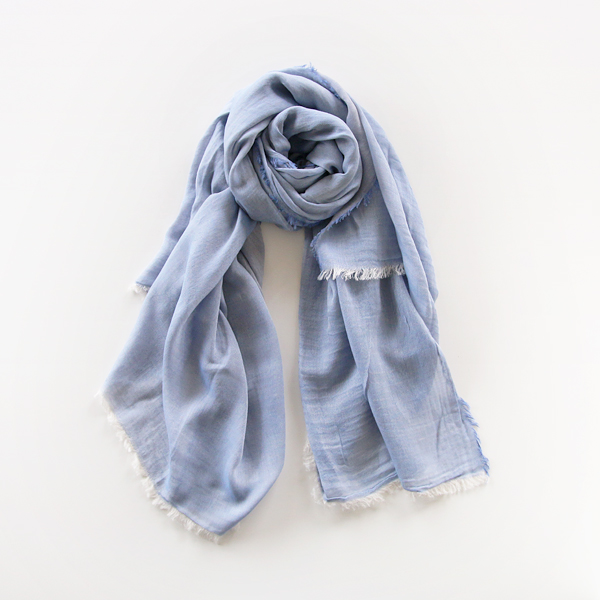
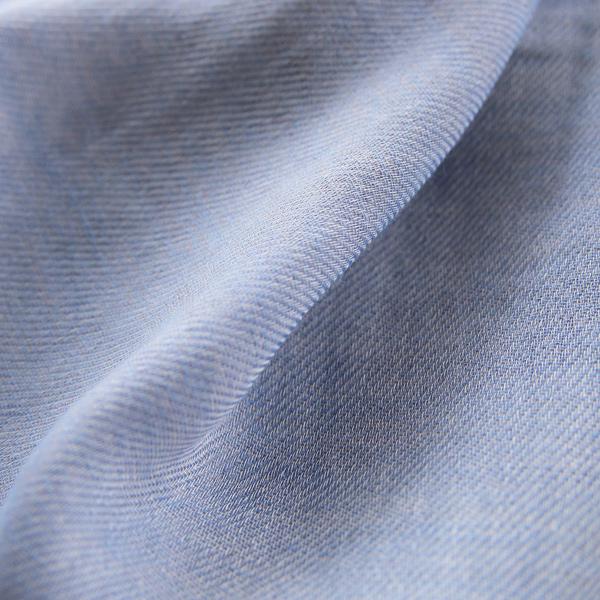
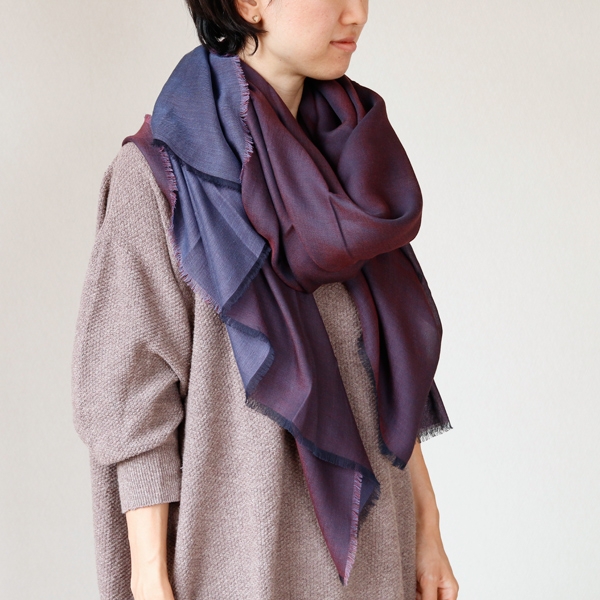
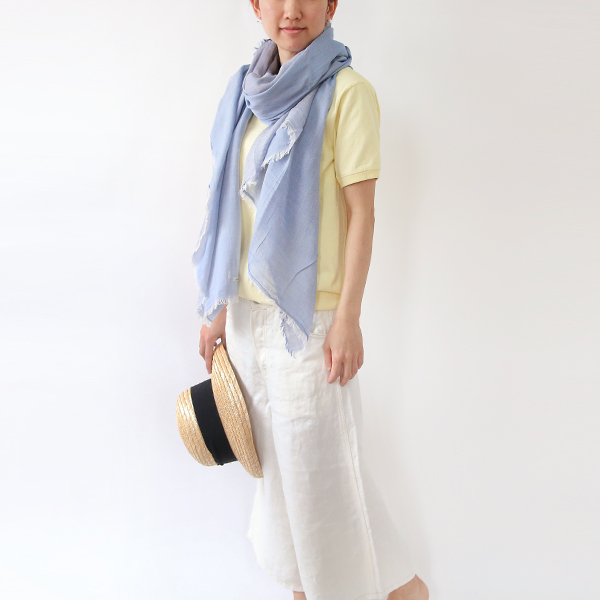
The stoles truly showcase hatsutoki's signature
fineness of thread and delicate weaving technique.
The double-face stole, which lets you enjoy a slight color difference between the front and back, is made
using the aforementioned 100-count single-ply thread.
Woven using a gauze-like method that creates layers of air, it's fluffy and soft,
its fine mesh gently wrapping around the body.
Because the way a stole is woven is so easy to see at a glance,
it offers a clear look at the artisan's meticulous skill.
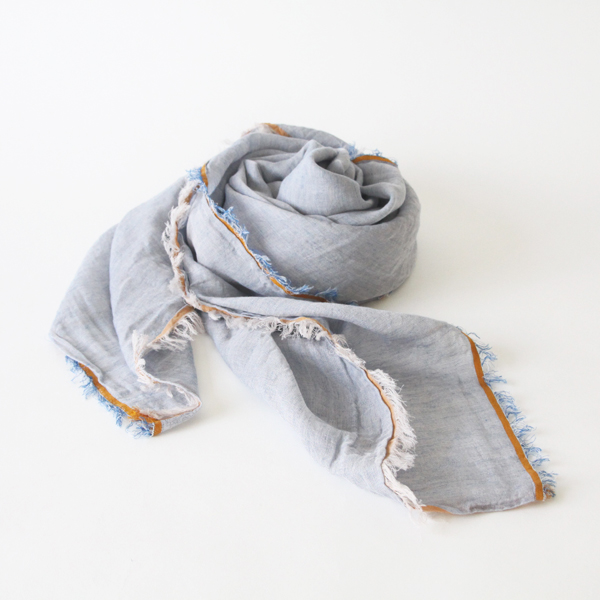

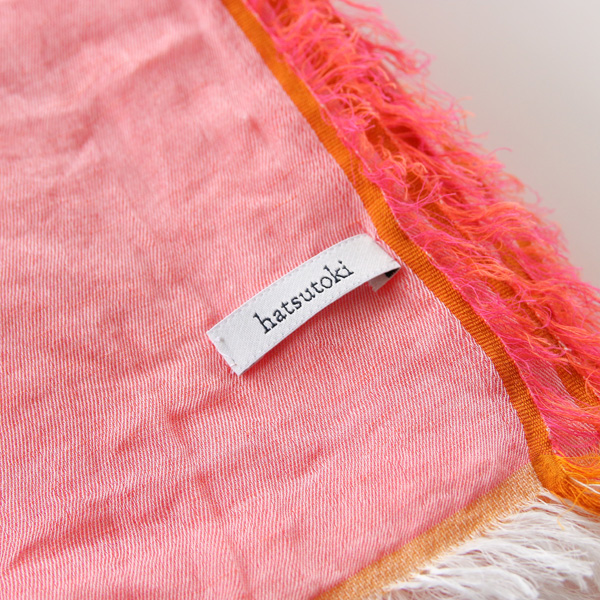
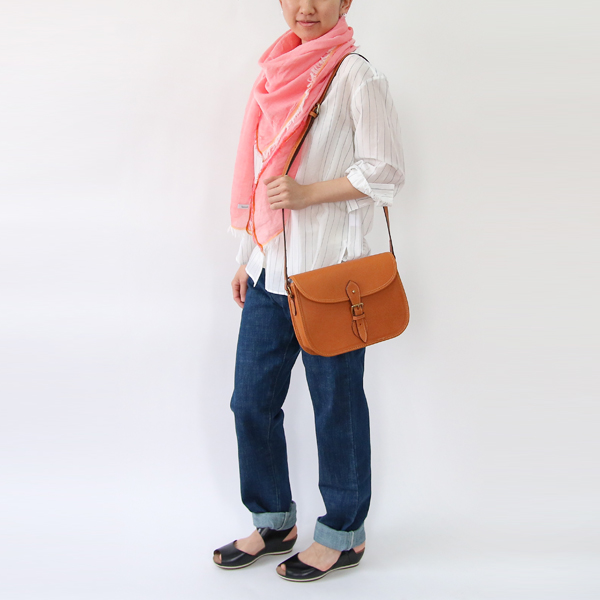
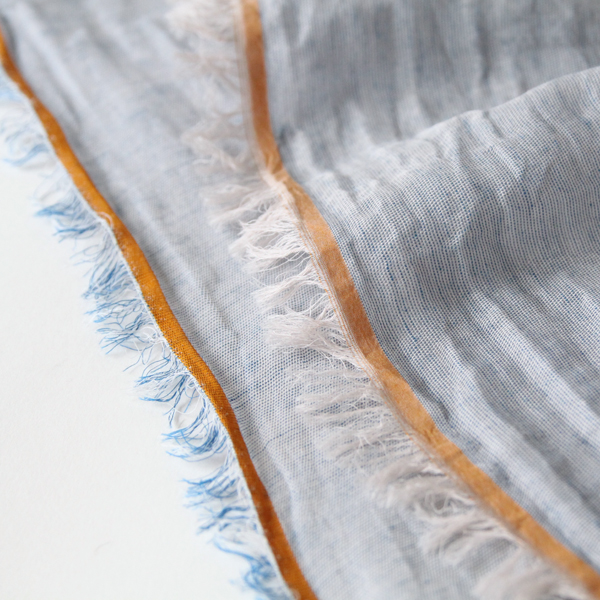
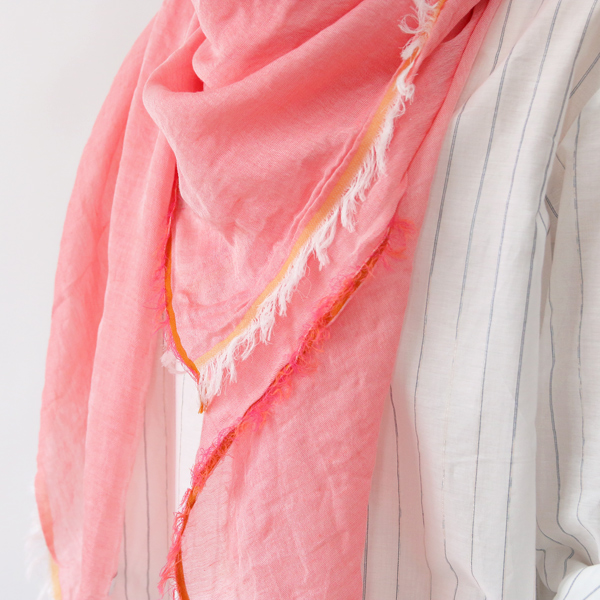
The cotton-linen stole combines cotton with a touch of linen, resulting in
a piece finished with an even lighter feel.
At first glance it looks like a solid color, but if you look closely,
you'll notice white threads peeking through the pink, or varying shades within the blue—
revealing how threads of many different colors are layered together.
The combination of threads in different hues creates a greater sense of depth, and
the fringe at the edges along with an orange line lend the piece a casual finish.
With Banshu-ori, Even a Shirt Gains Rich Expression
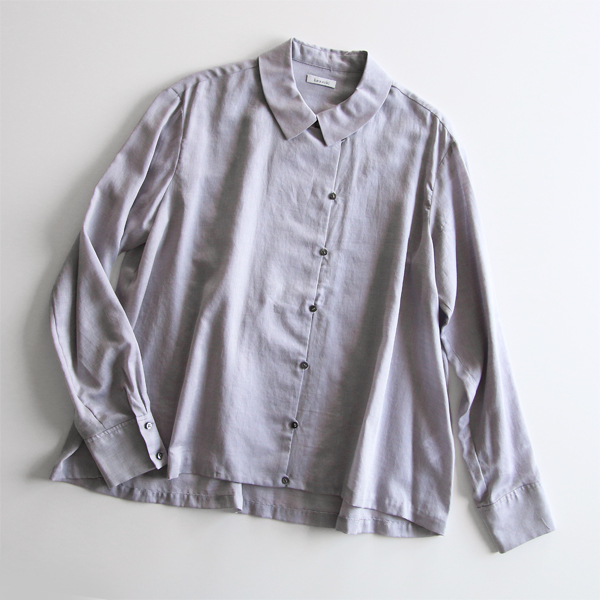
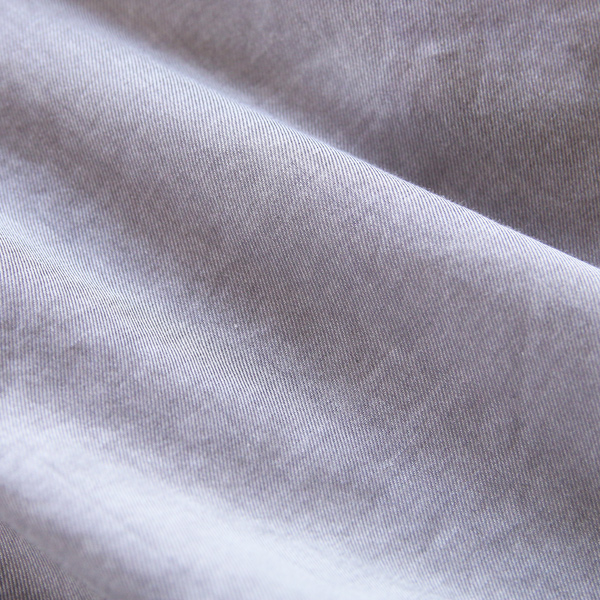
The twill shirt blouse, where fine threads trace beautiful shadows.
Its design, with buttons placed slightly off-center,
makes for a captivating piece reminiscent of traditional folk costume.
こちらも100番手単糸が使われており、
This one also uses 100-count single-ply thread,a lightweight twill weave fabric on both the front and back.
It's as light as silk, with a smooth, breezy feel against the skin.
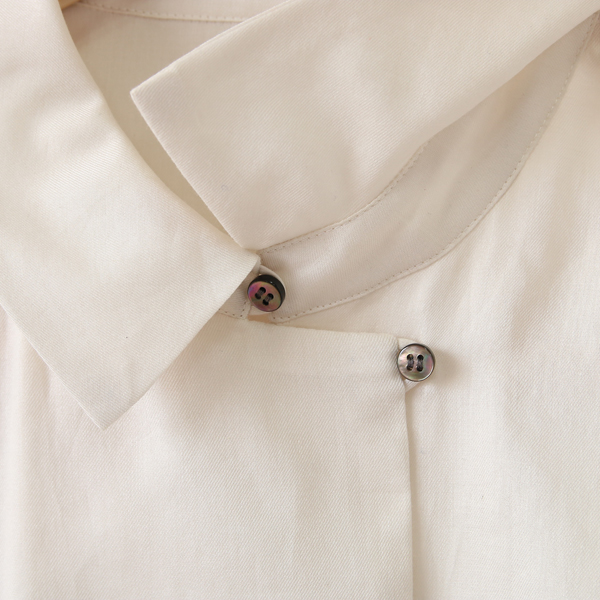
The front panels are designed to overlap one another,
with small buttons attached.
Although the design is quite distinctive,
the refined feel comes from the fine threads
that are carefully woven into the fabric.
The cotton used as the material
is the finest quality Egyptian cotton.
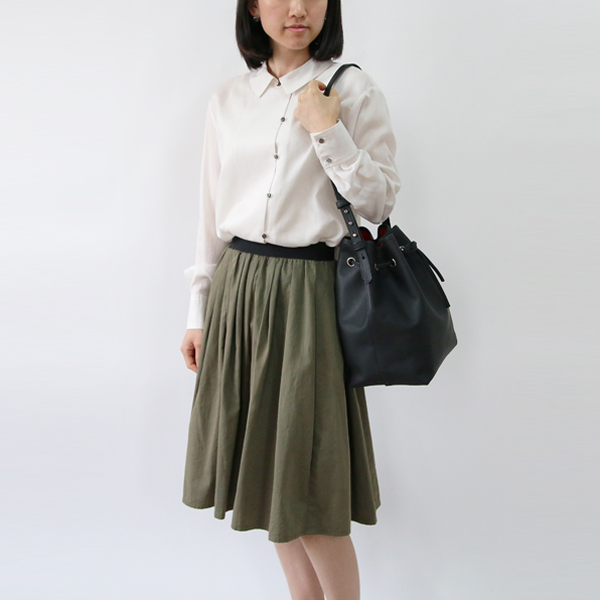
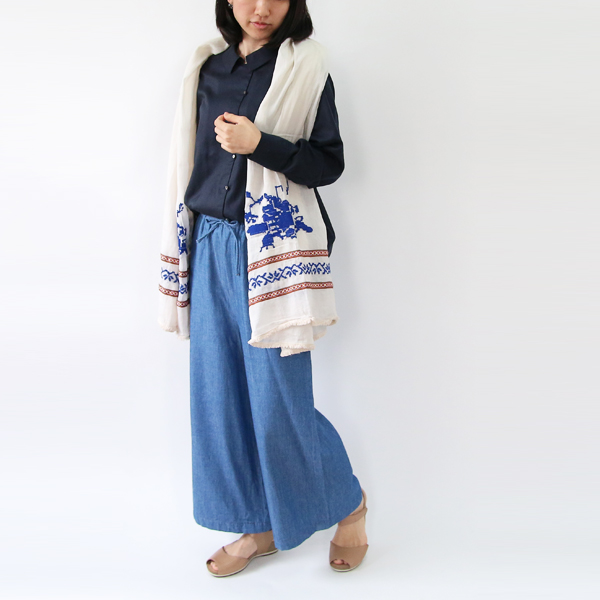
Button it all the way up to the collar and pair it with tidy bottoms
for a neat, clean impression.
The rounded collar brings out a feminine touch.
Also, thanks to its basic coloring, it's easy to pair with accessories like stoles,
which is a happy bonus.
We recommend it as a piece with a twist, to add alongside your usual blouses.
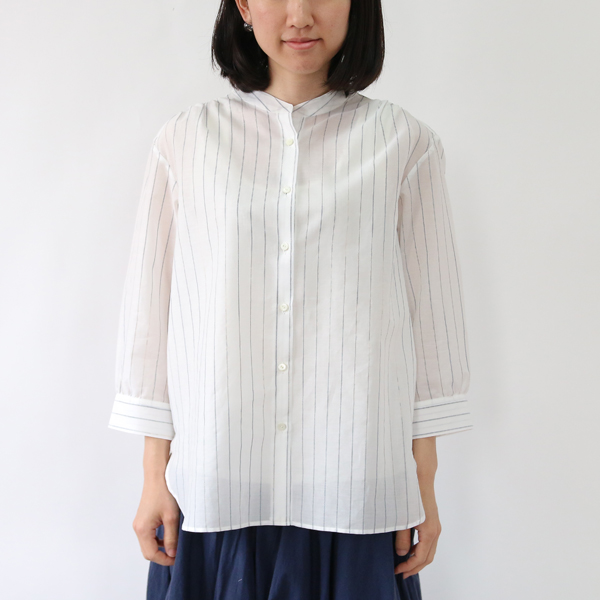
This is a kasuri (ikat-patterned) stripe shirt made using a yarn-dyeing method called itajime kasuri (board-clamp resist dyeing).
Itajime kasuri, a technique that has become quite rare these days, involves winding thread around boards
and dyeing it, a method said to allow for the creation of delicate patterns.
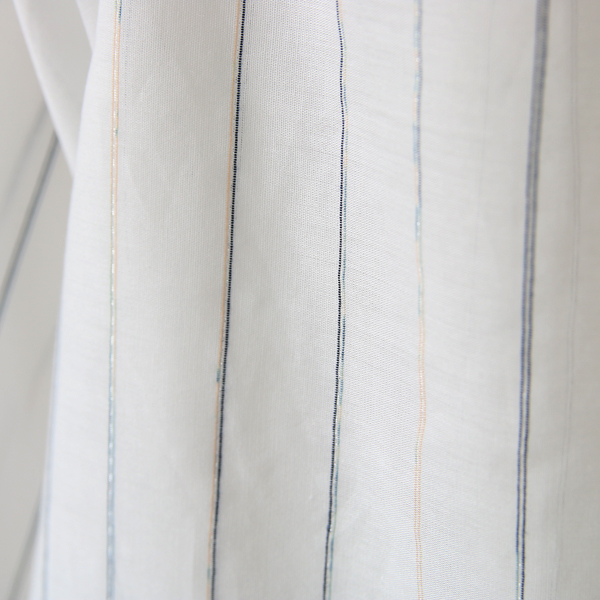
In the kasuri stripe shirt, the indigo-colored threads are dyed using the itajime kasuri method,
and fine metallic (lamé) threads are woven in as well, giving the shirt a rich, expressive character.
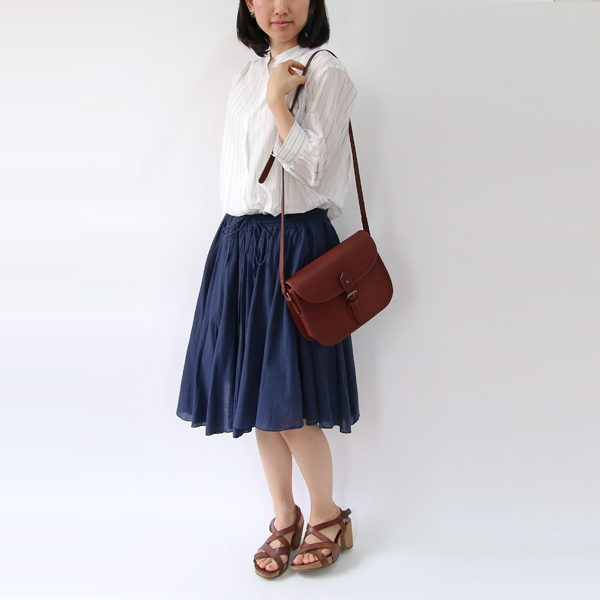
Like an everyday white shirt, the kasuri stripe shirt
blends naturally with any bottoms.
The lamé thread isn't very noticeable from a distance, but combined with the indigo thread,
it creates a bright, lively expression.
This is a piece where traditional weaving techniques and contemporary design come together beautifully.
Points to keep in mind that are unique to banshu-ori (Banshu weaving)
hatsutoki is a delicate material where texture and feel are prioritized.
If excessive force is applied, the seams may come apart or the threads may break, so please
keep the following points in mind.
- When wearing, please be careful not to catch the fabric on accessories, wristwatches, nails,
or other sharp objects.
- When placing the item in a bag, please check that there are no metal fittings or other
sharp objects inside the bag.
For hatsutoki products, hand washing is generally recommended.
*If the care label indicates dry cleaning only, please do not wash the item with water.
1. Use a detergent made for wool or silk, and gently press-wash the item in water to lukewarm water.
2. After washing, gently press out excess water with your hands or a towel to remove moisture.
3. Drying the item while it still retains plenty of moisture
helps achieve a natural texture. Gently smooth out any wrinkles by hand, and
dry it in the shade in a well-ventilated area.
4. If ironing, use a low to medium heat setting as a guide,
and press gently.
We also recommend wearing the item without ironing, to enjoy its natural texture as is.

GUIDE »
CONTENTS »
CATEGORIES »
- + Gifts by recipient
- + Gifts by scene
- + Clothing
- + Bags / Backpacks
- + Wallets / Card cases
- + Jewelry
- + Shoes
- + Rainy day outfits
- + Kitchen
- + Home
- + Babies / Kids
- + Japanese products
Earn Miles


Payment & Security




