.webp)


.webp)


.webp)


.webp)


Welcome to ZUTTO
Free shipping for newsletter subscribers (some areas excluded)
- トップページ/
- ZUTTO Journal/
- ブランドストーリー/
- Banshu-ori (Bansh...

The depth that banshu-ori (Banshu weaving) can express. A rain-dobby patterned skirt and a double-face dress
Strong sunlight, lush green foliage, a shimmering water surface, and a breeze that occasionally passes through. As the temperature climbs steadily, this is a season when you can't help but feel the rising energy of the year, a time when nature makes its presence strongly felt. This time, we'd like to introduce original wear made from the richly natural fabric of banshu-ori, born from a collaboration between hatsutoki, a banshu-ori brand based in Nishiwaki City, Hyogo Prefecture, and ZUTTO. Please feel the story woven into each piece, made from fabric that hatsutoki has crafted with great care.
Softly, softly, softly... A rain-dobby pattern that evokes the coolness of summer


Softly, softly, softly. Watching the way these threads line up brings to mind the sight of rain quietly falling. This time, ZUTTO chose a rain-dobby pattern for the textile of an original skirt. It's an evocative design that captures scenes from everyday life, like a painting.
Dobby refers to a weaving technique that allows for the repetition of fine woven patterns, and it's one of the techniques hatsutoki is most skilled at within banshu-ori weaving. The delicate stripe pattern applied to the warp threads is expressed through cut-dobby work that resembles raindrops. While banshu-ori textiles are typically characterized by their yarn-dyeing method, this piece uses threads that resist dyeing for the stripe pattern, and adopts a piece-dyeing method afterward so that dye doesn't penetrate this pattern, allowing it to remain visible as a design. This original skirt was made with a custom color on high-density cotton fabric.

With a modest amount of gathering, the silhouette avoids excessive volume. On a model who is 158cm tall, the length reveals the ankles. Long summer skirts are cool and easy to pair with sandals and T-shirts, so they may well appear frequently in your coordinates. While there are countless long skirts out there, if they're all cute pleats or voluminous designs, the silhouette becomes one-note. This skirt has a relaxed, straight-falling silhouette that doesn't feel too formal, paired with a raindrop-like dobby pattern. The colors, KAHKI and NAVY, are chic yet seasonless, making them easy to bring out again and again. You can enjoy them from spring through autumn.
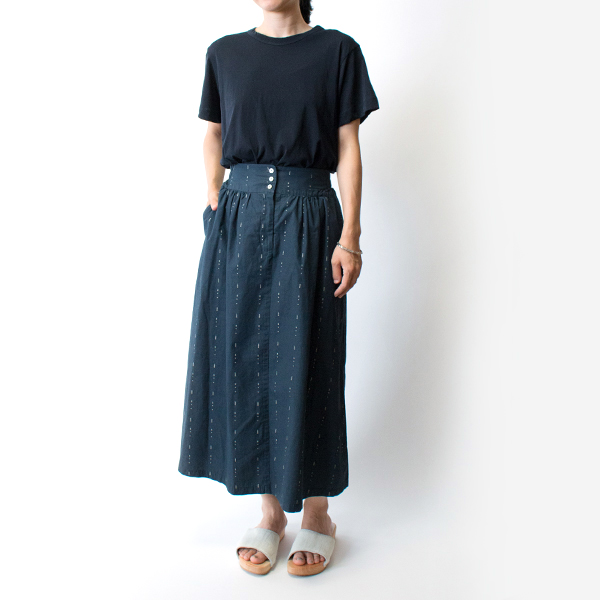
Model height 158cm Skirt: hatsutoki×ZUTTO Rain Dobby Skirt (NAVY), Cut-and-sew: Cosmorama Crew Neck T-Shirt (DARK NAVY), Clogs: Shower Sandals P.BLANC
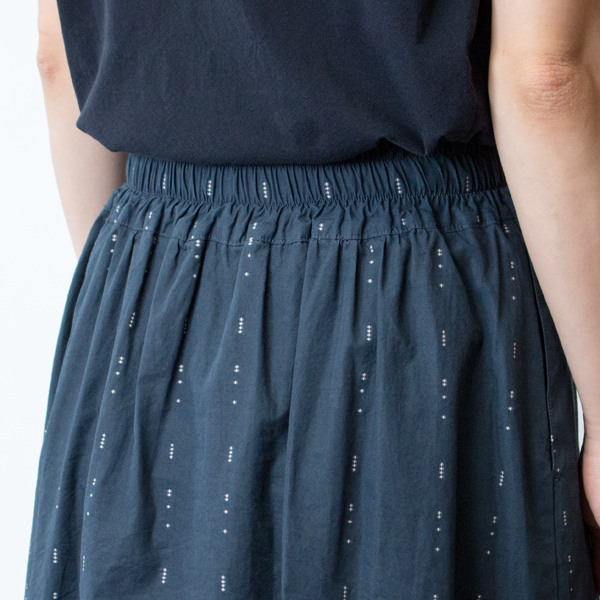
The back has an elasticated design
Small buttons are lined up along the front of the waist, adding a feminine touch. The back has an elasticated design, so it can be enjoyed by a wide range of people. The high-density woven fabric is crisp and comfortable against the skin, making it pleasant to wear even in summer.

Height 158cm Skirt: hatsutoki×ZUTTO Rain Dobby Skirt (KHAKI), T-shirt: Heavyweight T-Shirt (WHITE), Hat: HAT rana (NATURAL×BLACK), Sandals: Gurkha Sandals Black
A melting, deep sense of texture. The double-face shirt dress

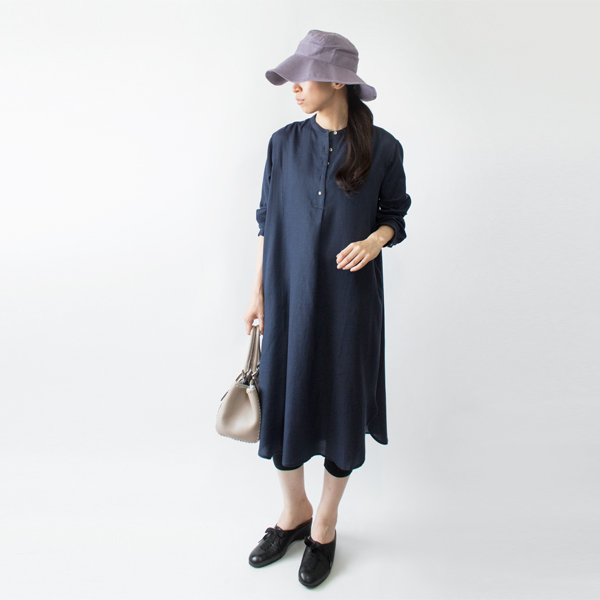
Height 166cm Dress: hatsutoki×ZUTTO Double-Face Dress (BEIGE×BLUE), Bag: Striped Raffia Bag (GREY/PURPLE), Clogs: Clogs ANTIQUE
Double-face. This is a fabric that's as light as air, soft and comfortable. We used hatsutoki's double-face fabric, which is smooth with a subtle sheen and feels as pleasant to the touch as gauze, to create this luxurious shirt dress.

Height 158cm Dress: hatsutoki×ZUTTO Double-Face Dress (GREY×NAVY), Bag: [Custom Order] Rattan×Leather Bag (S) BEIGE, Sandals: Cross-Strap Espadrille Mules BLACK
The original hatsutoki×ZUTTO double-face dress catches a beautiful sheen depending on the viewing angle. It has a smooth touch that hardly feels like cotton at all, and the fluid, softly draping fabric gives it a luxurious feel when worn on the body. Woven using a technique that creates airy layers, like gauze, the fabric has a melting softness.
Height 166cm Dress: hatsutoki×ZUTTO Double-Face Dress (NAVY×GREY), Bag: [Custom Order] Rattan×Leather Bag (S) BEIGE, Sandals: MUKAVA Inner Wedge Sole Sandals BL, Hat: [Custom Order] Rouge Linen Hat Bruyère
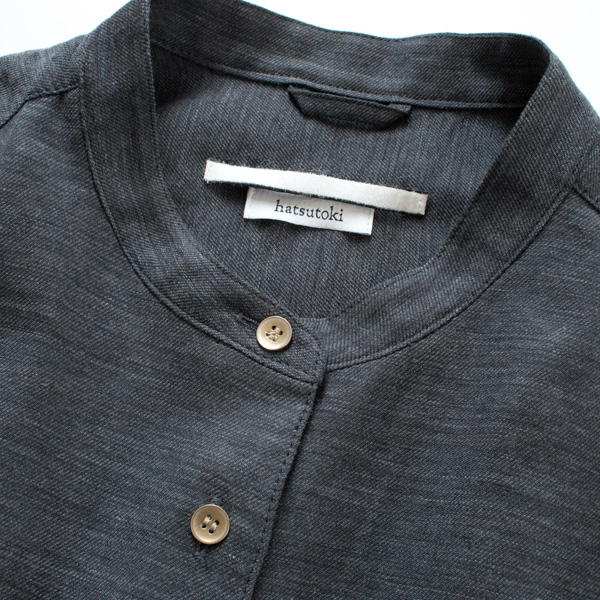
GREY×NAVY
This special dress, filled with ideas from its production region, develops more character the more you wear it. Made from a single piece of fabric, the two-toned design—with different colors on the front and back—adds a subtle sense of flair to any outfit. The raw material is top-grade Egyptian cotton. This textile was woven by skilled artisans in the banshu-ori production region of Hyogo Prefecture. The extremely fine weave doesn't stress the skin, making it smooth and pleasant to wear.
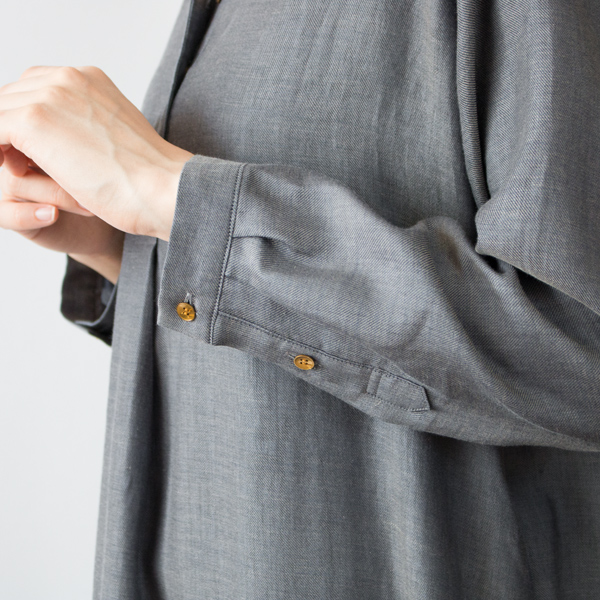
BEIGE×BLUE
The gentle-toned fabric is accented with metallic buttons made of a contrasting material. Here too, the gathering that might otherwise feel too sweet is kept modest, giving a clean impression. The pockets on both sides are a welcome touch, making this a piece you'll want to wear in all kinds of settings.
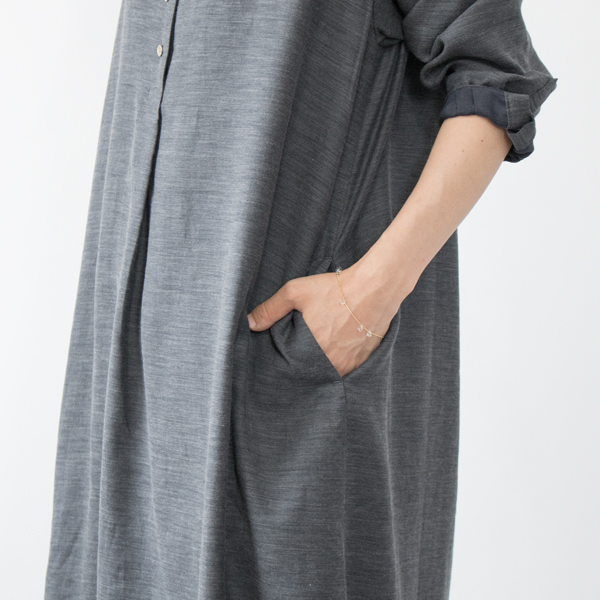
BEIGE×BLUE
The colors are NAVY×GREY, GREY×NAVY, and BEIGE×BLUE, three in total. NAVY×GREY and GREY×NAVY are colors unique to Banshu-ori (Banshu weaving), letting you enjoy an elegant interplay of grey and navy shading.
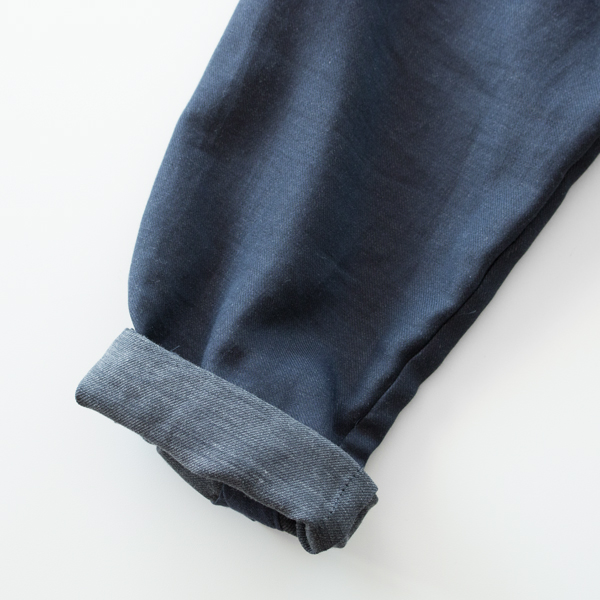
NAVY×GREY
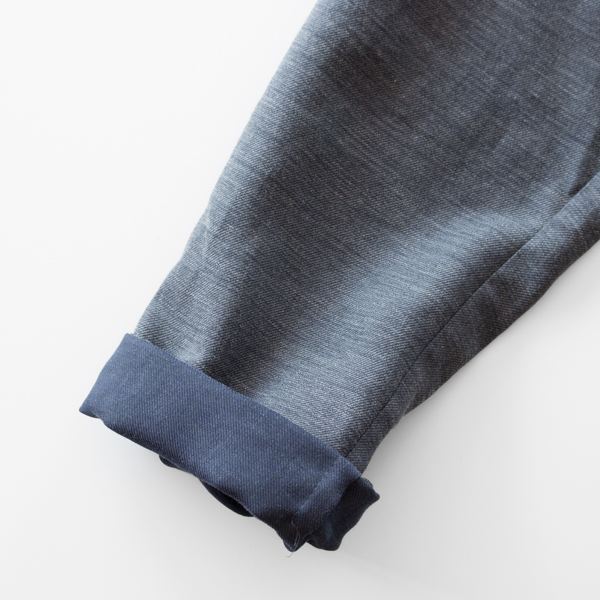
GREY×NAVY
This is a one-piece dress that lets you enjoy the colors of its double-face fabric each time you roll up the sleeves or the hem flutters. The layered coloring unique to sakizome (yarn-dyed) weaving, combined with a double-weave construction using fine-count yarn that seems to trap air within the delicate fabric, adds a gentle color to your outfit.

BEIGE×BLUE
At first glance, the outer fabric of BEIGE×BLUE appears to be light grey, but if you look closely, you can see that beige and blue threads are finely woven together. The lining is a refreshing blue.
【Column】What is double-face fabric?
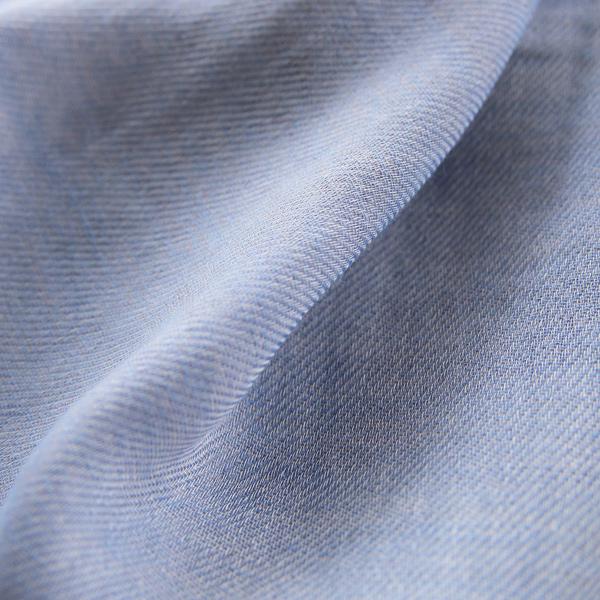
The double-face fabric is also used in the double-face stole that ZUTTO carries. Airy and light, yet forming beautiful drapes, this fabric has surprised many people. It is the most difficult material to work with, one that has faced repeated failures and has come close to being discontinued time and again, yet hatsutoki, the brand that created this fabric, has kept challenging themselves with it—so much so that they call it a "bewitching fabric." Because the extremely fine, delicate cotton yarn is woven sweetly and lightly like gauze, even minor variations in the weaving or finishing processes can cause the threads to break or become damaged. Sewing it was also extremely difficult. It started out with only a handful of items being carried, but the texture and feel of the fabric surprised and captivated everyone who touched it. Since then, it has become, both in name and in substance, a signature material of hatsutoki.
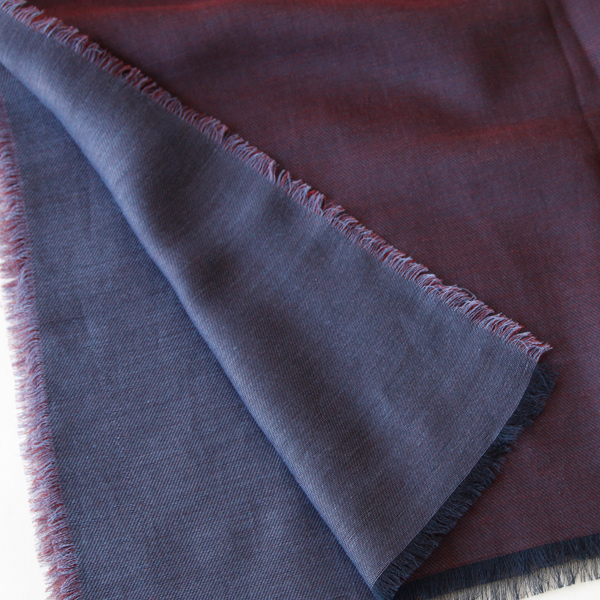
Double-Face Stole PURPLE
This double-face fabric, pursued in the search for softness, is woven with a double-layer structure. By creating an upper and lower layer within a single piece of fabric, a layer of air forms in between, resulting in a soft, fluffy finish. Normally, this kind of double-layer structure is made using thicker yarn and is often used for products like children's clothing or handkerchiefs where softness is desired. Here, yarn two to three times finer and more delicate than usual is used, creating a light, airy feel against the skin.

hatsutoki's fabrics are made using the "sakizome" (yarn-dyeing) technique, which is the defining characteristic of Banshu-ori. We will introduce this sakizome technique in more detail later, but the coloring expressed through the layering of extremely fine, colored cotton threads has a delicate and truly elegant quality. The inspiration for this rich, layered coloring comes from memories of the changing seasonal scenery of nature-rich Nishiwaki, and the design is drawn from that source. The colors of nature, the evening sky, a misty morning, the colors of the mountains through spring, summer, autumn, and winter—all of these are made up of complex, intermingling colors. It is said that the brand draws inspiration from these everyday scenes to expand their ideas for combinations of yarn and color in their materials.

Woven fabrics from hatsutoki, capturing the rich scenery of nature

hatsutoki's factory is located in Nishiwaki City, Hyogo Prefecture, not far from Kakogawa. It is a place blessed with the water resources essential to textile production, used in processes such as cotton dyeing and weaving. In addition to the beautiful water, the clear air and the surrounding mountain scenery also provide inspiration for hatsutoki's craftsmanship. Clouds form from the mountains, turn into rain, and flow as rivers, and it is with that water that the threads are dyed. It feels almost as if the cycle of the fabric overlaps with the natural cycle itself, as though the cloth is born from the land itself. The brand seems to naturally give rise to fabrics that are nostalgic, delicate, rustic, and beautiful, as if you can sense the scent of the land itself—and in doing so, it adapts the traditional culture of Banshu-ori to suit modern times, so that this heritage is not lost.

Banshu-ori refers to a lightweight, cotton-based woven textile with over 200 years of history, produced in the Kita-Harima region of Hyogo Prefecture. It is characterized by the "sakizome" method, in which the yarn is dyed before weaving, and the region accounts for 80% of Japan's share of yarn-dyed textile production. Textile-producing regions are often blessed with abundant water from large rivers. This abundant water gives rise to the beautiful coloring of the textiles, drawing out shades of color that can only be achieved in that particular place.
About Sakizome (Yarn-Dyeing)

Yarn before and after sakizome dyeing

The dyeing vat
Sakizome refers to the technique of dyeing the yarn before it is woven. Normally, a textile is formed by the interlacing of warp threads (running lengthwise) and weft threads (running crosswise). Depending on the specification, anywhere from 3,000 to 6,000 warp threads are arranged lengthwise, and the fabric is formed by passing weft threads through the gaps between them. When different colors are used for the warp and weft after dyeing the yarn beforehand, the two colors blend together, creating a rich, layered expression of color—often referred to as "tamamushi" (jewel-beetle) or "chambray" coloring. The fabric of the hatsutoki×ZUTTO double-face dress also displays this expression, unique to the sakizome method. The advantages of sakizome include the fact that, since the dyeing is done while the material is still in yarn form, the dye adheres more firmly and is less prone to fading, and that layering colored threads allows for a rich, layered expression of color.

In contrast to this, ato-zome (post-dyeing) fabric refers to a technique in which the fabric is dyed after it has already been woven. Typical examples of ato-zome include dyeing cloth that was woven with white thread, either as a bolt of fabric or after it has been sewn into the shape of a garment. Printing onto white fabric is also a type of ato-zome. Compared with dyeing thread before weaving, more care must be taken to ensure the dye sets properly. This time's Ame (Rain) dobby skirt uses this ato-zome method: using fabric woven from threads that won't take dye, the dobby pattern is expressed through post-dyeing.
These are the woven fabrics of hatsutoki, created in this way in a place blessed with abundant nature. This ZUTTO collaboration wear, which carries a sense of Japan's four seasons on top of Banshu-ori (Banshu weaving)—a textile that has long taken root in this land and been cherished—is sure to become a piece you'll want to treasure and wear for a long time.
▽The tops born from the collaboration with ao (アオ) can be found here
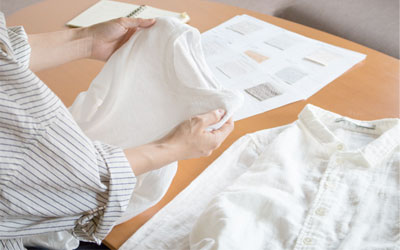
Original gauze wear with a gentle, comfortable feel, created together with ao, the gauze specialists
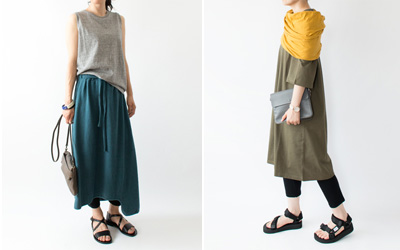
▽Other original ZUTTO wear can be found here
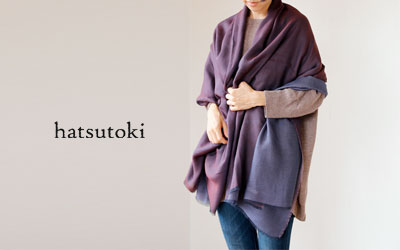
▽The hatsutoki (ハツトキ) brand page can be found here
GUIDE »
CATEGORIES »
- + Gifts by recipient
- + Gifts by scene
- + Clothing
- + Bags / Backpacks
- + Wallets / Card cases
- + Jewelry
- + Shoes
- + Rainy day outfits
- + Kitchen
- + Home
- + Babies / Kids
- + Japanese products
Earn Miles


Payment & Security