


.webp)


.webp)


.webp)


.webp)


Welcome to ZUTTO
Free shipping for newsletter subscribers (some areas excluded)
- トップページ/
- ZUTTO Journal/
- ブランドストーリー/
- The Reason to Cho...

Why we choose gauze pajamas for a comfortable night's sleep.
Why not take a fresh look at your pajamas?

It's often said that sleep takes up a third of our lives, and turning that large portion of our lives into "good sleep" is closely tied to our everyday habits. Compared to other countries, Japanese people tend to get less sleep, and as life has become more convenient—with smartphones, convenience stores, and the like—more and more people find themselves troubled by some kind of sleep issue. What's more, as people age, their sleep tends to become lighter, and many find themselves waking at the slightest sound, struggling as a result. Concerns about sleep really are endless.
There are many items that can lead to "good sleep" and enrich our daily lives—mattresses, pillows, scents, and so on—but what we'd like to focus on here is "pajamas." What kind of pajamas do you usually wear? Pajamas and sleep are deeply connected, because letting the body and brain rest in a relaxed state is what leads to good sleep.
When choosing pajamas, the points to keep in mind are "texture" and "size."
Texture:
It's best to choose something with a pleasant feel against the skin. Since it's something you wear every day, it's important that it feels good the moment you slip your arms through the sleeves. In terms of material, natural fibers that don't generate static electricity, such as cotton, silk, and linen, fit the bill. Among cotton fabrics, gauze—gentle enough to be used even on a baby's skin—is especially recommended.
Also, since people sweat about a cupful during sleep, a highly absorbent material is essential. When pajamas absorb moisture, they help regulate the humidity inside the futon, so sleep isn't affected.
Size:
It's important that the pajamas don't constrict the body, so a relatively loose fit is better than something snug. Since blood pressure tends to drop during sleep, any tight-fitting areas can restrict circulation and cause swelling, so care is needed.

Gauze Round Neck Dress, Gauze Lounge Pants
If you're after comfort, cleanliness, and a texture that suits everyone, gauze

There's a lot to say about the merits of gauze, but above all, it feels wonderful against the skin and is safe even for people with sensitive skin, such as those with atopic conditions.
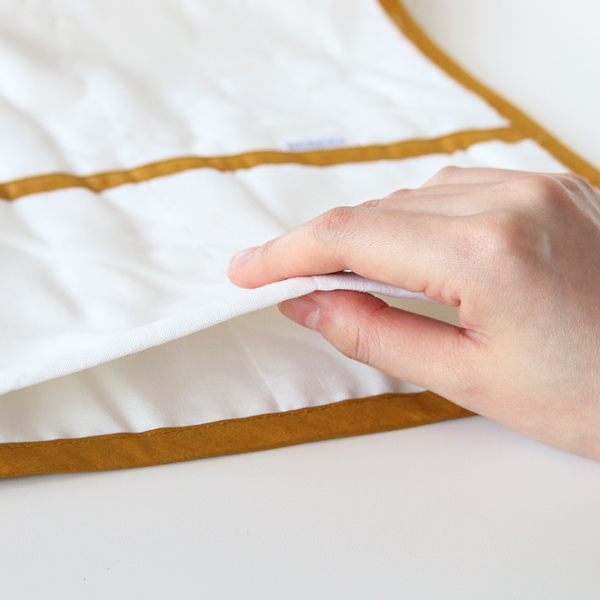
Because it holds air, it keeps you warm when it's cold, and when it's hot, it absorbs sweat to keep you feeling dry and comfortable, with good breathability that keeps you cool. Above all, it's known for drying quickly.
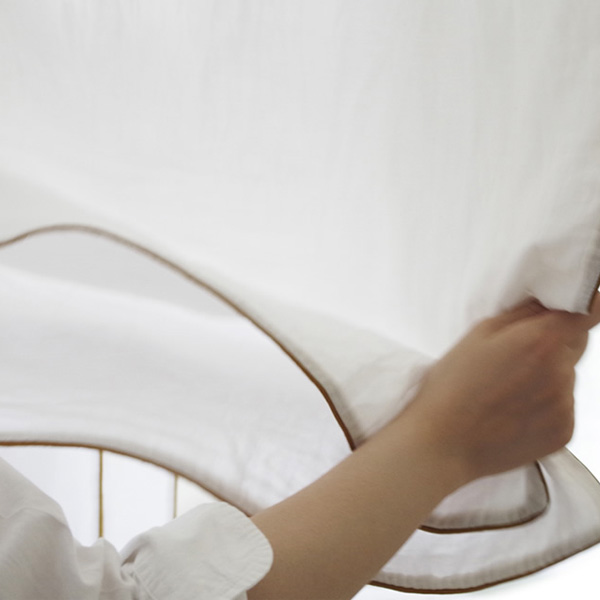
Kyo-wazarashi mensha gauze—you'll understand once you touch it
The Kyo-wazarashi mensha gauze we're introducing this time is soft from the very first wear, and becomes even fluffier with repeated washing. Its texture is a little different from ordinary gauze. What creates this uniquely luxurious feel comes down to two things: "wazarashi" (traditional Japanese bleaching) and the sewing process.
■Wazarashi: gauze made by taking dozens of times longer than usual

The process called "sarashi" (bleaching), carried out when making gauze, takes place after the cotton fabric has been spun. It removes the oils and impurities naturally present in raw cotton, along with the sizing agents added during spinning, and eliminates pigments and distinctive odors. This is done both to turn the spun cotton fabric into a textile product suitable for everyday use, and as a pretreatment to make dyeing easier.
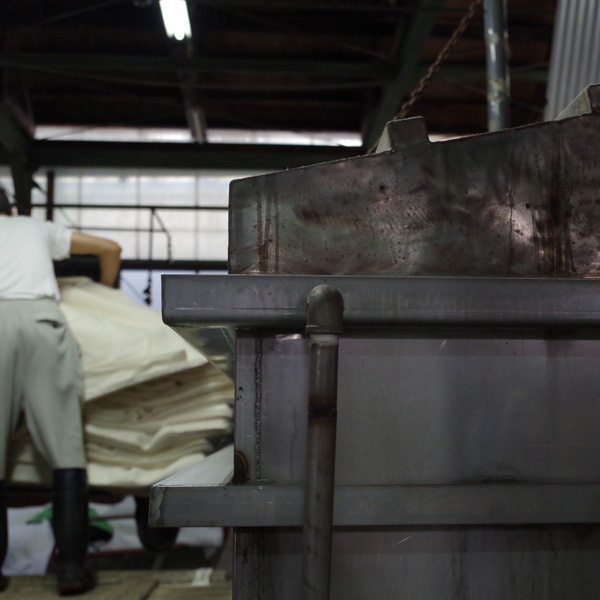
The typical bleaching process is carried out using equipment for automated scouring known as "yozarashi" (Western-style bleaching), and takes only about 40 to 80 minutes. It uses tension, heat, and chlorine-based bleach, placing stress on the fibers themselves as it processes them. Because it takes so little time, it's highly productive.
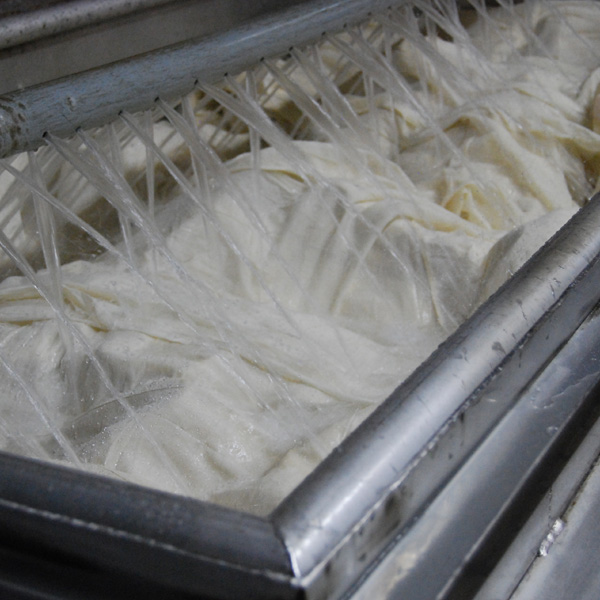
The "wazarashi" process used for the Kyo-wazarashi mensha we're introducing here, on the other hand, involves placing the woven raw cotton fabric into a large vessel called a wazarashi kettle, and treating it slowly and gently, without placing stress on the fibers, to remove impurities and odor. Compared to the standard method, which finishes in about an hour, wazarashi takes a full four days. Because so much time is taken, each individual fiber isn't crushed or deformed, so the gauze doesn't end up flat, but instead comes out plush and fluffy. It's also said that because the fibers aren't damaged, this gauze produces less lint compared to other gauze or cotton products. It truly is a luxurious gauze, made with a great deal of human care and time.
■The power of sewing that creates layers of air
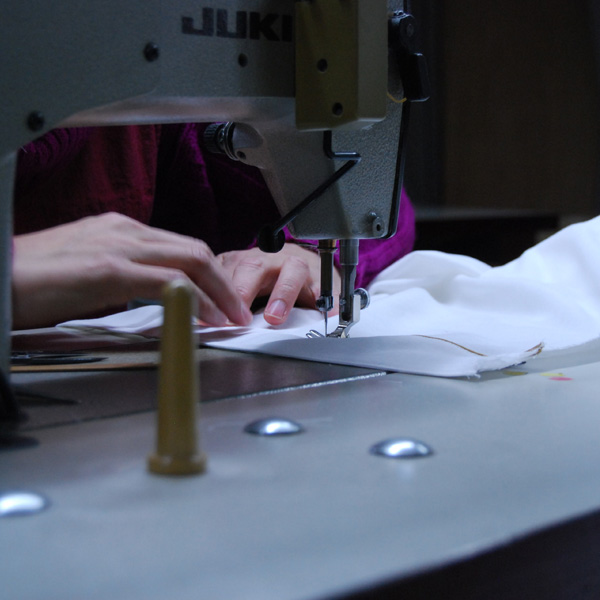
Beyond the bleaching process, Kyo-wazarashi mensha gauze is also distinctive in its sewing. This brand's gauze is made of multiple layers of thin gauze fabric stacked together, but unlike typically manufactured multi-layer gauze fabric, here a craftsperson layers the individual pieces of gauze fabric together into one, right at the sewing stage. Doing it this way lets air get in between each layer of gauze, creating a soft, fluffy feel to the fabric. Sewing together gauze that's extremely thin and soft sounds difficult even to an untrained mind, doesn't it? This is something made possible precisely because a craftsperson sews each piece by hand, rather than relying on mass production by machine.

Plant-dyed gauze pajamas have arrived
Sleep is essential for a healthy daily life. A new, one-rank-above pajama has arrived, with excellent texture, comfort, moisture absorption and release, and breathability, while also paying close attention to design.
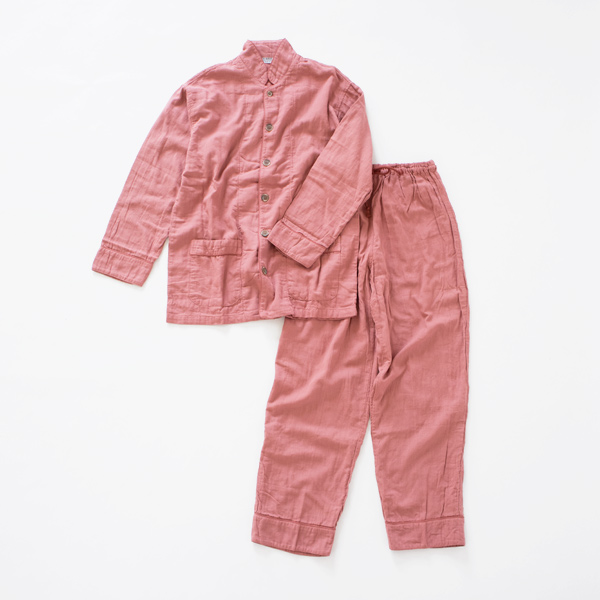
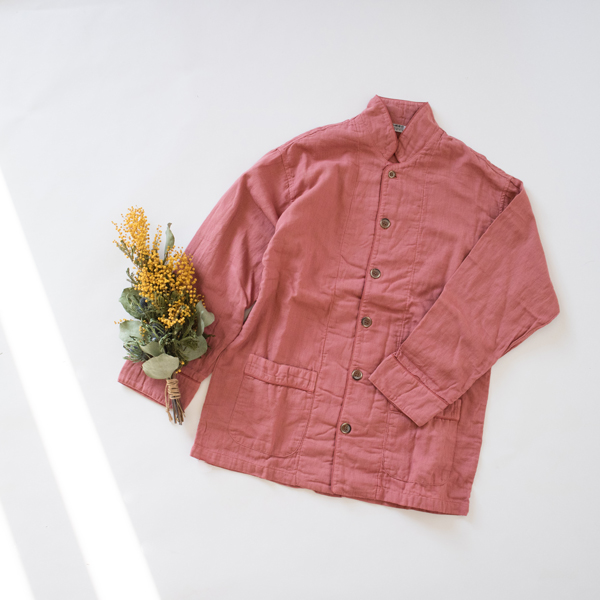
This is a lovely pajama that adults can wear, one that seems to encourage the gentle, mild mood of spring. Made by layering two sheets of gauze together, it's a piece you can wear through the long stretch from spring to autumn.
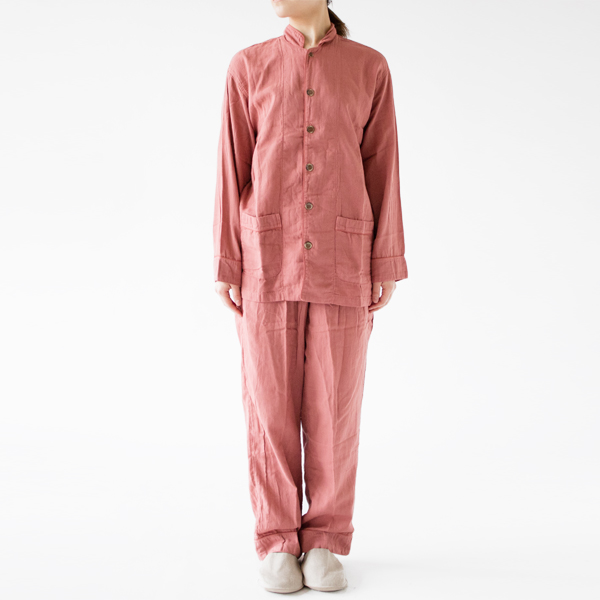
As mentioned earlier, the gauze pajamas made from Kyo-wazarashi mensha cotton absorb sweat well and let it evaporate, keeping you comfortable all year round. Many people say that, of course in midsummer, but also in winter, they wear something over the pajamas outside the futon, while inside the futon this double-gauze pajama alone is enough. Since it contains zero formaldehyde, it can also be chosen with peace of mind by those with sensitive skin, atopic dermatitis, or skin troubles that change with age.

In any case, this gauze pajama grows softer and fluffier the more you use it. As it becomes a little more relaxed and settles onto your body, you'll find yourself growing quite attached to it. The naturally derived pink hue brightens up the skin, making it something you look forward to wearing. Since the sizing is unisex, we recommend choosing one size down from what you would normally pick in women's clothing.
Comparing Fit by Height
Staff member, height 152cm → SS size fits perfectly

For a staff member who usually chooses size S, the SS-size pajama fit perfectly. Even accounting for a few centimeters of shrinkage from washing, SS size seems best, though those who prefer wearing pajamas a size larger might find S size suitable as well. (SS size is currently discontinued.)
Staff member, height 162cm → Is S size best?

For the staff member at 162cm, S size looks like a good fit. In M size, there was a bit of extra room in the body width, sleeve length, and bottom length.
Staff member, height 167cm → M size fits perfectly

For the staff member at 167cm, M size seems to work well. The bottom length comes down to about the ankles, so those who like a looser fit might find it a bit short, but the body width and sleeve length are no problem.
Also, since this is a gauze pajama, some slight shrinkage will occur. However, the size won't change drastically, and washing will simply make the fabric a little softer.
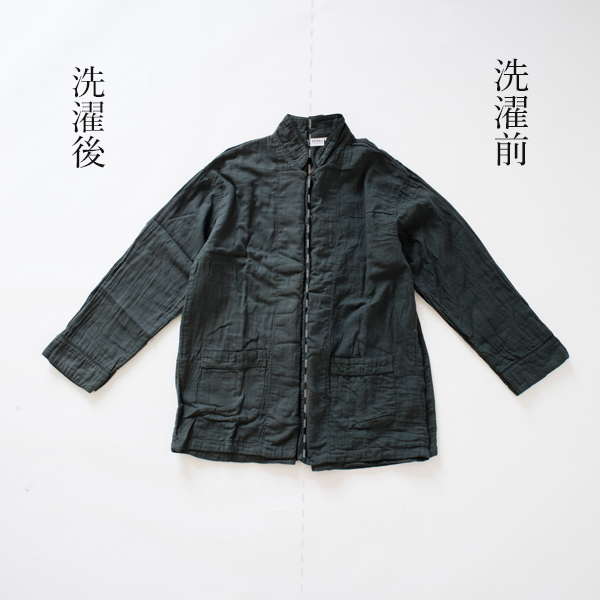
*This shows the same pajama in the sumikuro color.
Take a bath before bed, change into your pajamas, and relax. Dim the lights in the room, and settle in to read a book slowly, or watch a TV drama or a movie. Why not give yourself, who works so hard every day, the gift of "good sleep"? It may be a little early, but it also makes a perfect Mother's Day gift.
▽ Gauze Pajama, Plant-Dyed, Double Layer, Sango
GUIDE »
CONTENTS »
CATEGORIES »
- + Gifts by recipient
- + Gifts by scene
- + Clothing
- + Bags / Backpacks
- + Wallets / Card cases
- + Jewelry
- + Shoes
- + Rainy day outfits
- + Kitchen
- + Home
- + Babies / Kids
- + Japanese products
Earn Miles


Payment & Security




