.webp)


.webp)


.webp)


.webp)


Welcome to ZUTTO
Free shipping for newsletter subscribers (some areas excluded)
My page
Information
- トップページ/
- ZUTTO Journal/
- 選び方・使い方/
- What to Know Abou...

Things to know about pots and IH before winter arrives
A warm soup simmered quietly over low heat, or a sizzling piece of meat seared in a hot frying pan—as the temperature drops, these kinds of simmered and pan-cooked dishes start to sound especially appealing. These days, alongside gas stoves, IH cooking heaters (induction cookers) have also become common, which means cookware needs to be compatible as well. Being IH-compatible requires a pot to meet certain conditions, but why not choose a pot that brings out the best flavor in your cooking, suited to your environment and preferences, and spend the winter warmly?

For frying, searing, boiling, or deep-frying—first, let us introduce pots that can handle a wide variety of cooking styles.
■The All-Purpose Frying Pan
The first pan worth owning is a basic frying pan. A frying pan is, of course, perfect for cooking meat and vegetables, but with a lid it can also be used to steam fish or make light fried dishes—truly an all-purpose pan. Among these, iron frying pans stand out for their outstanding strength, able to withstand high heat, and their excellent heat retention, keeping food warm for a long time.

This is the Element frying pan from de Buyer. Founded in France in 1830, de Buyer has 180 craftsmen making pots and pans using 300 machines that have been in use since the Industrial Revolution. It is a rare metalware maker that maintains reliable quality while carrying out consistent production in a single factory.

The Element frying pan starts out silver in color, but as it is used over the flame, it gradually turns closer to black, and the pan itself becomes more durable over time. Once it has heated through, it does not cool down easily, so it can cook food thoroughly even over low heat. Simply searing sausages or bacon in it produces a juicy result—crisp on the outside, with the meat juices welling up gently from within. This delicious result is only possible with an iron pan that slowly conducts heat deep into the ingredients.
After use, an iron frying pan needs the extra step of being washed and then heated on the stove to dry off any moisture, but on the other hand, the more you use it, the more oil seeps into the surface, making it gradually easier to cook with. It takes some effort, but you get to draw out the flavor yourself. This is a pan that lets you enjoy that kind of process.
For reference on how to use an iron frying pan, please see here:

■The Deep Single-Handled Pot
A single-handled pot with more depth than a frying pan is also highly versatile. It is well suited to dishes that use water, such as boiling noodles or making miso soup.

A good size for a single-handled pot is around 16cm in diameter—easy for a woman to hold with one hand, and just the right size for cooking one or two servings. Kobo Aizawa's double-spouted milk pan (available in two sizes, 13cm and 15cm in diameter) is a single-handled pot whose oak handle and 18-8 stainless steel come together to form a beautifully designed shape. Stainless steel is rust-resistant, durable, and lightweight, making it a pleasure to use.
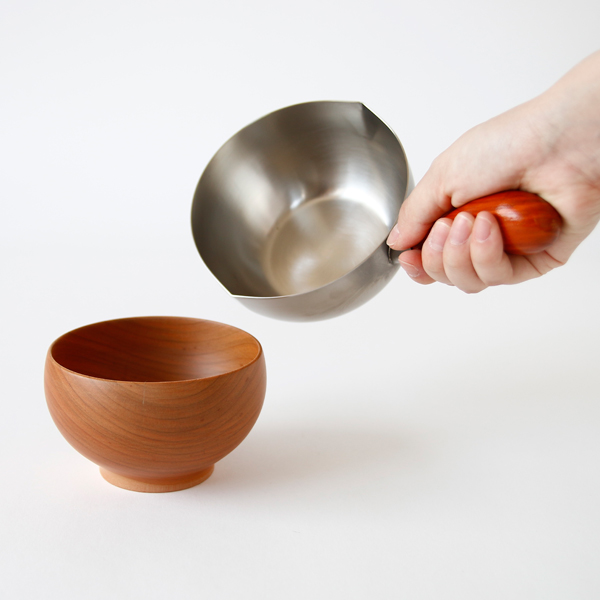
The rounded, plump handle also adds to its ease of use, and having a spout on both sides means it can be poured easily regardless of which hand you use.
Kobo Aizawa has been making stainless steel products since 1922 in Tsubame City, Niigata Prefecture—Japan's leading production area for stainless steel processing—pursuing ease of use as a tool and producing high-quality, carefully made goods. By valuing handwork by skilled craftsmen and stripping away unnecessary decoration, they achieve designs that are both easy to use and beautiful.

Next is a single-handled pot from DANSK. Its body has a wide base, and the lid doubles as a trivet—combined with excellent practicality, its vivid, spice-inspired colors are distinctly Scandinavian in design.

The body is made of enamel, which conducts heat well and is easy to clean. Enamel is a material made by coating an iron base with a glass-like glaze, combining the strength of iron with the hard, glossy beauty and rust resistance of glass. Different from both iron and glass alone, it can be considered a raw material ideally suited for kitchenware.
■The Double-Handled Pot for Main Dishes
If you want to cook for the whole family, or a pot you can bring straight to the table, a larger double-handled pot with handles on both sides is what you need. Making the most of its depth and size, it is well suited to main dishes such as stews and steamed dishes.
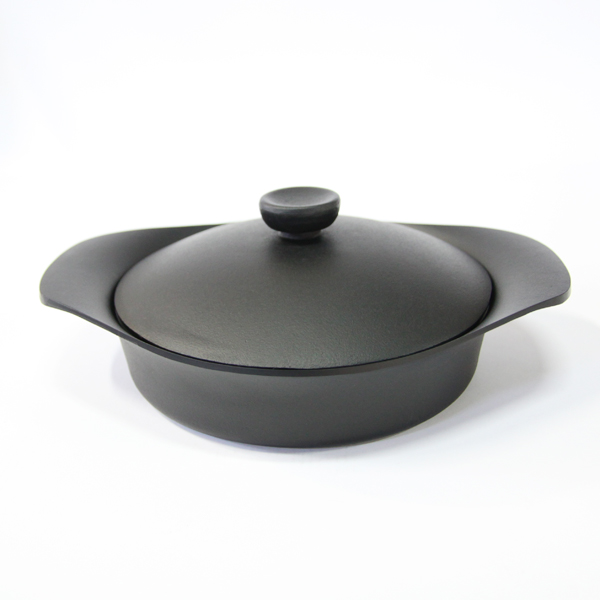
The Sori Yanagi iron pot series is nambu tekki (Nambu ironware) made in Morioka City, Iwate Prefecture. With a different character from a donabe (earthenware pot), its smooth, curved form has a modern quality that suits both Japanese and Western cuisine. Since the entire pot is made of iron, heat spreads evenly through it when placed over a flame, and it retains warmth for a long time.
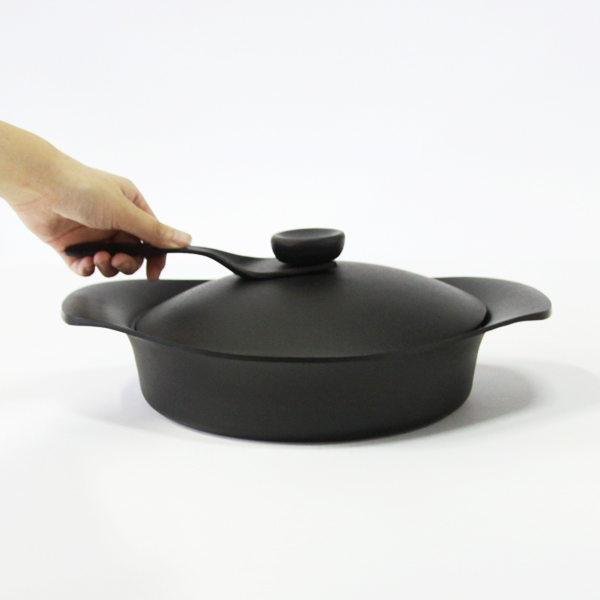
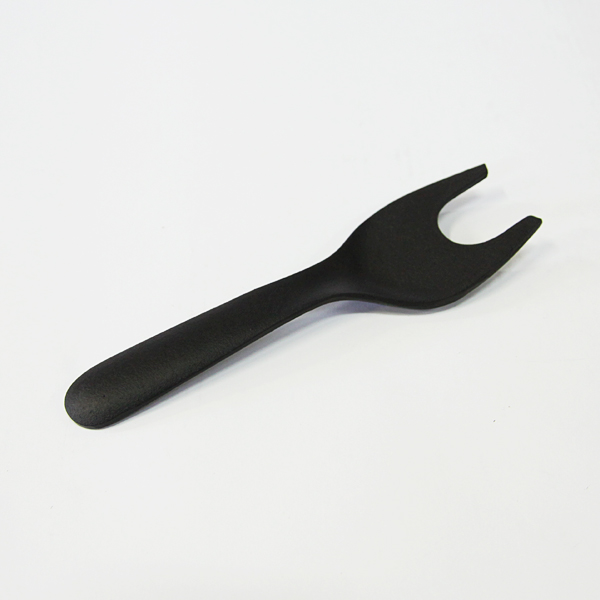
Hearing the term nambu tekki tends to bring to mind something rather heavy and solid, but one of the appeals of the Sori Yanagi iron pots is that they have been redesigned for ease of use today. For example, with the shallow iron pot, even though the lid is also made of iron and heats up along with the rest of the pot when placed over a flame—and even though it has some weight to it—a handle for gripping the lid has been added, making it a much more approachable piece to use.
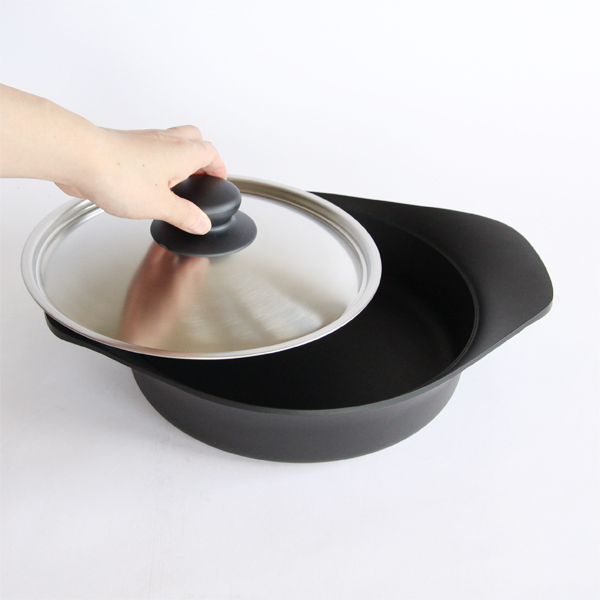
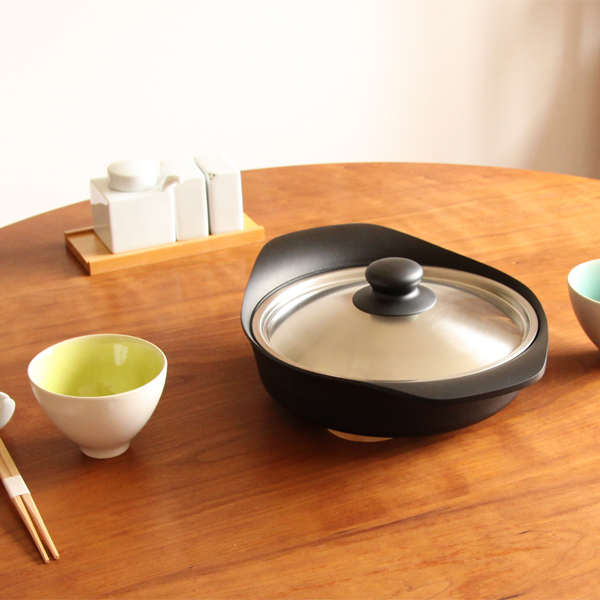
If you're hesitant about a pot where even the lid is iron, we also recommend an iron pot with a stainless steel lid instead. This reduces the weight and results in a pot that is also more hygienic.

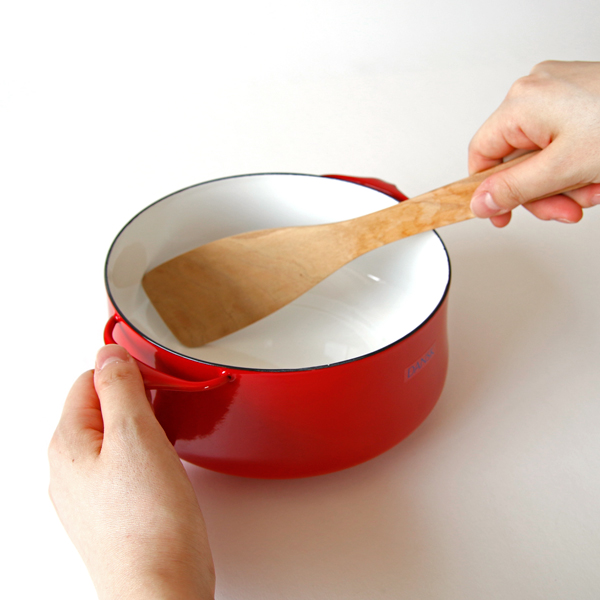

This is a double-handled pot from dansk. Just like the single-handled pot, it features a distinctive design in which the lid crosses over itself to double as a trivet.
At 18.5cm in diameter, it's just the right size for soups and stews for 2 to 4 people. It's easy even for women to lift, and looks lovely simply set on the table as is. This is the double-handled pot to choose as your main pot when serving Western dishes like stew.

For nabe (hot pot) cooking, many households have a gas stove, but others have a built-in IH cooktop, or use a separate portable IH unit for outdoor use. The type of pot you can use changes depending on whether you're cooking with gas or IH, but once you understand why a pot is or isn't IH-compatible, you'll be able to find the right one for your particular cooking method.
Simply put, an "IH-compatible pot" is one that can conduct heat through magnetism. Since IH cooktops are designed to generate heat through an electric current rather than a flame, the pot needs to allow magnetic force to pass through it. In simple terms, this means the bottom of the pot must be flat and made of a material that a magnet will stick to.
Looking at this by material, iron pots and enamel (hōrō) pots are generally IH-compatible.


*Please note that whether a pot is strictly IH-compatible can vary depending on its size and features. Please check each product individually beforehand.
For stainless steel pots, IH compatibility depends on the ratio of raw materials used in the stainless steel. Stainless steel 18-8 (18% chromium, 8% nickel) does not conduct magnetic force, so it is not IH-compatible. Copper pots and donabe (clay pots) also cannot be heated on IH, so they are not compatible either.
Note that pots labeled "IH-compatible" can also be used on a gas stove. Please choose the pot that best suits your cooking environment.


■A Note on Heat Level
Now that we've introduced various types of pots, there's one thing common to all of them that deserves attention: heat level. Since heat conductivity differs depending on the pot's material, the time it takes to warm up will vary. However, if the heat is too high, the pot can reach a much higher temperature than expected, causing not only burnt food but also damage to the pot itself or even a fire.
The key is to keep the flame low enough that it doesn't extend beyond the bottom of the pot. Also, for donabe, raising the heat too quickly can cause the pot to crack, so we recommend warming it slowly starting on low heat.
■Clean Right After Use
Basically, pots can be cleaned with dish soap just like ordinary dishware. However, if you leave food sitting in the pot for a long time, or leave soup or other liquids in it, this can cause bacteria to grow and leave marks on the pot. For this reason, please wash your pot as soon as you're finished using it.

GUIDE »
CATEGORIES »
- + Gifts by recipient
- + Gifts by scene
- + Clothing
- + Bags / Backpacks
- + Wallets / Card cases
- + Jewelry
- + Shoes
- + Rainy day outfits
- + Kitchen
- + Home
- + Babies / Kids
- + Japanese products
Earn Miles


Payment & Security