


.webp)


.webp)


.webp)


.webp)


Welcome to ZUTTO
Free shipping for newsletter subscribers (some areas excluded)
- トップページ/
- ZUTTO Journal/
- ブランドストーリー/
- The story of a ru...

A story about a rug to treasure for a lifetime, made by a carpet artisan in Yonezawa, Yamagata Prefecture.
As attention has turned toward the idea of "lifestyle," we've moved away from mass production and mass consumption, and into a world where it's considered beautiful to face a single object and cherish only the things you truly love, using them for a long time. This time, we introduce Yonezawa Dantsu Takizawa Kobo, a workshop where a carpet artisan in Yonezawa, Yamagata Prefecture, pours generous amounts of time and skill into creating rugs meant to last a lifetime.
What is Yonezawa Dantsu Takizawa Kobo?
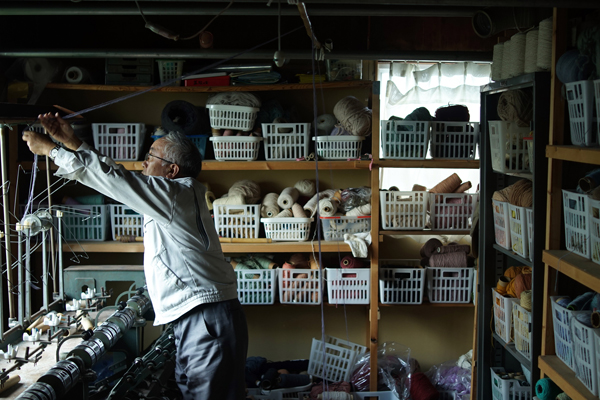
Origins
Yonezawa Dantsu Takizawa Kobo is a workshop for hand-woven carpets, or "dantsu," that trace their origins to 1691 in Yonezawa, a city in southern Yamagata Prefecture. Since the Yonezawa domain era, the city has been famous as a producer of silk textiles, and today it stands as Japan's northernmost textile-producing region, now a comprehensive center for both natural and synthetic fibers. The textiles produced here, known and loved as "Yonezawa-ori," were of such high quality that many were exported abroad.
Takizawa Kobo began its work assembling and maintaining silk-weaving looms. Watching relatives hand-weave carpets, the founder thought, "This would be easier to weave with the right kind of loom," and began researching carpet looms, eventually devising a hand loom that was easier to weave on. The workshop started its hand-woven carpet business in 1966.
Because hand-woven dantsu carpets can be woven with strong, tight strokes, the wool fibers resist coming loose, resulting in a sturdy product. This means there's no need for backing or adhesive—the design on the front appears exactly as it is on the reverse side of the carpet.
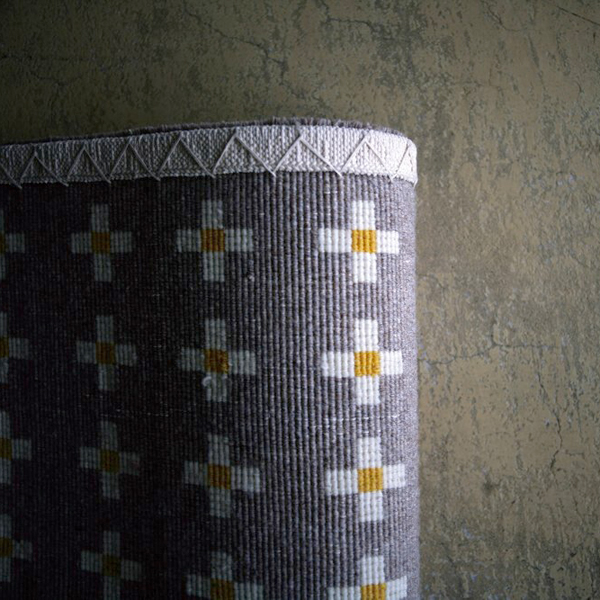
Looking at the back, you can clearly see just how dense and tightly woven this dantsu carpet is.
A carpet once chosen for the Prime Minister's Official Residence, now brought into the present day
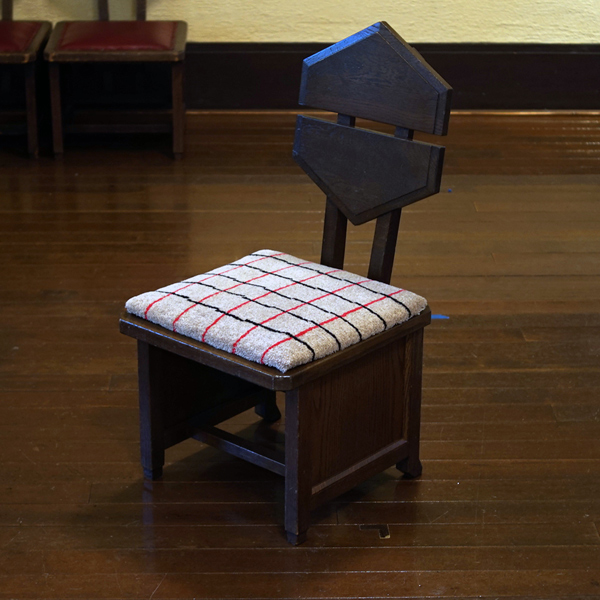
Whenever an order came in for a difficult weave or an oversized carpet, the workshop would devise its own loom to meet the challenge—and it was this high level of skill that earned recognition, leading to Yonezawa Dantsu Takizawa Kobo carpets being delivered to the Prime Minister's Official Residence and the Nissay Theatre. While the workshop has long produced sturdy, high-quality carpets like these, today it is actively embracing smaller sizes suited to contemporary living. A large carpet spread across a spacious living room or bedroom is wonderful, of course, but these rugs also shine brilliantly as bedside accents, as stool rugs lined up beside dining chairs, or as floor pads for sitting directly on the ground. These dantsu carpets, where traditional craftsmanship meets modern, refined design, suit both Japanese- and Western-style spaces alike—and just one piece can add remarkable depth to any interior.
So, what exactly is dantsu?
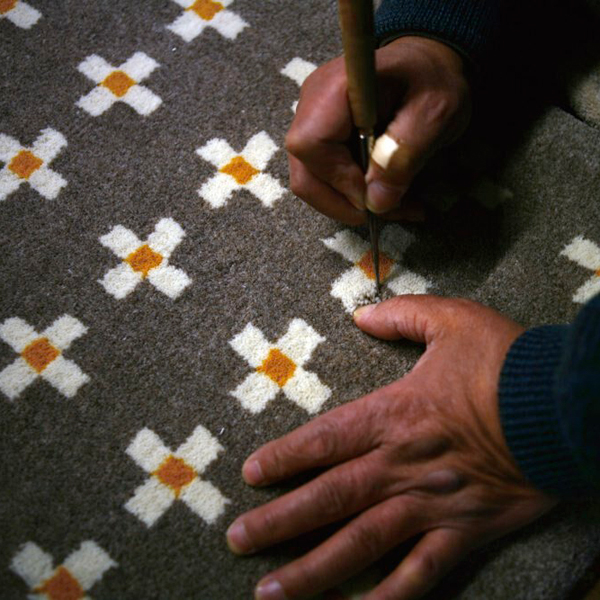
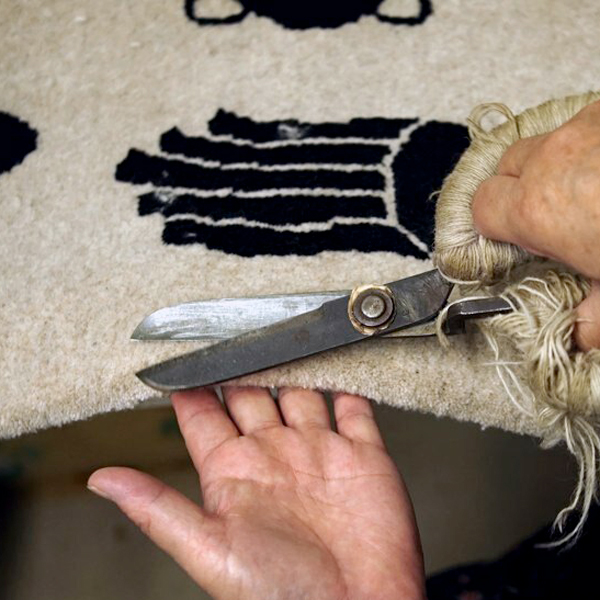
Dantsu is a type of woven floor covering, its name derived from a transliteration of the Chinese word for carpet, "tanzi." Generally speaking, it refers to hand-woven carpets made for use as floor coverings or decorative pieces. Creating a dantsu carpet requires an enormous amount of time and labor: artisans tie and plant each tuft of wool by hand, one stitch at a time, then trim and shape the pile with scissors or knives. It's precisely because they're handwoven that such a range of colors and patterns can be expressed, and thanks to their beautiful designs and dense, firm structure, dantsu carpets are also known as prestigious, high-end goods.

A look at the production process
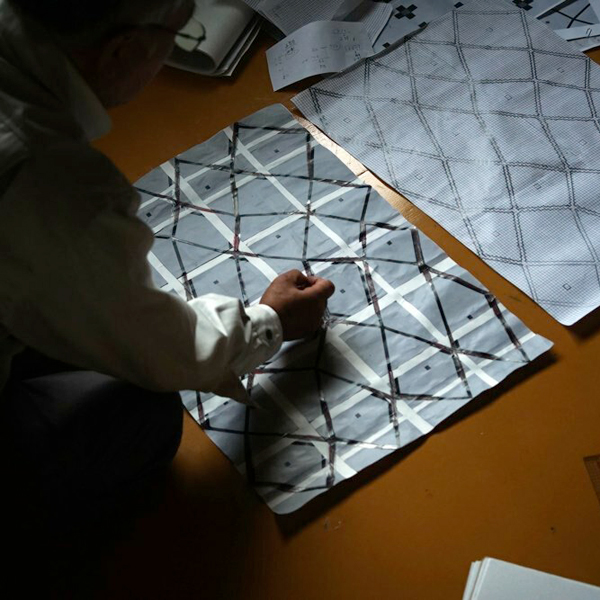
The design being drafted
Why we want this to be a lifetime piece
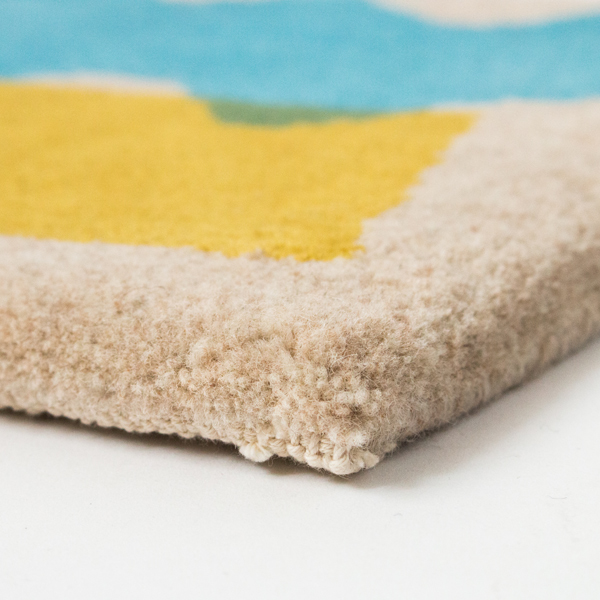
Every Yonezawa Dantsu Takizawa Kobo carpet is filled with the artisan's dedication and high level of skill—the kind of craftsmanship that makes anyone who picks one up think, "I want to use this forever." What stands out most is its durability: these plump, dense, firmly woven wool rugs, hand-tied and planted tuft by tuft by the artisans, require no backing at all.
In Japanese life until now, carpets and dantsu carried a strong image of being luxury goods costing hundreds of thousands or even millions of yen, based on the idea that they were meant to be spread out across a large living room or bedroom. But as lifestyles have diversified, the rugs from Yonezawa Dantsu Takizawa Kobo have transformed to suit more compact living spaces, moving away from the large carpets once meant to be unrolled across spacious living rooms and bedrooms. They're easy to move whenever you rearrange a room, and it's fun to imagine all the different, free ways you might use them.
What's more, Yonezawa Dantsu Takizawa Kobo offers thorough maintenance services. Carpets that have been used for many years, or that have gotten dirty by accident, can be repaired and cleaned by Yonezawa Dantsu. It truly makes you want to keep it close for the long haul.
[Made to Order] Rug (63 × 45 cm)

Top left: Kimagure Koushi Red (whimsical lattice, red), top right: Kasanari Orange (overlap, orange), bottom left: Kasanari Green (overlap, green), bottom right: Hanaawase (flower matching)
.jpg)
Top left: Uribo (wild boar piglet), bottom right: Ohana (flower)
This is the largest rug offered by Yonezawa Dantsu Takizawa Kobo, prepared as a made-to-order item. At roughly 63cm × 45cm, this size of dantsu is perfectly suited for use as an entryway mat.
Five patterns are available.
[Kimagure Koushi Red]At first glance it looks like a simple red-and-black lattice pattern, but look closely and you'll notice the horizontal black lines actually zigzag. It's a fresh take on a traditional artisan-made carpet, with a lattice expression that almost calls to mind digital numerals.
[Hanaawase]A pattern of vividly colored bellflowers set against a gentle pink background. The flowers seem almost to dance, and just looking at them is enough to lift your spirits. Yonezawa Dantsu Takizawa Kobo holds onto a great many designs drawn decades ago, and this is one of them.
[Kasanari]A pattern that looks almost like a single abstract painting. Two cloud shapes overlap in a design that is simple yet striking.
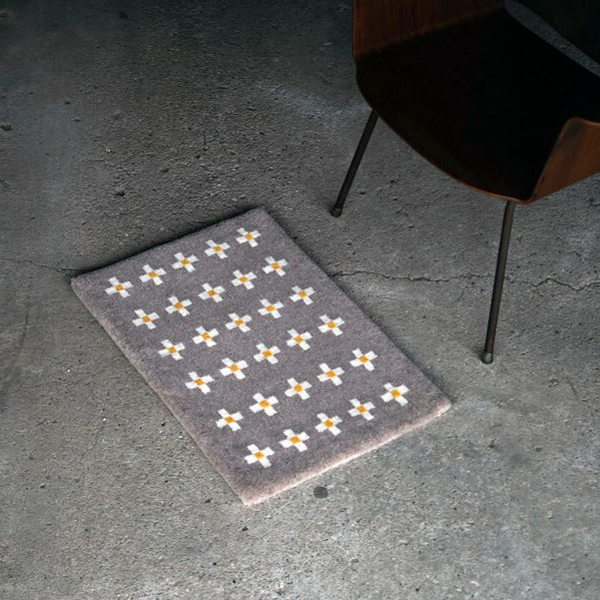
[Ohana]A design of small flowers arranged in neat rows. It carries a certain cool, refreshing feel, and pairs well with Scandinavian furniture or plain wood finishes.
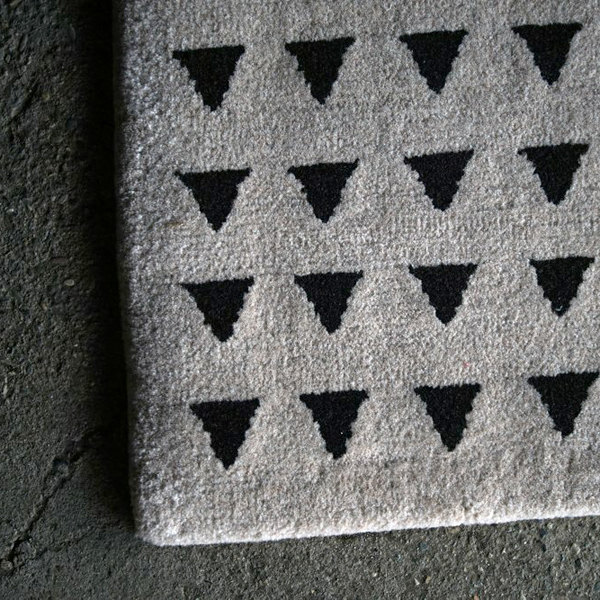
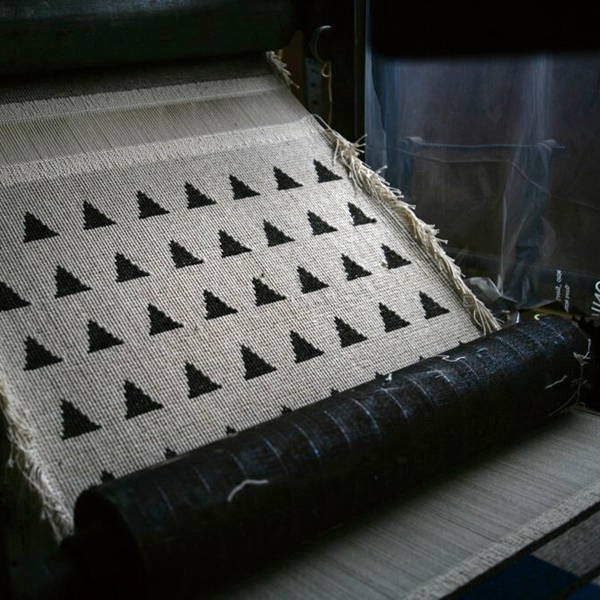
[Uribo]A design of triangles lined up in a way that recalls Scandinavian textiles. Compared to "Ohana," it tones down the cuteness a bit, giving it a chic impression that appeals to people of all ages and genders.
※Except for 【はなあわせ】, the base color areas of the rugs use natural wool. Because the wool is left undyed and blended to create color, many different shades overlap, resulting in a natural wool texture somewhere between gray and beige.

With the goal of "bringing carpets into modern life," these rugs have been made compact in size, so that you can place them at the entryway, beside the bed, next to a chest of drawers, or in front of a dresser—almost like displaying a painting on the floor.
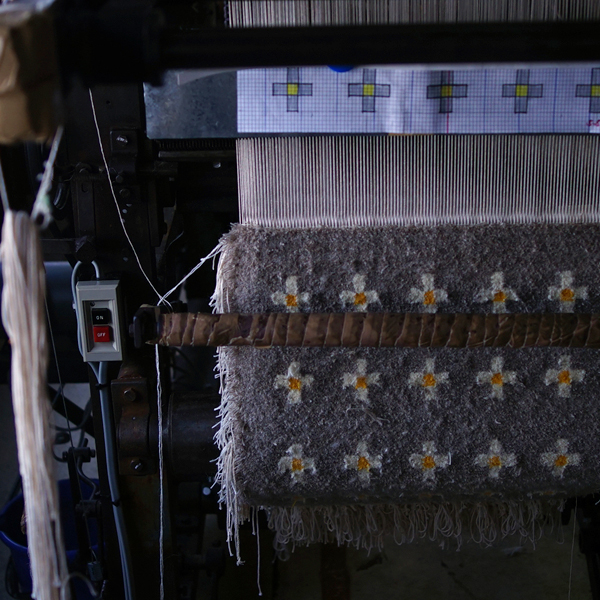
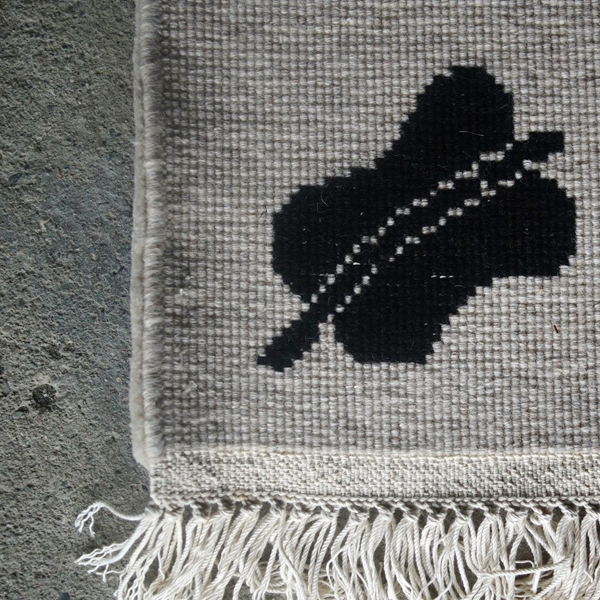
The beautiful reverse side
Chair Rug
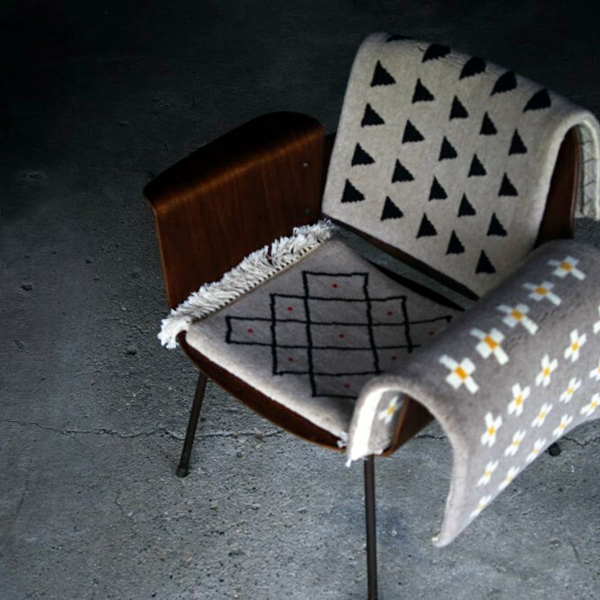
We also offer square chair rugs. (These are not made-to-order items.)

Left: Yozora (Night Sky), Center: Hanaawase, Right: Oshidori
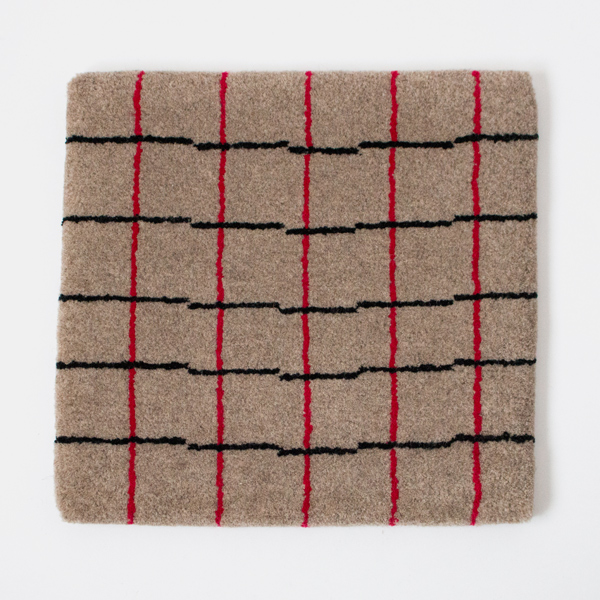
Kimagure Koushi Aka (Whimsical Red Lattice)
These square chair rugs, measuring 38cm on each side, come in six designs: 【Yozora (Night Sky)】, 【Hanaawase】, 【Oshidori】, 【Kimagure Koushi Aka (Whimsical Red Lattice)】, 【Uribo】, and 【Hana (Flower)】. Place them on hard wooden chairs or leather seats for use. During the chilly mornings and evenings, having just one of your favorite rugs will keep you cozy and warm. Thick and slow to flatten, they're perfect for everyday use.

Hana (Flower)

Yozora (Night Sky)
We also offer stool rugs.
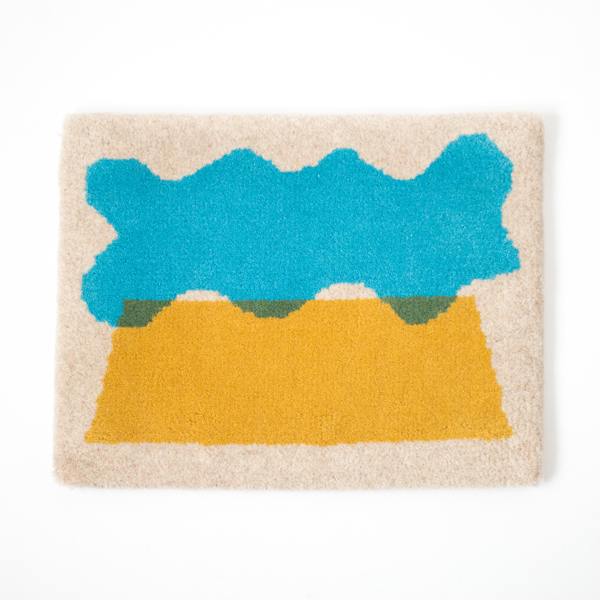
Stool Rug: Kumo to Yama (Clouds and Mountains)
The stool rug is a rectangular rug designed for use on stools, sized to fit perfectly on a butterfly stool. Motifs of clouds and mountains, long beloved in Japanese design, are given a playful, modern arrangement. At approximately 30cm×40cm, it's about the size of a chair rug in rectangular form.

Tapestries That Let You Enjoy Craftsmen's Handiwork on Display
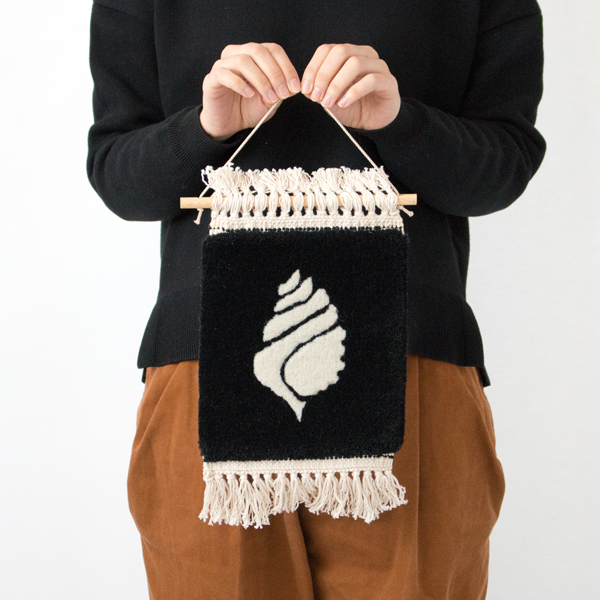
Tapestry: Horagai (Conch Shell)
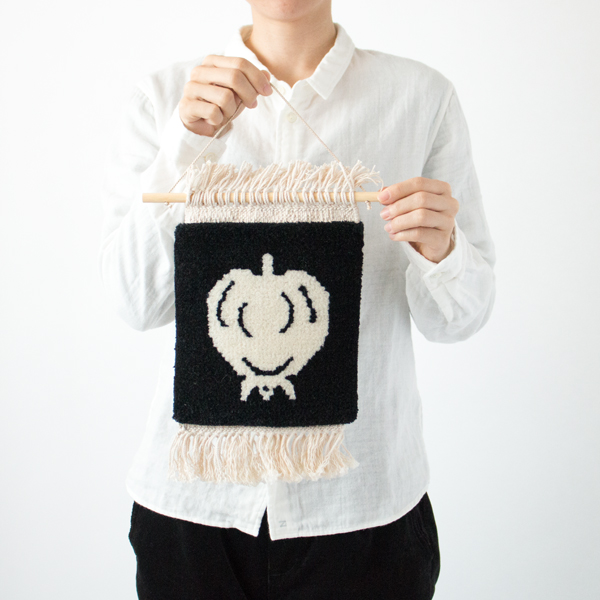
These are dantsu (traditional pile carpets) that can be displayed on a wall as tapestries. While retaining a certain nostalgic, Japanese atmosphere, their playful designs feel modern and charming. Available in three designs—【Hyotan (Gourd)】, 【Nuno Fusen (Cloth Balloon)】, and 【Horagai (Conch Shell)】—they can also be untied and have the rod removed to serve as a vase mat.
【Rugs (63×45cm) Only】Notes on Ordering and Care
The rugs offered this time from Yonezawa Dantsu / Takizawa Kobo are made-to-order items. Please read the notes below and make your purchase with the following understood.
From Order to Delivery
Once we receive your order, the workshop begins crafting each piece individually. Please note that these are not immediately available for shipment. Because of this, you cannot select a specific delivery date for this product; it will be shipped to your specified address approximately 1 to 2 months after ordering.
※Rugs cannot be combined with other items in a single order. If you would like to order Yonezawa Dantsu items that are not made-to-order, please place a separate order for those items. Thank you for your understanding.
Cancellations, Returns, and Exchanges
Since made-to-order items are crafted individually by artisans especially for each customer, cancellations, returns, and exchanges due to the customer's personal circumstances are not accepted. Thank you for your understanding in advance.
About Payment Methods
Since production begins only after payment is received, we do not accept cash on delivery for this purchase.If you choose to pay by credit card, the charge is generally not processed until the item ships, remaining in a "provisional authorization" state. It becomes a "final charge" once the item is shipped. However, if you select Amazon Pay or carrier payment, the charge may be finalized before shipping due to the nature of these payment methods. We appreciate your understanding.
Notes on Purchasing Dantsu
The base color of Yonezawa Dantsu comes from the material's natural color, so please understand that we cannot guarantee the color will exactly match what is shown on the product page.Because the natural wool is blended without dyeing to create color, many different shades overlap to create a natural texture, and each product will vary slightly in color. The base color will be somewhere close to gray or beige, so we hope you'll look forward to discovering what shade arrives for you.
Care Instructions
When you first begin using the rug, some loose wool fibers may shed. Although the rugs are washed for shrink-proofing, some shedding of loose fibers is unavoidable due to the nature of wool fiber's cross-sectional structure. Please understand this. It will naturally settle down with continued use, but if it bothers you, please remove the loose fibers with tape.
If the rug feels dusty, wipe it from top to bottom, following the direction of the fibers, using a white towel that has been dampened with lukewarm water and wrung out well. This will remove both dust and loose fibers. If you're unsure of the fiber direction, check the underside—the side where the tag hangs down is the bottom. For difficult stains, please have the rug professionally cleaned.
See products from Yonezawa Dantsu / Takizawa Kobo here
GUIDE »
CONTENTS »
CATEGORIES »
- + Gifts by recipient
- + Gifts by scene
- + Clothing
- + Bags / Backpacks
- + Wallets / Card cases
- + Jewelry
- + Shoes
- + Rainy day outfits
- + Kitchen
- + Home
- + Babies / Kids
- + Japanese products
Earn Miles


Payment & Security




