


.webp)


.webp)


.webp)


.webp)


Welcome to ZUTTO
Free shipping for newsletter subscribers (some areas excluded)
- トップページ/
- ZUTTO Journal/
- ブランドストーリー/
- Things Truly Love...

Making things that are truly loved for a long time. The appeal of factory brands
This time, our theme is the appeal of "factory brands."
In magazine features and product introductions at select shops,
the term "factory brand" has become increasingly common,
but when we try to pin down exactly what kind of manufacturing qualifies as a "factory brand,"
and consider what characteristics and appeal it actually has, we find the subject surprisingly deep.
What is a brand, exactly?
Before thinking about factory brands,
let's first consider what a "brand" is.
The clothes and bags we own have brand tags attached to them,
and the presence of that brand name
gives us a sense of trust and reassurance — an experience everyone has had at some point.
The easiest example to picture is what's known as a luxury brand,
typically high-end European fashion goods,
where images of "long history," "trust with customers," and "craftsmanship"
seem condensed into the brand's logo or tag.
The reason we're drawn to a brand is, of course, because we believe in that brand's
history, story, and high quality —
in other words, because we love what makes that brand distinctly "itself."
The product we pay money for,
the invisible story behind it,
and the logo or tag that symbolizes it —
all of these together are elements that make up a brand.
That said, there's also a side to this where the logo or tag becomes the symbol of the brand itself,
and eventually that symbol takes precedence, shaping our image of the brand
before anything else.
Let's think about it this way.
"What if that piece of clothing, that bag,
didn't have the brand's logo or tag on it at all?"
Even without the brand's logo or tag attached, would we
still be just as eager to seek out and buy that product?
It might be easier to understand if we replace clothes or bags with "wine."
In the case of wine, what we're essentially enjoying as a product is what's inside the bottle,
and if all we cared about was the taste and aroma,
then the label on the bottle or the lavish packaging wouldn't be necessary at all.
But even so, it would feel rather flat
if that fine wine came in a plain, featureless plastic bottle.
Opening a wooden box bearing the winery's name,
carefully examining the label's name and vintage printed on the bottle, and only then pulling the cork.
Perhaps it's this whole sequence of experience that we recognize as the "brand."
The same holds true for clothes and bags.
Of course, at its core, we buy something because we're drawn to its design and quality —
not because of the brand logo or name tag —
but if the tag weren't there, it would somehow feel a little lonely.
This shows that the logo mark or name tag
is one of the major elements that forms what we perceive as a "brand."
Manufacturing sent out directly from the factory
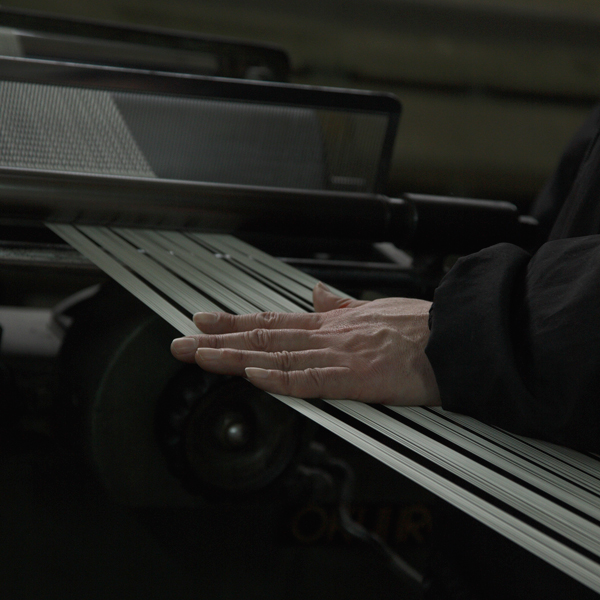
With this in mind,
let's take a closer look at factory brands.
Most ordinary fashion items — clothes, bags, accessories —
are made either in a brand's own factory according to a design the brand has decided on,
or manufactured by commissioning another company's factory.
Sometimes a brand owns its own factory and can handle the entire production process
in-house,
while in other cases, even a brand with its own factory will commission certain items requiring special materials or advanced techniques
to a factory with specialized expertise.
Since this "factory" ("kōjō" in Japanese) is what "factory" refers to,
a factory brand essentially means manufacturing sent out directly by the factory or maker itself,
which has then become branded in its own right.
Manufacturers that normally take on the production of items planned by other brands,
and run their business by serving those brands,
are professionals when it comes to strong supply channels for raw materials, deep knowledge of how to handle materials,
and the high quality of their production, including sewing techniques.
When such a factory plans its own products
and makes use of its own strength in manufacturing technique to create them,
the resulting brand is what's known as a "factory brand."
For example, a cashmere stole or a leather bag made by a manufacturer that also produces items for well-known luxury brands
on commission
may carry a different brand name, but the materials and quality are, naturally, first-rate.
In that sense, one characteristic of factory brands is that they offer
high-quality products at relatively accessible and fair prices,
but beyond just cost performance,
the sense of trust as a "maker" built up over years of working with designer brands,
and the high level of technical skill cultivated by taking on difficult manufacturing challenges single-handedly —
this story, unique to the manufacturer itself, is arguably the true identity of a factory brand.

For manufacturers who have long played the role of unsung supporting player, rarely seen directly by end users,
stepping forward as a factory brand and communicating their own manufacturing directly
also brings the positive benefit of being able to take customer feedback straight back into the manufacturing process
and use it to develop further products.
In that sense, factory brands that communicate directly from the factory
carry out high-quality manufacturing and deliver it directly to the user
can be said to have as their strength sustainable manufacturing that maintains stable production.
Here, while actually looking at some factory brands
let's look at their appeal and product characteristics.
Making Kurashiki Hanpu a Part of Daily Life
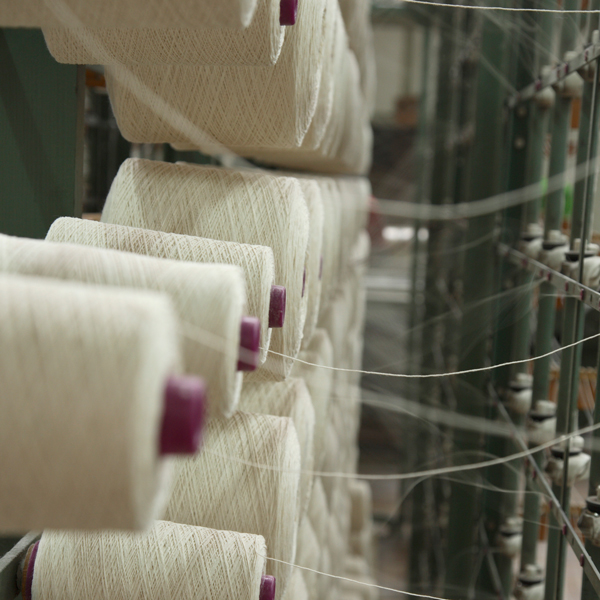

JoBu was born in Kurashiki, a region known for producing hanpu (cotton canvas).
It was born from Byston Co., Ltd., founded in 1933 in Kurashiki, Okayama Prefecture.
Returning to the origins of hanpu as a tool, wanting to create sturdy everyday goods made from natural materials,
JoBu was born from the meeting of just such a product designer and "Kurashiki Hanpu - Byston."
A shuttle loom is a loom mainly used to weave fabrics such as vintage jeans material.
It is an old-fashioned loom that weaves by passing thread back and forth,
producing a unique texture not found in high-speed looms that shoot thread using air.
The subtle slackening of tension as the weft thread moves back and forth
is said to create a moderate puffiness in the thread, giving rise to this texture.
Another characteristic feature is that selvedge edges form on both sides of the fabric.
Kurashiki hanpu, gently woven piece by piece,
offers a texture that can never be achieved with foreign-made canvas.
Handkerchiefs That Captivate with Embroidery

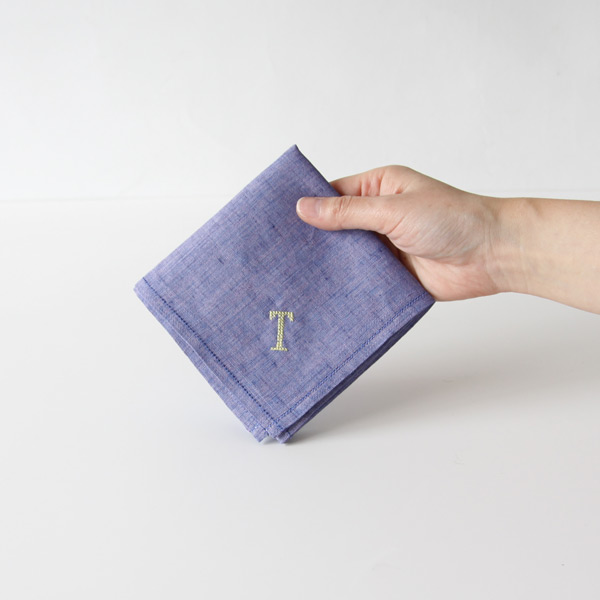
Since its founding in 1879, blooming has provided textile products closely tied to daily life and
fashion, such as handkerchiefs and home textiles.
Starting from a single piece of cloth, how much can people's lives be enriched?
The delicate embroidery on the handkerchiefs conveys the maker's ongoing dedication to this question.
If you visit the handkerchief section of a department store,
you'll find rows of handkerchiefs embroidered with various brand logos,
and in many cases, most of them are actually made by blooming (Blooming Nakanishi),
making it such a popular handkerchief manufacturer that you may have used their products without even realizing it.
blooming's greatest strength is, above all,
the sheer variety of items that can be custom-ordered to meet various requests.
This is a distinctive quality unique to a manufacturer
that has expanded its variety of handkerchief fabrics and embroidery
to meet the demands of various brands.
"Beauty" Sent Out from the Land of Kiryu
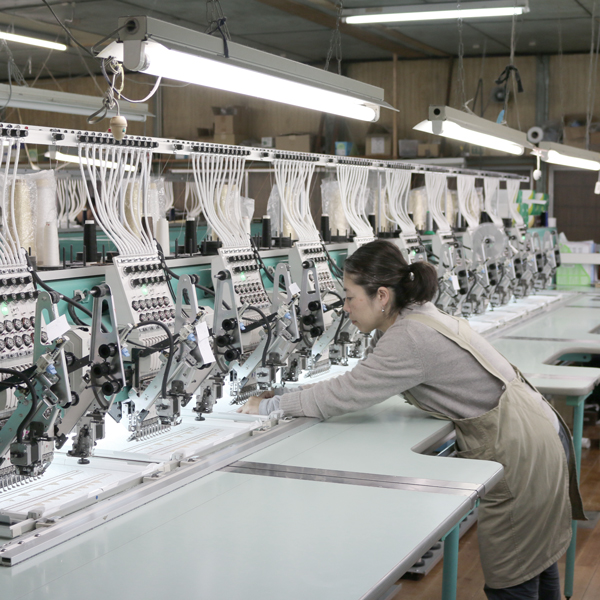

000 (Triple O) is a brand built on the concept of creating new value from zero through the power of thread.
The parent body of the brand is
Kasamori, a long-established embroidery shop founded in 1877 (Meiji 10) in Kiryu City, Gunma Prefecture.
Since its founding, Kasamori has been making products based on Kiryu's traditional techniques,
and since the 1960s has been engaged in the embroidery business using jacquard embroidery machines.
Handling all kinds of clothing processing, from Japanese to Western attire, and developing its own proprietary technique known as "Kasamori Lace,"
the company creates products through a combination of cutting-edge technology and the hands of skilled artisans.
Their technical skill is so high that they have been approached by leading overseas fashion houses to provide their embroidery techniques.
Such beautifully finished embroidery, unparalleled anywhere in the world, is a feat achievable only by a long-established embroidery shop.
When light hits it, the silk shows a faint sheen, and beautiful colors emerge.
This Sphere Silk series is packed entirely with thread, even inside the spherical shape,
and repeated embroidery stitching, over and over, makes this three-dimensional form possible,
though it's said that achieving such a beautiful silhouette requires meticulous adjustment by the craftsman.
Workwear Loved in a Port Town

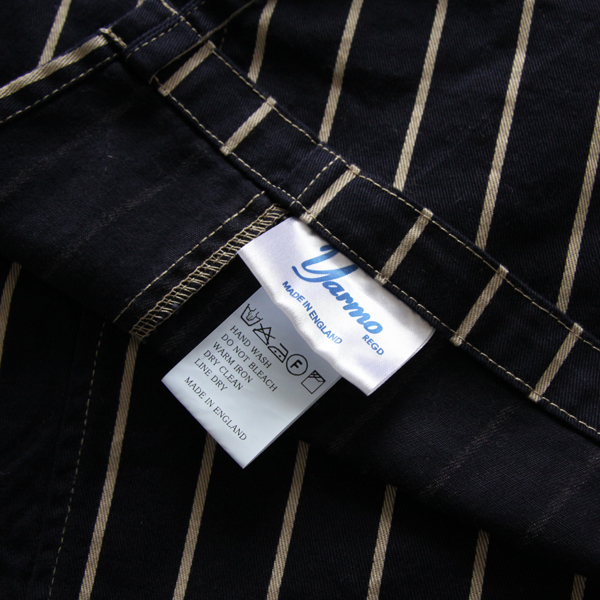
Yarmo is a factory brand founded in 1898 in Great Yarmouth, England.
Originally, it made smock-type aprons and jackets for people engaged in herring fishing,
and had many stores around British ports.
Workwear made for people working in the harsh environment of the sea,
with its durable, highly insulating fabric and excellent pattern designed for ease of movement,
along with its highly practical design, mean that today it is loved not only by those in the fishing industry
but also by artists and craftspeople in other fields.
The brand has also produced uniforms for a variety of organizations, including the UK Ministry of Defence, well-known oil companies, and pharmaceutical manufacturers,
making it a representative brand of British workwear.
Built to Withstand Heavy Use
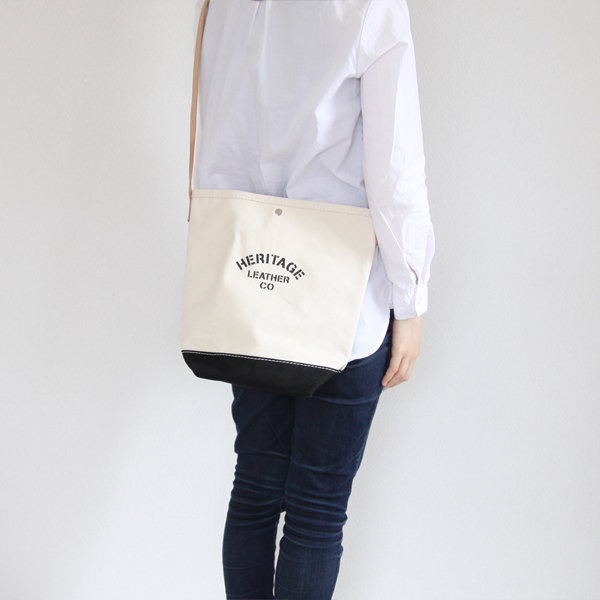
Founded in 2000 in Los Angeles by Jose Munoz and Gonzalez,
HERITAGE LEATHER CO. is a factory brand producing handmade products in the USA,
HERITAGE LEATHER CO. (Heritage Leather Company).
Drawing on years of experience serving as factory manager at a historic American tool goods manufacturer,
the brand creates tough products trusted by real American workers,
while continuing to evolve products that can also be used for everyday town wear,
carrying the history of this traditional American factory brand forward into the future.
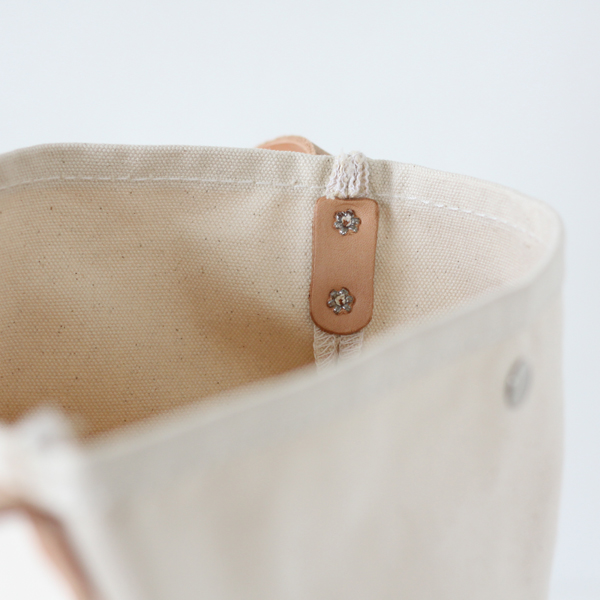
The canvas fabric used in the bags
is 18 ounces, a weight characteristic of American factory brands,
making it a very thick and durable material. This tough material is firmly sewn together
through a commitment to handmade craftsmanship by skilled artisans,
Simple, yet full of craft spirit—this kind of making
leads to a sense of reassurance and attachment that grows the more you use it.
We started this article by asking, "What is a brand?"
and looked at the characteristics of factory brands through a variety of examples of making things.
・In the world of fashion, making use of the technical skill cultivated by producing goods to meet the demands of designer brands
・In fields such as industry and fishing, making use of solid, no-nonsense craftsmanship to support people's work
We found that there are these two directions, and in both cases,
the maker's technical skill is being put to use just as it is.
Whether the material is canvas, leather, silk, or something else, each has a quality backed by its own history,
and they share a commitment to sustainable making.
In that sense, the making of factory brands, communicated directly by the makers themselves,
might just be the kind of making that goes on being loved forever.
▼The brands featured this time


GUIDE »
CONTENTS »
CATEGORIES »
- + Gifts by recipient
- + Gifts by scene
- + Clothing
- + Bags / Backpacks
- + Wallets / Card cases
- + Jewelry
- + Shoes
- + Rainy day outfits
- + Kitchen
- + Home
- + Babies / Kids
- + Japanese products
Earn Miles


Payment & Security




