


.webp)


.webp)


.webp)


.webp)


Welcome to ZUTTO
Free shipping for newsletter subscribers (some areas excluded)
- トップページ/
- ZUTTO Journal/
- ブランドストーリー/
- Denim from Kojima...

From Kojima, Okayama Prefecture—a birthplace of denim. In search of denim made with a true craftsman's spirit.
Denim, a wardrobe staple.
Denim pants, denim skirts, denim shirts—
surely everyone owns at least one denim item.
Denim is a material we live with all year round.
Did you know that domestically produced denim, made in a place called Kojima in Okayama Prefecture,
has been gaining recognition around the world?
When we think of denim, we tend to picture something foreign—especially American—
but Japanese domestic denim, made with exceptional skill, has earned extremely high acclaim.
This time, we'll take a deep dive into denim itself, and into the
dedication and craftsmanship behind Kojima's denim brands.
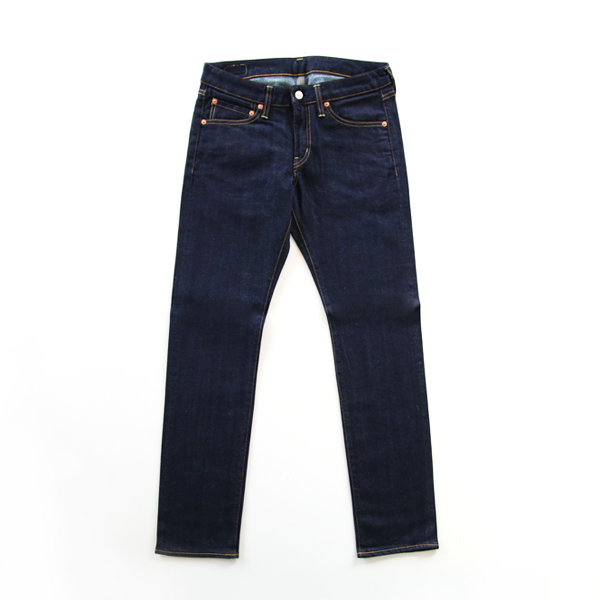

So, what exactly is denim?
Even if you think you know, when asked to explain it,
you might find yourself at a bit of a loss.
Denim is a twill fabric made from cotton yarn that has been dyed with indigo.
Twill weaving is a technique in which the warp thread passes over two weft threads,
then under one weft thread, repeating this pattern throughout,
and the resulting fabric is characterized by diagonal lines running across its surface.
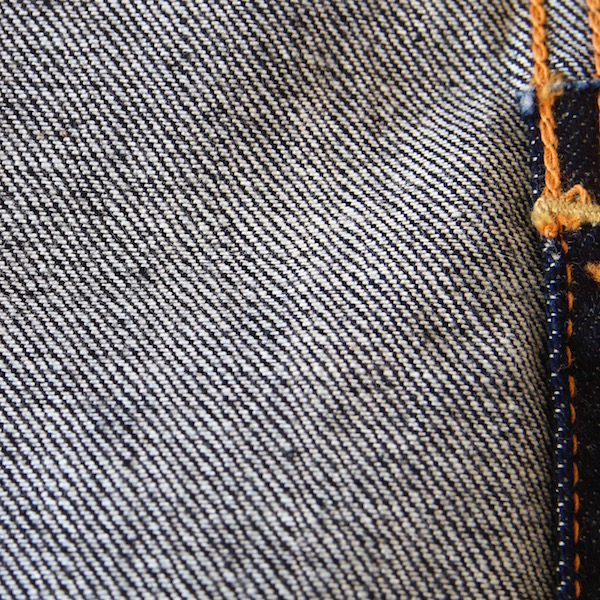
In the case of denim, the warp thread is dyed with indigo,
while the weft thread remains undyed, so when you look at the surface of denim,
you can see white dots from the weft thread peeking through every two threads.
The distinctive blend of indigo blue and white that's unique to denim
comes precisely from this combination of thread colors and weaving technique.
We often use the word "denim" to refer to jeans or skirts made from denim fabric,
but in fact, "denim" technically refers to
the fabric itself, with these specific characteristics.


Now, about that denim.
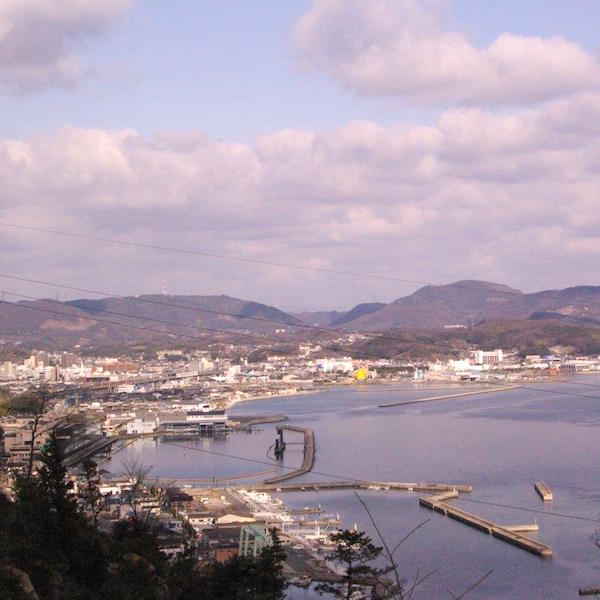
South of Kurashiki City in Okayama Prefecture, facing the Seto Inland Sea, lies a place called Kojima.
Overlooking the Seto Ohashi Bridge that connects Honshu and Shikoku, this town—where you can feel
time passing at a relaxed pace—is the birthplace of domestically made jeans in Japan, and
is now known as the heart of "Japan Denim," a name that commands pride worldwide.
Step off the train at Kojima Station, and you'll find denim decorations everywhere.
The entire town of Kojima feels as though it carries the single brand of "denim."
Kojima means denim, and denim means Kojima.
You can sense the passionate spirit of the craftsmen here in every corner.
Okayama Prefecture was originally known for its thriving cotton cultivation,
and has long been celebrated as a center of the textile industry.
It's still famous today as a production area for canvas fabric and school uniforms.
After the war, when secondhand jeans left behind by American soldiers
became popular, an attempt was made in Kojima, Okayama, to
produce those jeans domestically in Japan,
and in 1965, jeans were mass-produced in Japan for the very first time.
This marked the birth of Japan's first domestically made denim.
Gradually, factories that produced and processed denim fabric began to gather
in Kojima and Ibara City,
and today, every step of jeans-making except for spinning (the process of turning raw cotton into thread)
can be completed entirely within the prefecture.

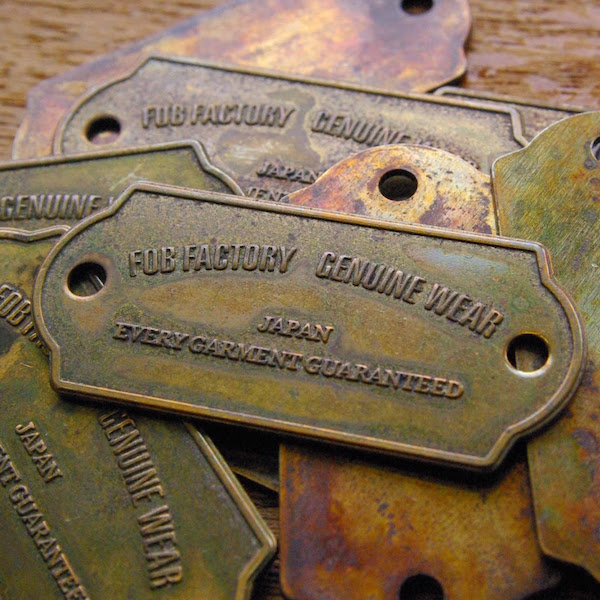
FOB FACTORY, the brand we're featuring this time, brings even greater dedication
to Kojima-made denim as a domestic Japanese product.
True to the idea that jeans-making begins with denim-making,
FOB FACTORY designs its own fabric in-house.
■Nakashiro (undyed core), made for fading beautifully

Take, for example, nakashiro, a traditional dyeing method in which the thread's core is left undyed.
As mentioned earlier, the warp thread used to weave denim fabric is dyed first,
and this warp thread is dyed using a method called rope dyeing.
This is a technique unique to denim, in which only the surface of the thread is dyed indigo blue,
while the core of the thread remains undyed.
Since the inside stays white and undyed, this is called "nakashiro" (literally, "white inside").
The longer you wear a pair of jeans, the more the blue on the surface fades,
revealing the white core beneath—and it's this dyeing method
that gives denim its rich, characterful fading over time.
■Evolved selvedge denim
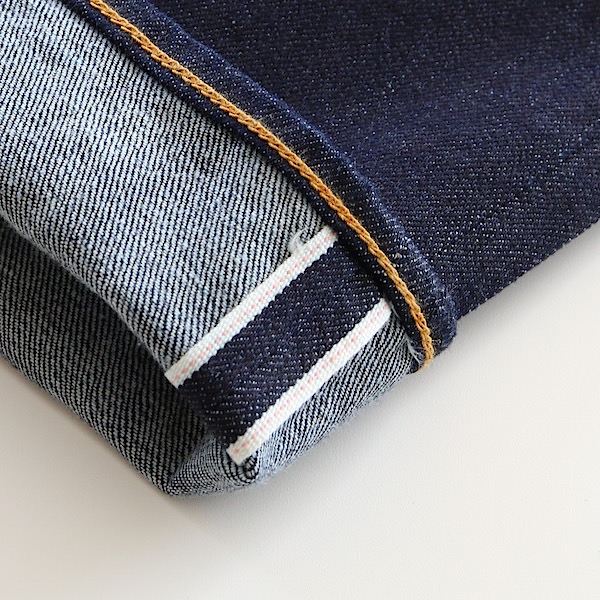
FOB FACTORY also uses selvedge denim.
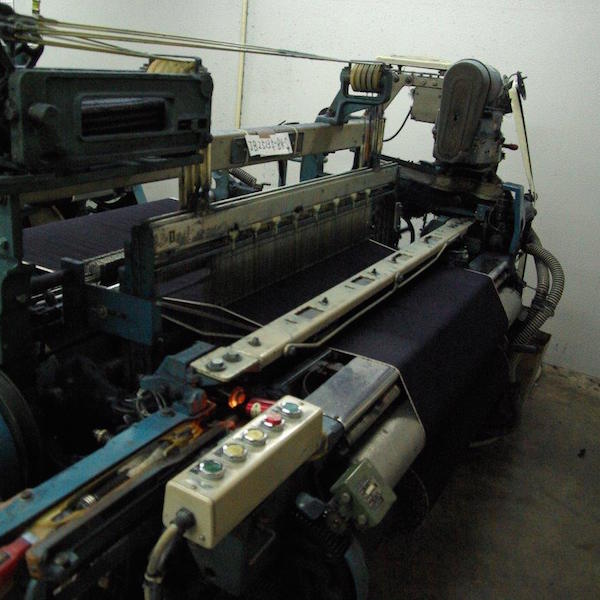
Selvedge denim refers to denim fabric woven on old-style looms (shuttle looms),
and it's characterized by the "selvedge" edges visible along both sides of the fabric.
Because the weaving process is slow and takes time, less tension is placed on the thread,
resulting in a vintage-like unevenness that gives the denim a rustic yet
warm character.
And this particular denim, while made using such an old-style loom for selvedge weaving,
is a rare selvedge stretch denim that has successfully incorporated polyurethane thread
through skilled technique.
It's wonderful that both the look and the wearing comfort are achieved at once.
Domestic denim brands that carry such traditional techniques forward into the present day
are truly a rare find.
As selvedge denim is worn over time, the selvedge line along both sides
of the pants gradually emerges through the aging process.
■Even the thread is designed with aging in mind
For sewing, a thread called core-spun yarn is used—cotton wrapped around a polyester core.
This allows for natural fading, giving the fabric a vintage feel as it changes over time
It's a thread that lets you enjoy the way its expression changes over time.
In the old days, all-cotton thread was used,
and cotton thread ages together with the fabric, deepening into a natural texture over time.
These days, spun thread (polyester), which is strong, low-cost, and easy to sew with,
is widely used,
but because it's a synthetic fiber, it has the drawback of not aging along with the fabric—the thread alone stays unchanged and ends up standing out.
That's why the core-spun thread used here is stronger than cotton,
and with cotton on the outer layer, the thread color develops a naturally aged tone over time as well. It's a truly superior material.
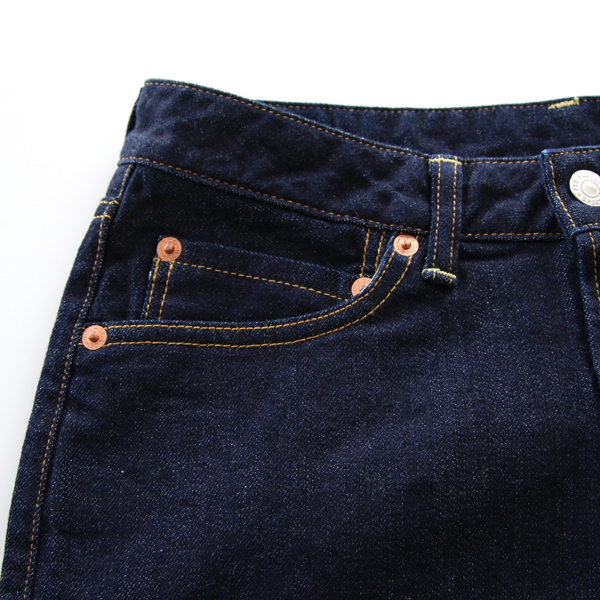
■The Union Special: the sewing machine behind the hem's aging texture
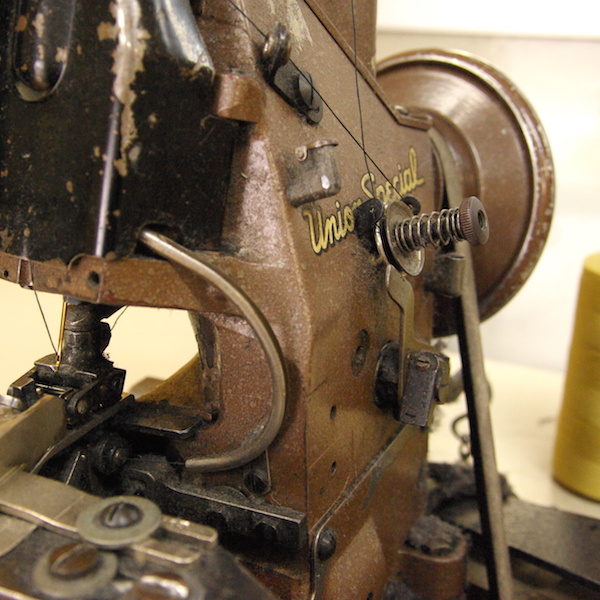
We're constantly researching and developing the sewing machines needed to make our clothing,
and what we're especially aiming for are machines that can reproduce old-fashioned details.
We've modified old American-made sewing machines (Union Special)
to sew the hems of our jeans.
By running the fabric through a metal die—which eliminates the need for ironing—tension is applied,
creating an uneven texture at the hem. This is a calculated use of the machine,
designed so that a distinctive aged texture emerges at the hem as the jeans are worn.
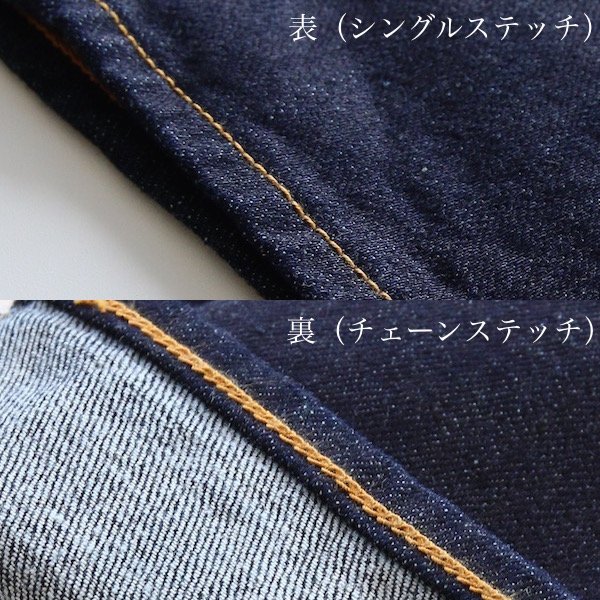
The hem sewn using the Union Special uses a chain stitch.
On the surface, it looks like a single stitch, with each stitch connected in a row,
but on the reverse side, the thread interlocks in a chain-like pattern, which is why it's called a chain stitch.
What's distinctive about this machine is that, as the jeans are worn,
a twisted aging texture develops beneath the chain stitch.
In other words, this stitching method is what gives rise to that cool, aged look.

From here, we'll introduce the brand story in interview format,
based on what we heard from a representative of FOB FACTORY, who actually makes domestic denim in Kojima.
—FOB FACTORY's domestic denim maintains a high standard in both design and quality.
What does FOB FACTORY consider "good denim" to be?
What we consider good denim is the denim we saw during the era of the Amekaji (American casual) boom,
when the price of vintage used denim soared and things called "vintage"
were recognized as having value.
It's not that we simply think something is good just because it's old or vintage—
it's that today's denim on the market feels flat and overly clean.
As denim came to be sold even in department stores,
a clean, flawless material became essential.
Naturally, things like fraying or loose threads are completely unacceptable,
and we've even heard of cases where fading itself is considered undesirable.
The opposite of this kind of clean-finish quality—
denim with a warm character, finished by hand using low-tech methods—
that's the denim we aim to make.
—So, what should one do to develop denim with a good texture over time?
There's no need to think too hard about it—simply by having the same person wear it continuously,
that person's own unique creases and worn spots naturally develop.
The way you cross your legs, the way you sit, your lifestyle—all of it shows up as fading.
That's what makes denim so interesting.
What matters most is living your own good life,
and wearing the jeans casually without overthinking it.
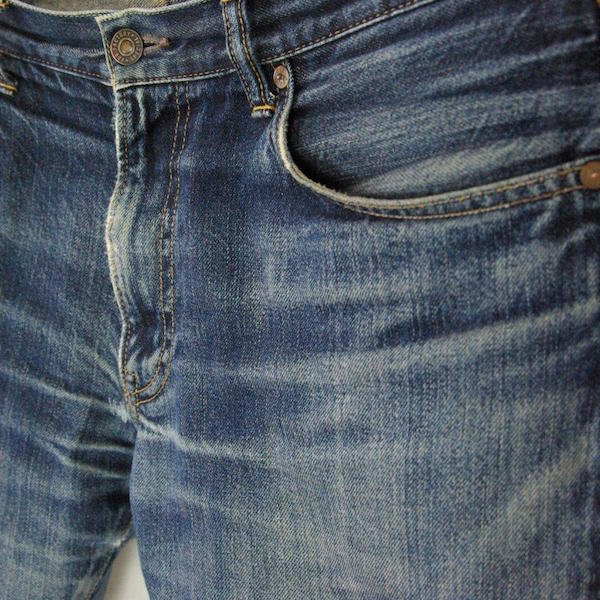
FOB FACTORY: an aging sample after three years of wear
The policy FOB FACTORY holds is:
-FIND NEW WISDOMS THROUGH OLD THINGS-
This reflects the idea of "learning something new by revisiting the old,"
the notion that hints toward new methods and knowledge are hidden within old things and old techniques.
Rather than simply chasing after old things, they take the advantages and ways of thinking
gained from the old and create something suited to this era.
Precisely because we live in an age of mass production and mass consumption,
you can sense their dedicated pursuit of what can be proposed as a kind of counterpoint to that—
their attitude comes through clearly.
And above all, you can feel their love for denim.

We also asked about denim care—
how to make it last a long time and develop good aging.
—How should denim be washed?
We've also heard that it's better not to wash it at all...
In the past, there was talk that denim shouldn't be washed for months,
so that the creases would develop and age in the same spots.
However, precisely because denim is so durable,
people often wear it without much concern—wearing it outdoors, sitting directly on the ground—
so it's an item that tends to get dirtier than other clothing.
Dirt is bad both for the fabric and for the sewing thread.
So please avoid going a long time without washing it.
Using a mild, neutral detergent instead of a strong one, and washing it inside-out in the washing machine, will also help prevent excessive fading.
Skip the dryer—air-drying in the sun is best.
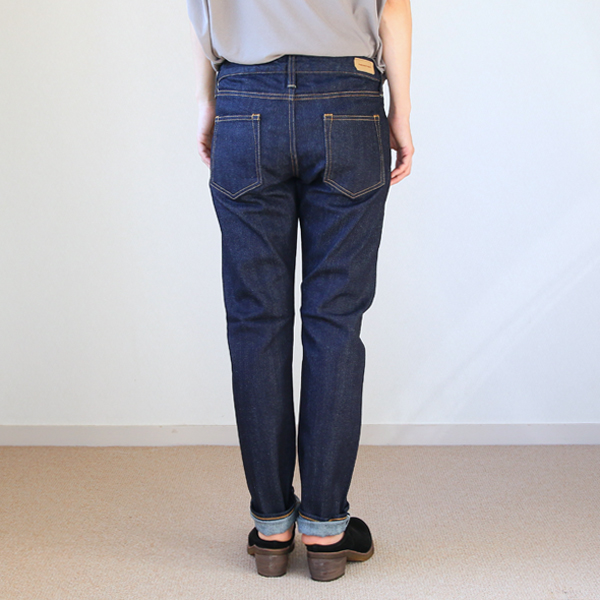
We've introduced domestic denim, focusing especially on FOB FACTORY, born in the town of Kojima,
and shared its appeal and craftsmanship.
Domestic denim grows richer in character as it ages through continued wear.
We hope you'll experience its charm firsthand.
▼FOB FACTORY brand page
GUIDE »
CONTENTS »
CATEGORIES »
- + Gifts by recipient
- + Gifts by scene
- + Clothing
- + Bags / Backpacks
- + Wallets / Card cases
- + Jewelry
- + Shoes
- + Rainy day outfits
- + Kitchen
- + Home
- + Babies / Kids
- + Japanese products
Earn Miles


Payment & Security




