


.webp)


.webp)


.webp)


.webp)


Welcome to ZUTTO
Free shipping for newsletter subscribers (some areas excluded)
- トップページ/
- ZUTTO Journal/
- ブランドストーリー/
- Seamless knits nu...

Seamless knits nurtured by Scottish water: the craftsmanship of Harley of Scotland
Simple, and therefore difficult: the single-color knit sweater
When it comes to winter staples, wool knitwear is at the top of the list. It's hardly an exaggeration to say that everyone owns at least one simple, single-color sweater—but it's precisely with such simple items that the material, comfort, and silhouette matter most.
Harley of Scotland, which we introduce here, is a long-established knitwear maker founded in 1929 on the east coast of Scotland. Let's unravel the appeal of this factory brand, which continues to produce traditional knit sweaters using high-quality wool yarn sourced from local industry.


A story of knit sweaters, nurtured by water
A sailor captivated by the handmade knits of a port town
Harley of Scotland was founded in 1929 by Peter Harley, a long-established Scottish knitwear maker. Peter, the brand's founder, once worked as a sailor on the seas. During his voyages, he was captivated by the traditional, beautifully patterned sweaters he saw in places like Orkney, Shetland, and Fair Isle. The figures of sailors braving the cold, rough waves, and the beautiful sweaters that were part of their identity—practical and rugged in feel, yet beautiful precisely for that reason. One can't help but imagine how such knitwear must have appeared to his eyes.

For hundreds of years, sweaters made in the land stretching from Shetland to Fife offered more than just comfort and warmth—each pattern carried its own meaning, allowing people to identify workers on the ever-changing northern seas. Inspired by these traditional and beautiful patterns and colors, the brand was born from a proposal to create light, soft sweaters suited for everyday wear.
What is Shetland wool?
Harley of Scotland is skilled in the art of knitting high-quality wool into sweaters. While the company now uses many different types of wool, one that deserves special mention when discussing its history is "Shetland wool." Shetland wool comes from sheep that live on the Shetland Islands. Because these sheep grow up in the harsh coastal environment—with dramatic temperature swings and high humidity—the wool that protects their bodies is naturally toughened as well. Shetland wool is known for being extremely lightweight, warm, and rich in color, a beauty that cannot be imitated by any other wool. Due to the strong winds of the North Atlantic, the Shetland Islands have almost no pasture, so it's said that the sheep there grow up eating seaweed.
The power of "water" to wash wool into something beautiful and richly textured

Shetland wool yarn is rich in oil, and at the point it has been processed from raw wool into yarn, it is quite coarse. It is the "washing" process that transforms it into something smooth to the touch. Essential to this process is the extremely hard water found in northeastern Scotland. Washing Shetland wool in this high-mineral-content water produces a remarkably smooth texture.
Shetland wool, raised by sheep that feed on seaweed by the water's edge, and the luxurious texture born from washing it—it would hardly be an exaggeration to say that the cold water of this region nurtures fine knitwear.

Continuing to hone its skills as a wool knitwear maker, Harley began importing beautiful merino wool from Italy in the 1980s, launching production in Fair Isle—now one of its key markets—of sweaters that pursued even greater lightness, warmth, and softness while retaining their traditional style. Building on the skills developed over the years, Harley now skillfully works with a wide variety of wools, from traditional Shetland wool to merino wool and Geelong lambswool, knitting each in a way that brings out its unique character.
Today, in addition to its own original line, the company has expanded into designing for private brands and retail, and even handles the production of seamless knitwear made using the latest technology—continuing, across three generations, to provide high-quality wool garments.
Choosing Harley's knitwear, to warm both body and heart
Now, let's take a closer look at Harley of Scotland's knitwear.
The comfort of seamless construction
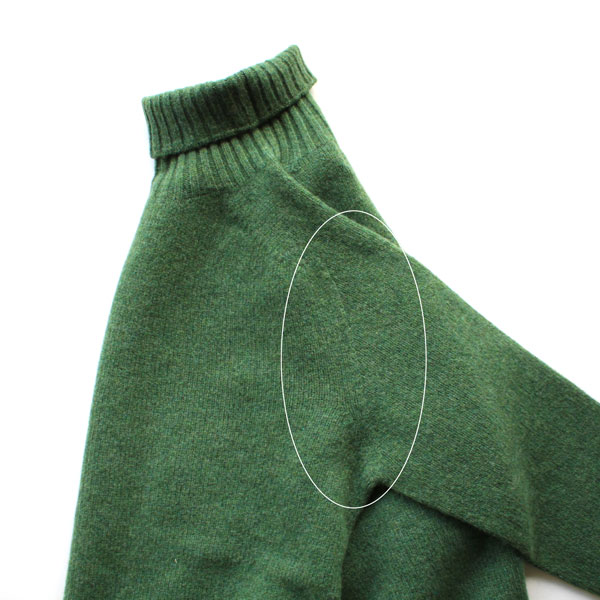
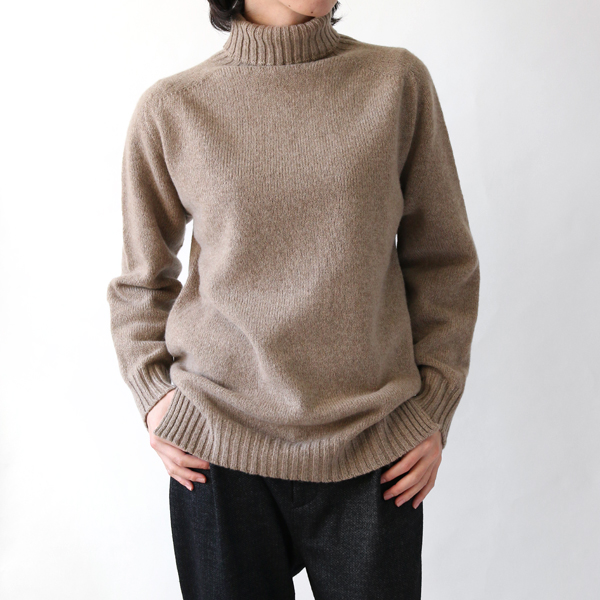
Let's start with the knitting technique that plays a major role in determining comfort. One of Harley of Scotland's specialties is "seamless knitting." Normally, knitwear is made by knitting the front panel, back panel, and both sleeves separately and then joining them together. But in the seamless method, the sweater's shape is knitted as a single unit, resulting in no unnecessary seams and a more comfortable fit. The greatest advantage of the seamless method is the comfort that comes from having no seams at all.
For example, the knitwear pictured, the "High Gauge Tunic Sweater," is a design that makes full use of this seamless construction method. At first glance, it may seem like an unremarkable, ordinary design with no major distinguishing features, but because there are no unnecessary joints on the inside—such as where the sleeves meet the body—the fabric feels less bulky, achieving a smooth, close-fitting wear. When you actually try it on, the absence of bunching or stiffness results in a beautiful silhouette. Minimizing waste of the raw wool material is also an important point in long-term knitwear manufacturing.
Knitting That Makes the Most of Wool's Individuality
Next, let's focus on the wide variety of wool types. Though we call it all "wool" in a single word, its characteristics vary enormously depending on the breed and region of origin, and Harley of Scotland is clearly a maker that creates knit sweaters that make the most of these differing characteristics.
■Shetland Wool
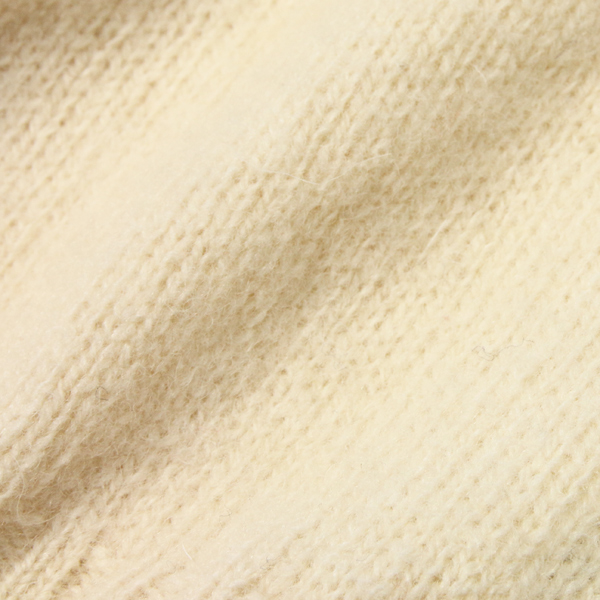
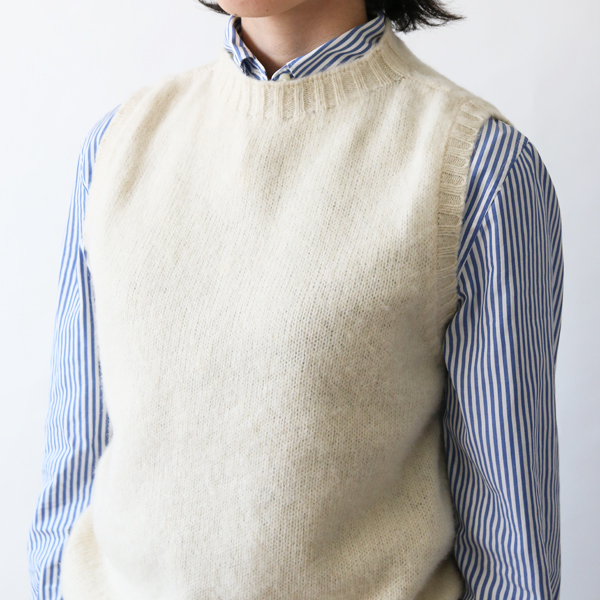
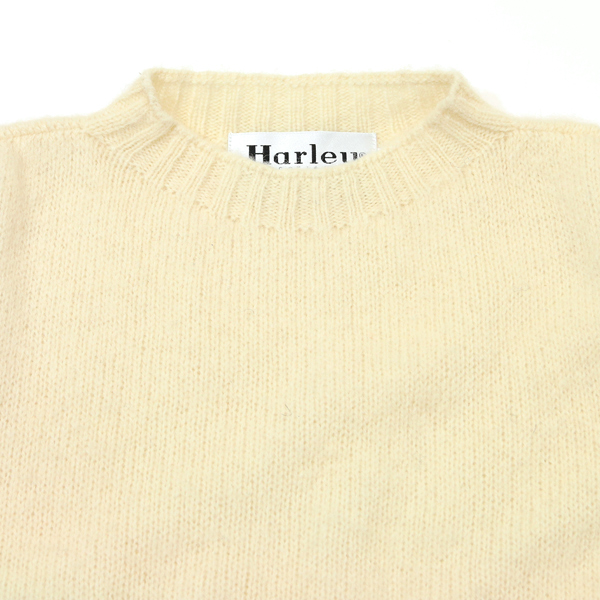
This is the Shetland wool introduced earlier. Having weathered the harsh winters of Shetland, it gives off a warmth quite different from other wools. Look closely and you'll notice the fibers are a bit longer, giving it a distinctive, characterful appearance. Even in a simple vest like this, the unique texture of Shetland wool catches the eye.
■Lambswool
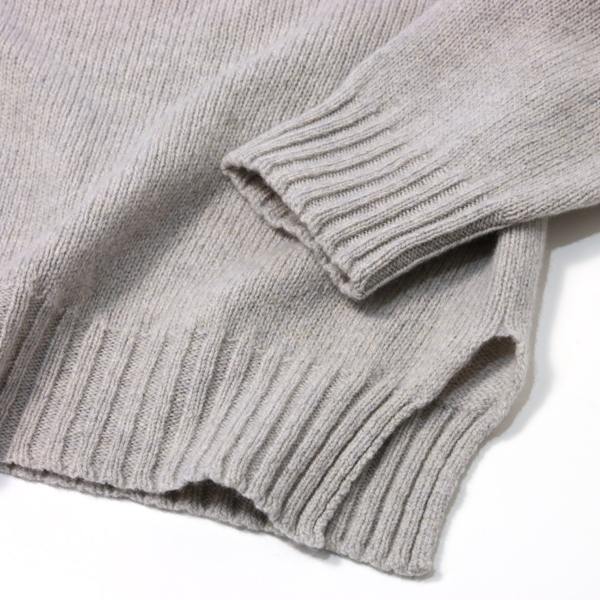
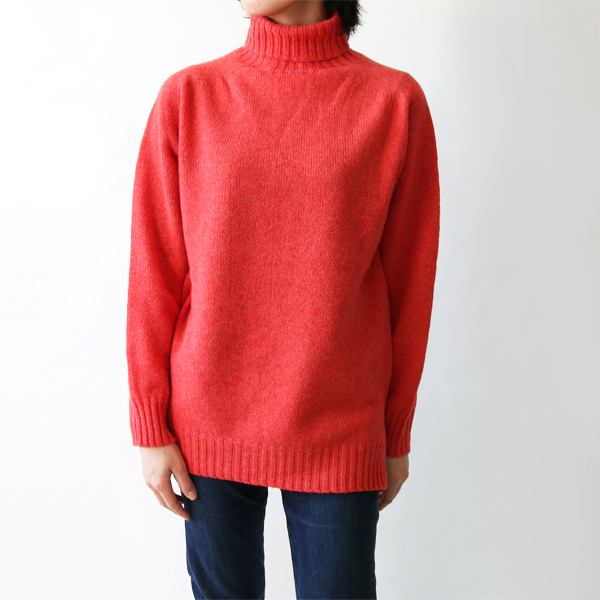
Even familiar lambswool takes on a certain sophisticated impression when finished with the careful knitting that is characteristic of Harley of Scotland. Lambswool is wool taken from lambs up to six months old, and this particular piece is knit finely in a high gauge using lambswool yarn. It features the characteristic soft touch of lambswool along with a tightly knit structure that provides excellent warmth.
■Geelong Lambswool
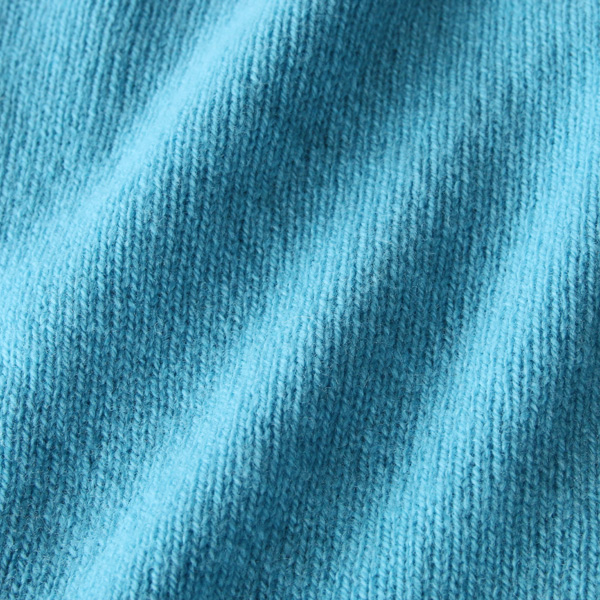
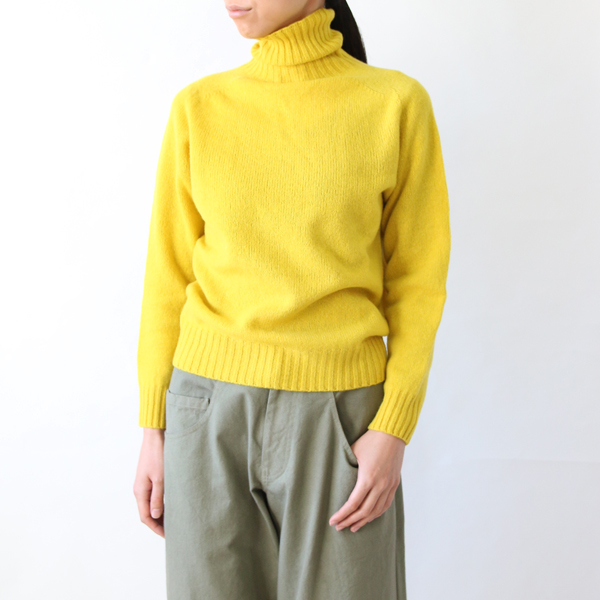
Among lambswools, Geelong lambswool is said to be the finest. Geelong lambs live only in the city of Geelong in Victoria, Australia, and are considered the pinnacle of lambswool—making it a wool of rare value in every sense. Because the yarn is extremely soft and delicate, it offers a wonderfully pleasant feel against the skin. It's a light, fluffy knit, yet its warmth is more than sufficient. Another characteristic of Geelong lambswool is its excellent color vibrancy. Taking advantage of this, vivid yellows and blues appear especially striking to the eye.
Warm Tones and Cool Tones Alike Have Character: A Rich Range of Colors
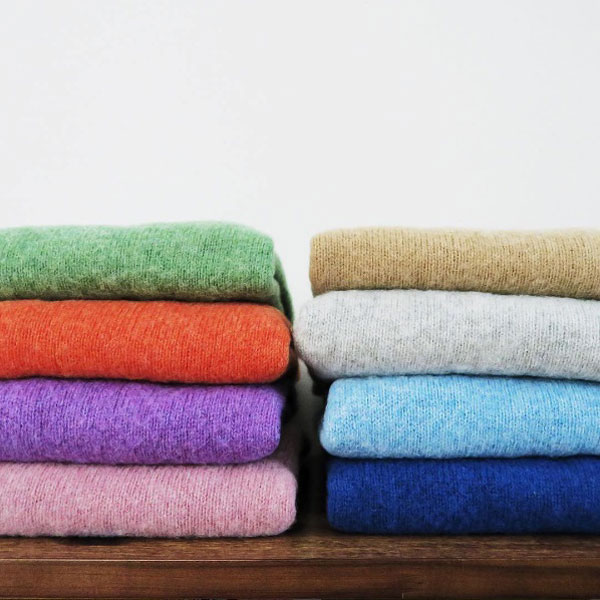
The photo shows just a portion of the color variations, of which more than 100 shades are prepared each season. When we think of a solid-colored sweater, we tend to picture standard colors like white, gray, or navy, or warm tones like brown and red—but the lineup also includes vivid greens and refreshing sky blues, and many other colors that brighten up what can otherwise be a rather somber winter wardrobe.
A simple, solid-colored knit without any pattern is an item that lets you fully enjoy coordinating with fashion accessories like necklaces and hats. Do try choosing a knit in a color you wouldn't normally wear.
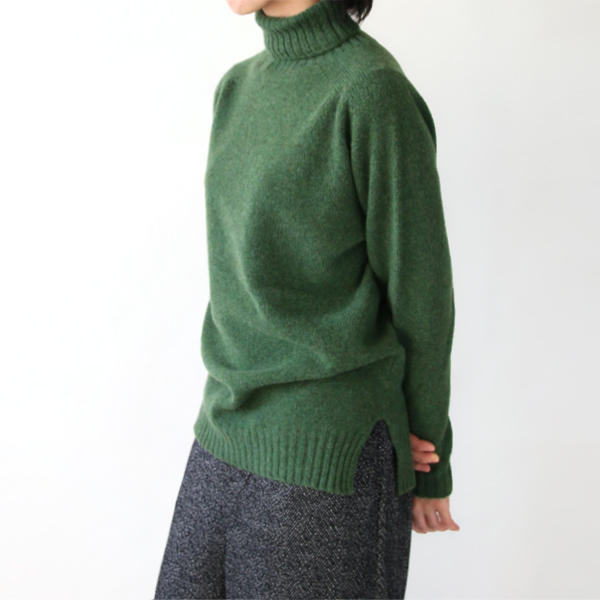

Knit: High Gauge Tunic Sweater (SERPENTINE)
Gloves: Sheepskin Gloves with Stitching
Here, a green tunic sweater is paired with a gold necklace. A simple sweater can easily look mannish when paired with denim or cotton pants, but adding just one lively, eye-catching accessory instantly gives it a more feminine feel. The ability to look either casual or dressy depending on the bottoms you pair it with is one of the great advantages of a solid-colored knit.
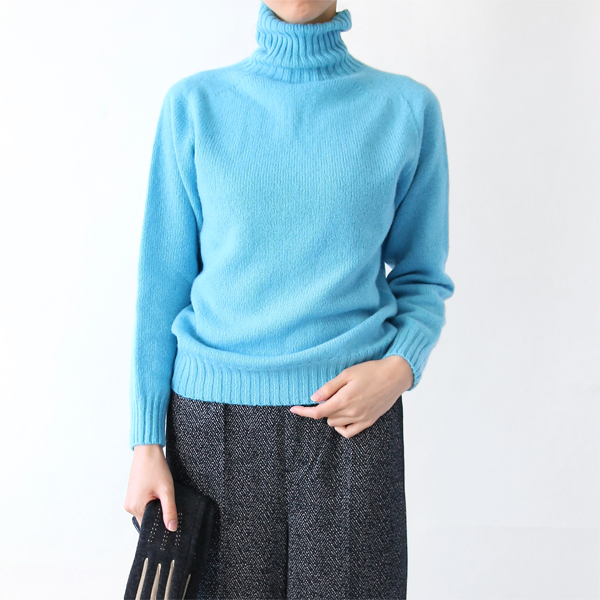
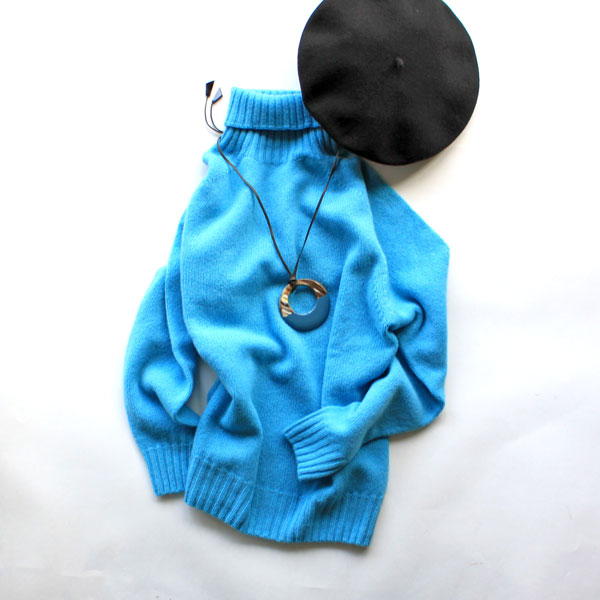
Knit: Lambswool Turtleneck (POOLEBLUE)
Necklace: Circle Pendant/349 (BLUE GRAY)
Even a bright blue, a color often avoided in winter, can take on a cool yet warm feel depending on how you pair it with accessories. Here it's matched with a wool beret and a buffalo horn necklace that adds a sense of warmth. If you've ever noticed that you keep ending up with the same kinds of sweaters in gray or brown, this year we highly recommend adding one distinctly vivid piece to your wardrobe.
>>>See the full list of Harley of Scotland items

GUIDE »
CONTENTS »
CATEGORIES »
- + Gifts by recipient
- + Gifts by scene
- + Clothing
- + Bags / Backpacks
- + Wallets / Card cases
- + Jewelry
- + Shoes
- + Rainy day outfits
- + Kitchen
- + Home
- + Babies / Kids
- + Japanese products
Earn Miles


Payment & Security




